Ditapis dengan
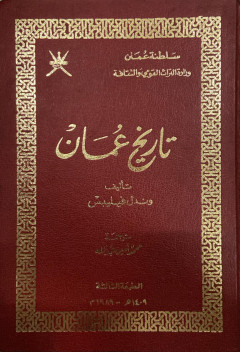
Tarikh Oman
History, with its turbulent events and diverse characters, is one of the most fascinating stories, and history books are among the best narratives. The History of Oman is no exception; the author attempts to recount the events one by one, with concise commentary, in such a way that you can feel them unfold as you turn the pages. This book covers the rich history of the Arab nation of the Indian…
- Edisi
- third edition
- ISBN/ISSN
- -
- Deskripsi Fisik
- 208 pages; 25 cm
- Judul Seri
- -
- No. Panggil
- 953.53 PHI t
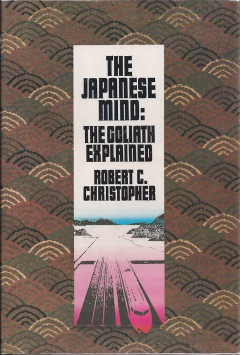
The Japanaese mind : The Goliath explained
The Japanese Mind: The Goliath Explained by Robert C. Christopher offers a concise analysis of the cultural values and social behaviors that shape Japanese thinking. The book explains how tradition, group orientation, discipline, and implicit communication influence Japan’s society, education, and work culture. Christopher highlights the contrast between modern industrial success and enduring…
- Edisi
- -
- ISBN/ISSN
- 0-671-44947-8
- Deskripsi Fisik
- 352 pages ; 24 cm
- Judul Seri
- -
- No. Panggil
- 952.04 CHR j

Divided Korea: The politics of development 1945-1972
This book offers a comparative political analysis of North and South Korea from the end of Japanese colonial rule in 1945 up to 1972, focusing on how two antagonistic regimes—backed by the Soviet Union and the United States sought to consolidate power and direct national development. Kim argues that political leadership, institutional design, and externally driven pressures shaped divergent t…
- Edisi
- -
- ISBN/ISSN
- 674-21287-8
- Deskripsi Fisik
- ix, 471 pages : illustrations ; 23,5 cm
- Judul Seri
- -
- No. Panggil
- 951.904 KIM d

A History of political institutions in Japan
A historical examination of the major political institutions in Japan, from the early modern period through the Meiji Restoration and into more recent eras. Ishii analyzes the development of governance structures, the relationship between the imperial system, the bureaucracy, and emerging representative bodies, as well as how these institutions evolved in response to internal and external press…
- Edisi
- -
- ISBN/ISSN
- 0-86008-261-X
- Deskripsi Fisik
- x, 172 pages : illustrations ; 23 cm
- Judul Seri
- -
- No. Panggil
- 952.04 ISH a
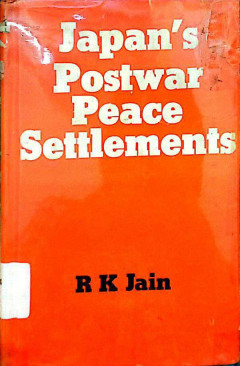
Japan's postwar peace settlements
Examines the diplomatic, legal, and geopolitical dimensions of Japan’s postwar peace settlements from 1945 onwards. Jain explores how Japan negotiated with various countries to reestablish its international relations, focusing on treaties, reparations, and reconciliation. He analyzes key agreements such as the San Francisco Peace Treaty as well as bilateral pacts with nations including Korea …
- Edisi
- -
- ISBN/ISSN
- -
- Deskripsi Fisik
- xvi, 399 pages ; 22 cm
- Judul Seri
- -
- No. Panggil
- 952.04 JAI j

The cultural background of the peoples of Malaya
This book presents an anthropological and sociological analysis of cultural diversity in the Malay Peninsula. N. J. Ryan reviews the social and cultural background of the main ethnic groups, namely the Malay, Chinese, and Indian, as well as Western influences, in the development of Malay society. Through a historical approach, he explores the social structures, customs, traditional values, beli…
- Edisi
- -
- ISBN/ISSN
- -
- Deskripsi Fisik
- xiii, 184 pages: illustrations ; 19 cm
- Judul Seri
- -
- No. Panggil
- 306.595 RYA c

Typhoon in Tokyo : The Occupation and its aftermath
This book provides an analytical account of the Allied occupation of Tokyo following World War II. Harry Emerson Wildes examines political, social, and cultural changes that emerged during the occupation period, describing its impact on Japanese society and the transformation of Tokyo in the postwar era. Through firsthand observations and detailed reporting, the author offers insight into the c…
- Edisi
- 1
- ISBN/ISSN
- -
- Deskripsi Fisik
- 356 pages ; 21,5 cm
- Judul Seri
- -
- No. Panggil
- 952.044 WIL t

The history of Korea
The History of Korea provides a comprehensive overview of Korea’s historical development from ancient times to the modern era. The authors trace the origins of the Korean people, the formation of early kingdoms, and the cultural, political, and social evolution that shaped the peninsula. The book highlights key dynasties, major historical events, foreign influences, and Korea’s struggles an…
- Edisi
- -
- ISBN/ISSN
- -
- Deskripsi Fisik
- 363 pages ; 23 cm
- Judul Seri
- -
- No. Panggil
- 915.9 POW h

History of Nepal: As cold by its own and contemporary chronicles
This book presents the history of Nepal as compiled from original chronicles and contemporary accounts written by historians and traditional chroniclers. Edited by Bikrama Jit Hasrat, it provides a valuable overview of the political developments, royal dynasties, and historical events that shaped Nepal. With its primary source-based historical approach, this work is a valuable reference for res…
- Edisi
- -
- ISBN/ISSN
- -
- Deskripsi Fisik
- lxxxiv, 356 pages; 25 cm
- Judul Seri
- -
- No. Panggil
- 954.96 HAS h

Timor Timur satu menit terakhir: Catatan seorang wartawan
Meliput konflik adalah tugas sehari-hari Rien Kuntari, wartawan Kompas. Dia telah memasuki medan-medan perang paling berbahaya, termasuk Rwanda, Irak, dan Kamboja. Tapi, di antara semua wilayah konflik yang pernah dia liput, Timor Timur adalah yang paling sulit, paling membahayakan, dan sekaligus paling mengesankan. Sebagai seorang wartawan yang dituntut bersikap objektif dan cover both sides, …
- Edisi
- Cet. 1
- ISBN/ISSN
- 978-979-433-537-6
- Deskripsi Fisik
- 483 halaman;23 cm
- Judul Seri
- -
- No. Panggil
- 959.85 KUN t
 Karya Umum
  Filsafat
  Agama
Agama  Ilmu-ilmu Sosial
  Bahasa
  Ilmu-ilmu Murni
  Ilmu-ilmu Terapan
  Kesenian, Hiburan, dan Olahraga
  Kesusastraan
  Geografi dan Sejarah