Ditapis dengan

Papers on Malay subjects
Papers on Malay Subjects is a collection of scientific essays and ethnographic reports published in the early 20th century to provide an in-depth overview of the social, cultural, historical, and legal aspects of Malay society. Edited by R. J. Wilkinson with several contributors such as Sir R. O. Winstedt, C. W. Harrison, G. E. Shaw, and J. Rigby, this work consists of four main volumes discuss…
- Edisi
- -
- ISBN/ISSN
- -
- Deskripsi Fisik
- viii, 468 pages ;25 cm
- Judul Seri
- -
- No. Panggil
- 959.5 BUR p

Philosophy
Philosophy provides a comprehensive introduction to key concepts and schools of thought in the field of philosophy. It covers both Western and Eastern philosophical traditions, with a particular focus on Chinese philosophy. The book explores fundamental philosophical questions related to ethics, metaphysics, epistemology, and logic, and traces the historical development of these ideas across cu…
- Edisi
- -
- ISBN/ISSN
- 978-7-5085-2745-1
- Deskripsi Fisik
- 223 pages : illustrations ; 21 cm
- Judul Seri
- -
- No. Panggil
- 306.51 WUC p
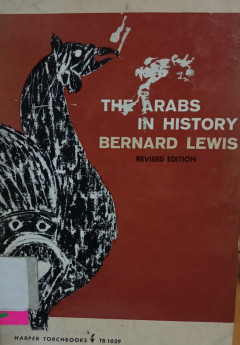
The Arabs in history
The Arabs in History provides a concise historical overview of the Arab people from pre-Islamic times to the modern era. Bernard Lewis examines the development of Arab society, the rise of Islam, the creation of the early Islamic empires, and the cultural, economic, and political forces that shaped the Arab world. The book highlights the Arabs’ contributions to civilization, their interaction…
- Edisi
- -
- ISBN/ISSN
- 0-06-090491-7
- Deskripsi Fisik
- 200 pages : illustrations ; 21 cm
- Judul Seri
- -
- No. Panggil
- 953 LEW a
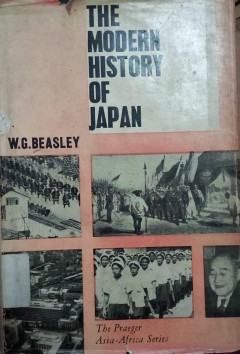
The Modern history of Japan
The Modern History of Japan by W. G. Beasley provides a comprehensive overview of Japan’s political, social, and economic transformation from the late Tokugawa era to the modern period. The book examines the fall of the shogunate, the Meiji Restoration, Japan’s rapid modernization, and the emergence of the nation as a major world power. Beasley analyzes key historical developments, includin…
- Edisi
- -
- ISBN/ISSN
- -
- Deskripsi Fisik
- xi, 352 pages : illustrations ; 21,5 cm
- Judul Seri
- -
- No. Panggil
- 952 BEA m
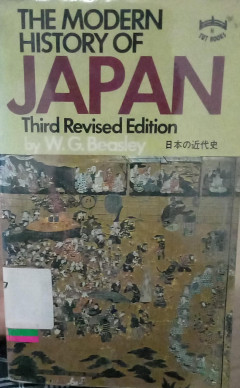
The Modern history of Japan
The Modern History of Japan by W. G. Beasley provides a comprehensive overview of Japan’s political, social, and economic transformation from the late Tokugawa era to the modern period. The book examines the fall of the shogunate, the Meiji Restoration, Japan’s rapid modernization, and the emergence of the nation as a major world power. Beasley analyzes key historical developments, includin…
- Edisi
- 3
- ISBN/ISSN
- 4-8053-0480-4
- Deskripsi Fisik
- ix, 358 pages : illustrations ; 18 cm
- Judul Seri
- -
- No. Panggil
- 952.047 BEA m
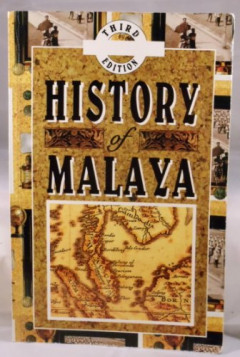
A History of Malaya
This book presents a comprehensive history of the Malay Peninsula, from the Malacca Sultanate in the 15th century to the formation of an independent state in the late 1950s. Kennedy traces the political, economic, and social dynamics that shaped Malaya, including the influence of foreign powers such as the Portuguese, Dutch, and British. He reviews the evolution of the Malay kingdom, its intera…
- Edisi
- -
- ISBN/ISSN
- -
- Deskripsi Fisik
- x, 385 pages : ilustrations ; 20 cm
- Judul Seri
- -
- No. Panggil
- 959.5 KEN h

Foundations of Pakistan: All India muslim league documents: 1906-1947
Foundations of Pakistan: All-India Muslim League Documents, 1906–1947 is a comprehensive collection of primary documents chronicling the political journey of the Muslim movement in the Indian subcontinent prior to the founding of Pakistan. Compiled by Syed Sharifuddin Pirzada, the book chronicles resolutions, speeches, correspondence, meeting minutes, and key decisions of the All-India Muslim…
- Edisi
- -
- ISBN/ISSN
- -
- Deskripsi Fisik
- lxxiv, 605 pages: 25 cm
- Judul Seri
- -
- No. Panggil
- 954.9 PIR f
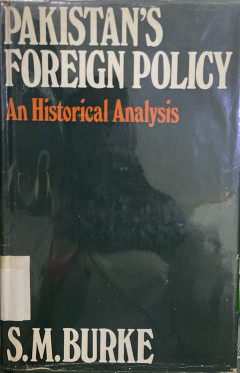
Pakistan's foreign policy
S. M. Burke's Pakistan's Foreign Policy provides an in-depth analysis of the dynamics, orientation, and evolution of Pakistan's foreign policy since its founding in 1947. Burke explores the historical, geopolitical, and ideological factors that shaped Pakistan's relations with major powers, including the United States, India, China, and the Soviet Union. The book also examines internal challeng…
- Edisi
- -
- ISBN/ISSN
- -
- Deskripsi Fisik
- ix, 432 pages: 25 cm
- Judul Seri
- -
- No. Panggil
- 327.5491 BUR p
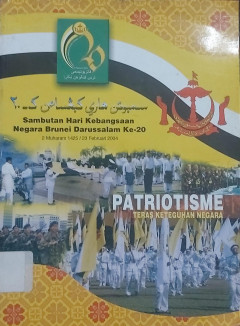
Sambutan hari kebangsaan negara Brunei Darussalam ke-20
Buku peringatan ini didedikasikan untuk mendokumentasikan secara komprehensif Sambutan Hari Kebangsaan Negara Brunei Darussalam Ke-20, yang diperingati pada tanggal 2 Muharam 1425 bersamaan dengan 23 Februari 2004. Dengan mengusung tema sentral "PATRIOTISME TERAS KETEGuhan NEGARA", buku ini bertujuan untuk merakam semangat kebangsaan yang tinggi serta peranan kesetiaan rakyat sebagai asas kukuh…
- Edisi
- -
- ISBN/ISSN
- -
- Deskripsi Fisik
- 112 Halaman : Ilustrasi ; 27 cm
- Judul Seri
- -
- No. Panggil
- 959.55 JAB s

India and disarmament
Provides an analytical study of India’s disarmament policy and its role in global efforts to reduce and eliminate weapons of mass destruction. The book examines India’s historical commitment to universal disarmament, its diplomatic initiatives, and its proposals at international fora. It also discusses the constraints India faces — including national security considerations, geopolitical …
- Edisi
- -
- ISBN/ISSN
- -
- Deskripsi Fisik
- 294 pages ; 22,5 cm
- Judul Seri
- -
- No. Panggil
- 954.3271 IND i
 Karya Umum
  Filsafat
  Agama
Agama  Ilmu-ilmu Sosial
  Bahasa
  Ilmu-ilmu Murni
  Ilmu-ilmu Terapan
  Kesenian, Hiburan, dan Olahraga
  Kesusastraan
  Geografi dan Sejarah