Ditapis dengan

The Siege of Mecca
On November 20, 1979, hundreds of Islamist militants led by Saudi preacher Juhayman al-Otaybi stormed and seized the Grand Mosque in Mecca, Islam’s holiest site, trapping tens of thousands of worshippers inside. The siege lasted two weeks and resulted in hundreds of deaths, in an event that was largely ignored by the global media at the time. Trofimov draws on newly declassified documents and…
- Edisi
- -
- ISBN/ISSN
- 978-0-385-51925-5
- Deskripsi Fisik
- x, 301 pages : iilustrations ; 24 cm
- Judul Seri
- -
- No. Panggil
- 953.053 TRO s

The House of Saud: The Rise and rule of the most powerful dynasty in the Ara…
The book provides a revealing account of the emergence and consolidation of the Saudi royal family as one of the most influential dynasties in the Middle East. It traces the historical roots of the House of Saud, their alliance with Wahhabi religious leaders, and their rise to power in the Arabian Peninsula. Through political analysis and investigative reporting, the book examines how the famil…
- Edisi
- -
- ISBN/ISSN
- 0-03-043731-8
- Deskripsi Fisik
- v, 569 pages ; 24 cm
- Judul Seri
- -
- No. Panggil
- 953.8 HOL h
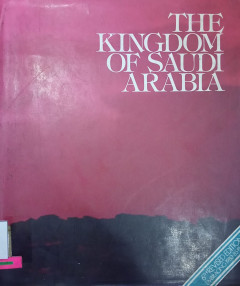
The Kingdom of Saudi Arabia
This book provides a comprehensive historical and cultural portrait of the Kingdom of Saudi Arabia. It explores the geography, cities, and tribal structure of the country, and examines the lives of its people from nomadic Bedouins to modern urban dwellers. The authors trace the rise of the House of Saud, detailing how the kingdom was founded and how key figures like Ibn Saud shaped its identity…
- Edisi
- -
- ISBN/ISSN
- 0-905743-28-8
- Deskripsi Fisik
- 256 pages : iilustrations ; 30 cm
- Judul Seri
- -
- No. Panggil
- 953.8 KLE k
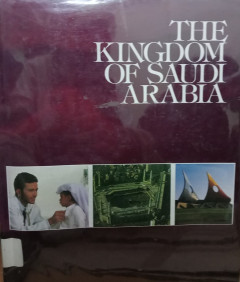
The Kingdom of Saudi Arabia
The Kingdom of Saudi Arabia by William Facey provides a concise and informative overview of the historical, cultural, and geographical foundations of Saudi Arabia. The book traces the development of the Arabian Peninsula from its early tribal society to the rise of the Saudi state, emphasizing the role of Islam, the unification under King Abdulaziz, and the transformative impact of oil discover…
- Edisi
- -
- ISBN/ISSN
- 0-905743-67-9
- Deskripsi Fisik
- 256 pages : iilustrations ; 30 cm
- Judul Seri
- -
- No. Panggil
- 953.8 FAC k
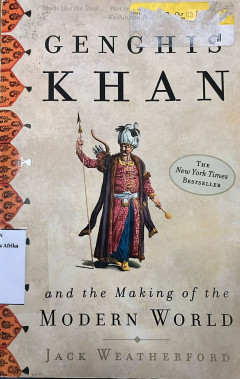
Genghis Khan and the making of the modern world
The Mongol army led by Genghis Khan subjugated more lands and people in twenty-five years than the Romans did in four hundred. In nearly every country the Mongols conquered, they brought an unprecedented rise in cultural communication, expanded trade, and a blossoming of civilization. Vastly more progressive than his European or Asian counterparts, Genghis Khan abolished torture, granted unive…
- Edisi
- -
- ISBN/ISSN
- 0-609-80964-4
- Deskripsi Fisik
- viii, 312 pages ; 20 cm
- Judul Seri
- -
- No. Panggil
- 950.1 WEA g

Dir 'iyyah and the first Saudi state
Dirʿiyyah and the First Saudi State by William Facey provides a concise historical examination of the rise of Dirʿiyyah as the birthplace of the First Saudi State in the 18th century. The book traces the alliance between Muhammad ibn Saud and the religious reformer Muhammad ibn Abd al-Wahhab, which laid the ideological and political foundations for the emerging state. Facey highlights Dirʿiy…
- Edisi
- -
- ISBN/ISSN
- 0905743-806
- Deskripsi Fisik
- 112 pages : illustrations ; 30 cm
- Judul Seri
- -
- No. Panggil
- 953.8 FAC d

The architectural achievement of King Abdul-aziz in the honored area of Makka…
This book explores the architectural developments initiated under the reign of King Abdul-Aziz in the honored area of Makkah between 1924 and 1953. It highlights the King’s efforts to modernize the holy city while preserving its sacred character, focusing on major projects such as the expansion of the Grand Mosque, improvements to pilgrim facilities, and the introduction of new urban infrastr…
- Edisi
- -
- ISBN/ISSN
- 9960-880-59-1
- Deskripsi Fisik
- 380 pages : illustrations ; 32 cm
- Judul Seri
- -
- No. Panggil
- 953.121 ALI a

Bushido: The Soul of Japan
A captivating exploration of the code of honor and ethics that governed the samurai warriors in feudal Japan. The author's book aims to provide Western readers with an in-depth understanding of the principles and values that shaped the samurai's way of life. Nitobe delves into the historical and philosophical aspects of Bushido, which refers to the "way of the warrior." He explores various elem…
- Edisi
- -
- ISBN/ISSN
- 4-8053-0218-6
- Deskripsi Fisik
- xxiii, 203 pages ; 18 cm
- Judul Seri
- -
- No. Panggil
- 915 NIT b

Japan: An Anthropological introduction
A comprehensive ethnographic and anthropological overview of Japanese society, tracing its cultural origins, social structure, and value systems. Befu explores Japan’s historical development — from prehistoric periods through the formation of kinship systems, family structures, and rural community life. He examines how ritual kinship, paternalism, and the stem family concept shape familial …
- Edisi
- -
- ISBN/ISSN
- 4-8053-0461-8
- Deskripsi Fisik
- xii, 210 pages : illustrations ; 18 cm
- Judul Seri
- -
- No. Panggil
- 915.2 BEF j

Malaysia : A Survey
This book presents a comprehensive survey of Malaysia from historical, social, economic, and political perspectives. In various chapters, Wang Gungwu and his contributors explore Malaysia's development from the pre-colonial period to the modern era, including ethnic dynamics, economic structures, and government institutions. The book also discusses societal transformation, the role of the state…
- Edisi
- -
- ISBN/ISSN
- -
- Deskripsi Fisik
- 465 pages ; 25 cm
- Judul Seri
- -
- No. Panggil
- 959.504 GUN m
 Karya Umum
  Filsafat
  Agama
Agama  Ilmu-ilmu Sosial
  Bahasa
  Ilmu-ilmu Murni
  Ilmu-ilmu Terapan
  Kesenian, Hiburan, dan Olahraga
  Kesusastraan
  Geografi dan Sejarah