Ditapis dengan
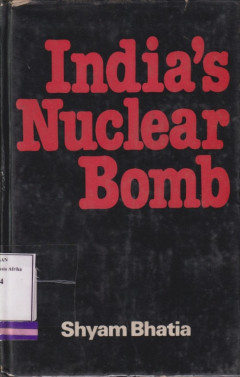
India's nuclear bomb
An in-depth investigation into India’s pursuit of nuclear capability during the Cold War era. The book examines political motivations, scientific developments, and strategic calculations behind India’s nuclear programme. Bhatia discusses key events leading to the first nuclear test in 1974 (“Smiling Buddha”), responses from global powers, and the domestic debates surrounding nuclear pol…
- Edisi
- -
- ISBN/ISSN
- 0-7069-0770-5
- Deskripsi Fisik
- 169 pages ; 22 cm
- Judul Seri
- -
- No. Panggil
- 355.8251 BHA i
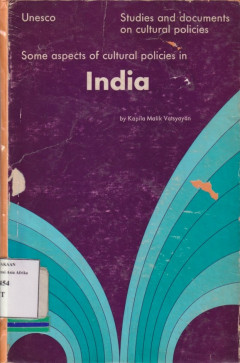
Some aspects of cultural policies in India
Some Aspects of Cultural Policies in India by Kapila Malik Vatsyayan presents an in-depth analysis of the evolution, framework, and implementation of cultural policies in India. The book explores the role of government institutions, cultural organizations, and national development plans in shaping India’s cultural identity. Vatsyayan discusses issues such as cultural preservation, education, …
- Edisi
- -
- ISBN/ISSN
- -
- Deskripsi Fisik
- 105 pages : illustrations ; 24 cm
- Judul Seri
- -
- No. Panggil
- 303.4840954 VAT s
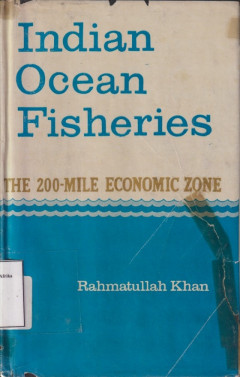
The 200-mile economic zone : Indian ocean fisheries
The 200-Mile Economic Zone: Indian Ocean Fisheries by Rahmatullah Khan analyzes the economic, legal, and strategic implications of establishing Exclusive Economic Zones (EEZs) in the Indian Ocean region. The book discusses the potential of marine fisheries, resource management challenges, and the importance of ocean governance for coastal nations. Khan examines India’s role within the broader…
- Edisi
- -
- ISBN/ISSN
- -
- Deskripsi Fisik
- xiv, 264 pages 22,5 ; cm
- Judul Seri
- -
- No. Panggil
- 333.956 KHA t

Nuclear India: Volume II
This first volume of Nuclear India by J. P. Jain provides an in-depth introduction to the origins, development, and strategic foundations of India’s nuclear program. The book examines India’s political motivations, scientific progress, and security concerns within the regional and global context. Jain discusses historical milestones, policy debates, technological challenges, and India’s p…
- Edisi
- -
- ISBN/ISSN
- -
- Deskripsi Fisik
- vxvii, 440 pages ; 22 cm
- Judul Seri
- -
- No. Panggil
- 355.0217 JAI n

Nuclear India: Volume II
This volume of Nuclear India by J. P. Jain explores India’s evolving nuclear policy, strategic motivations, and defense considerations. The author examines the historical development of India’s nuclear program, technological capabilities, and the geopolitical pressures influencing national security decisions. The book analyzes regional tensions in South Asia, global nuclear diplomacy, and I…
- Edisi
- -
- ISBN/ISSN
- -
- Deskripsi Fisik
- vxvii, 440 pages ; 22 cm
- Judul Seri
- -
- No. Panggil
- 355.0217 JAI n
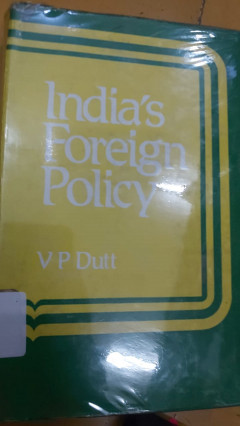
India's foreign policy
The book analyzes India’s foreign policy amid shifting regional and global dynamics. It examines India’s fluctuating relationship with Pakistan, the stalemate in Afghanistan, ethnic conflict in Sri Lanka, and the cautious improvement in relations with China. It discusses new developments in South-East Asia, confusion in Gulf and West Asian politics including the Iran–Iraq war, and Indi…
- Edisi
- -
- ISBN/ISSN
- 0-7069-3310-9
- Deskripsi Fisik
- xiii, 523 pages ; 21,5 cm
- Judul Seri
- -
- No. Panggil
- 327.54 DUT i
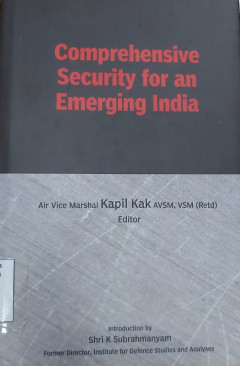
Comprehensive security for an emerging India
This volume objectively evaluates the headwinds of comprehensive security challenges that India would confront in the years ahead. Over nearly two decades, India has made successful transitions to ‘emerge’ on the regional and global scene, but informed and reasoned analyses of the multi-dimensional dangers that loom large, and the common opportunities available, have been lacking. This lacu…
- Edisi
- -
- ISBN/ISSN
- 978-93-80502-30-4
- Deskripsi Fisik
- xviii, 394 pages ; 23,5 cm
- Judul Seri
- -
- No. Panggil
- 327.3 KAK c

Public policy formulation and implementation in India
This book provides an analytical study of how public policies are formulated and implemented within the complex institutional and administrative structures of India. It examines the dynamics between political leadership, bureaucracy, and public institutions that shape the processes of decision-making in the country. Through detailed discussions, the author highlights the challenges faced in …
- Edisi
- -
- ISBN/ISSN
- 81-86637-02-4
- Deskripsi Fisik
- 221 pages ; 22 cm
- Judul Seri
- -
- No. Panggil
- 354.5402 PAU p
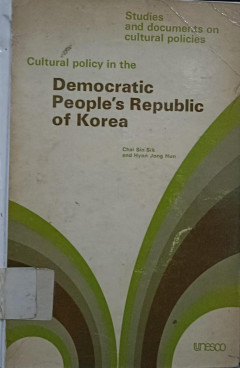
Cultural policy in the Democratic People's Republic of Korea
This book explains the cultural policies of the Democratic People's Republic of Korea, emphasizing the role of culture in the construction of socialism. Discussions include cultural education, the arts, media, historical preservation, and the role of culture in mass mobilization. It demonstrates how state policies are directed at shaping national identity and ideological allegiance through art …
- Edisi
- -
- ISBN/ISSN
- 92-3-101645-8
- Deskripsi Fisik
- 39 pages : 24 cm
- Judul Seri
- -
- No. Panggil
- 306.209519 SIK c
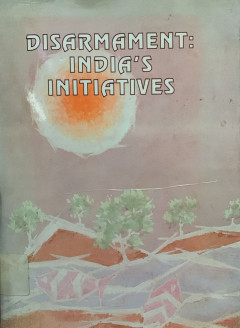
Disarmament: India's initiatives
Disarmament: India’s Initiatives is a government-published document by the External Publicity Division of India’s Ministry of External Affairs, outlining India’s long-standing commitment and concrete actions on global disarmament. The publication presents India’s historical proposals, including its call for a nuclear-weapon-free world, the 1988 Action Plan for phased disarmament, and ef…
- Edisi
- -
- ISBN/ISSN
- -
- Deskripsi Fisik
- 135 pages; 24,5 cm
- Judul Seri
- -
- No. Panggil
- 954 EXT d
 Karya Umum
  Filsafat
  Agama
Agama  Ilmu-ilmu Sosial
  Bahasa
  Ilmu-ilmu Murni
  Ilmu-ilmu Terapan
  Kesenian, Hiburan, dan Olahraga
  Kesusastraan
  Geografi dan Sejarah