Ditapis dengan

The Japan reader 2: Postwar Japan: 1945 to the present
A comprehensive collection of essays, documents, and analyses covering Japan’s postwar history. The book examines Japan’s political, economic, and social reconstruction after World War II, including democratization, economic growth, and cultural transformation. Livingston highlights key challenges and achievements, such as the development of modern institutions, international relations, and…
- Edisi
- -
- ISBN/ISSN
- 0-14-02-1968-4
- Deskripsi Fisik
- xxi, 600 pages ; 19,5 cm
- Judul Seri
- -
- No. Panggil
- 952 LIV j

Japanese politics--an inside view: Readings from Japan
A detailed examination of Japan’s political system from a domestic perspective. The book compiles analyses and essays that explore the structure and function of political institutions, the role of political parties, electoral behavior, and policymaking processes. Itoh emphasizes how cultural, historical, and social factors shape political decision-making in Japan. This collection provides rea…
- Edisi
- -
- ISBN/ISSN
- -
- Deskripsi Fisik
- x, 248 pages : illustrations ; 21 cm
- Judul Seri
- -
- No. Panggil
- 952 ITO j
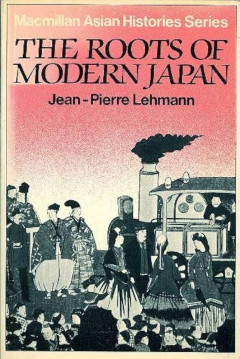
The Roots of modern Japan
Explores the historical foundations that shaped Japan’s transformation into a modern nation. Lehmann examines key developments from the late Tokugawa period, the Meiji Restoration, and Japan’s rapid modernization, emphasizing the social, political, and economic forces that influenced the country’s evolution. The book highlights how traditional values interacted with Western ideas to creat…
- Edisi
- -
- ISBN/ISSN
- 0-333-26604-8
- Deskripsi Fisik
- xviii, 352 pages ; 23,5 cm
- Judul Seri
- -
- No. Panggil
- 952 LEH r

Imperial Japan 1800-1945
An analytical overview of Japan’s transformation from a feudal society into a modern imperial power. The book traces major political, economic, and social changes beginning in the late Tokugawa period, through the Meiji Restoration, and into Japan’s era of militaristic expansion. Livingston highlights key factors such as industrialization, state-led modernization, nationalism, and the rise …
- Edisi
- -
- ISBN/ISSN
- 0-394-48437-1
- Deskripsi Fisik
- viii, 517 pages : illustrations ; 20 cm
- Judul Seri
- -
- No. Panggil
- 952 LIV i
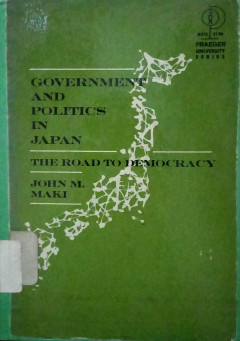
Government and politics in Japan: The Road to democracy
Analyzes the historical development of Japan’s political system and its gradual transformation toward democratic governance. Maki explains the evolution of political institutions from the Meiji era through the postwar period, highlighting the role of constitutional reforms, political parties, and public participation. The book also examines the interaction between traditional political cultur…
- Edisi
- -
- ISBN/ISSN
- -
- Deskripsi Fisik
- xi, 275 pages ; 20,5 cm
- Judul Seri
- -
- No. Panggil
- 952 MAK g

The Japanese miracle and peril
Explores Japan’s remarkable post-war economic rise—often described as the “Japanese miracle”—alongside the major challenges that accompanied it. Price illustrates how industrial innovation, disciplined labor, and supportive government policies propelled Japan to global economic prominence. At the same time, he highlights the vulnerabilities behind this success, including social pressu…
- Edisi
- -
- ISBN/ISSN
- 0-8104-6103-X
- Deskripsi Fisik
- 341 pages ; 20,5 cm
- Judul Seri
- -
- No. Panggil
- 952 PRI j
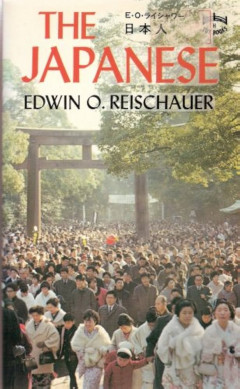
The Japanese
Provides an in-depth overview of Japanese history, society, and cultural values. Reischauer explains how Japan’s traditions, social structures, and historical experiences shaped the behavior, worldview, and national identity of its people. The book discusses key aspects such as group-oriented society, political development, education, economic growth, and Japan’s role in the international c…
- Edisi
- -
- ISBN/ISSN
- 4-8053-0435-9
- Deskripsi Fisik
- 443 pages : illustrations ; 18 cm
- Judul Seri
- -
- No. Panggil
- 952 REI j

The Japanese
Provides an in-depth overview of Japanese history, society, and cultural values. Reischauer explains how Japan’s traditions, social structures, and historical experiences shaped the behavior, worldview, and national identity of its people. The book discusses key aspects such as group-oriented society, political development, education, economic growth, and Japan’s role in the international c…
- Edisi
- -
- ISBN/ISSN
- 0-674-47176-8
- Deskripsi Fisik
- 443 pages : illustrations ; 20,5 cm
- Judul Seri
- -
- No. Panggil
- 952 REI j

Japan and western civilization: Essays on comparative culture
Explores the historical, cultural, and intellectual interactions between Japan and the West. Through a series of essays, Kuwabara analyzes how Japanese society received, adapted, and reinterpreted Western ideas in fields such as philosophy, education, politics, and social organization. He highlights the contrasts between Japanese cultural traditions and Western rationalism, while emphasizing th…
- Edisi
- -
- ISBN/ISSN
- 0-86008-338-1
- Deskripsi Fisik
- xxviii, 202 pages ; 23,5 cm
- Judul Seri
- -
- No. Panggil
- 952 TAK j
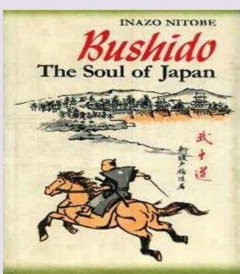
Bushido: The Soul of Japan
A captivating exploration of the code of honor and ethics that governed the samurai warriors in feudal Japan. The author's book aims to provide Western readers with an in-depth understanding of the principles and values that shaped the samurai's way of life. Nitobe delves into the historical and philosophical aspects of Bushido, which refers to the "way of the warrior." He explores various elem…
- Edisi
- -
- ISBN/ISSN
- 4-8053-0218-6
- Deskripsi Fisik
- xxiii, 203 pages ; 18 cm
- Judul Seri
- -
- No. Panggil
- 915 NIT b
 Karya Umum
  Filsafat
  Agama
Agama  Ilmu-ilmu Sosial
  Bahasa
  Ilmu-ilmu Murni
  Ilmu-ilmu Terapan
  Kesenian, Hiburan, dan Olahraga
  Kesusastraan
  Geografi dan Sejarah