Ditapis dengan

China rising: Peace, power, and order in East Asia
Throughout the past three decades East Asia has seen more peace and stability than at any time since the Opium Wars of 1839-1841. During this period China has rapidly emerged as a major regional power, averaging over nine percent economic growth per year since the introduction of its market reforms in 1978. Foreign businesses have flocked to invest in China, and Chinese exports have begun to fl…
- Edisi
- -
- ISBN/ISSN
- 978-0-231-14188-8
- Deskripsi Fisik
- xiii, 274 pages : illustrations : bibl: hlm 252-262 : index ; 24 cm
- Judul Seri
- -
- No. Panggil
- 327.5105 Kan c

China and Southeast Asia: Global changes and regional challenges
The relations between ASEAN and China occupy a unique and important position in the foreign relations of the Asia-Pacific region. China and Southeast Asia's political, strategic and economic importance in the realm of international relations has been transformed by the region's unprecedented economic growth, unexpected financial crisis, and turbulent political changes.
- Edisi
- -
- ISBN/ISSN
- 981-230-298-0
- Deskripsi Fisik
- xxvii, 327 pages ; 23 cm
- Judul Seri
- -
- No. Panggil
- 327.510 59 Leo c

The international politics of the new Asia Pacific
This text explores the regional roles and relationships of major powers with regard to the Asia Pacific region. It provides the context of various approaches to understanding international relations, and against this background, considers the roles of the US, China, Japan and Russia.
- Edisi
- -
- ISBN/ISSN
- 1-55587-728-1
- Deskripsi Fisik
- xi, 257 pages : map : bibl: hlm 239-250 : index ; 24cm
- Judul Seri
- -
- No. Panggil
- 327.5009045 Dou i

Northeast Asia's stunted regionalism: Bilateral distrust in the shadow of glo…
Although Northeast Asia could be on the verge of becoming the world's third great region, expanding economic ties have not been supported by security cooperation and trust. Gilbert Rozman traces the problems in establishing regionalism over 15 years. Relying on many sources in the languages of the region, he offers a detailed picture of conflicting strategies in China, Japan, Russia, and South …
- Edisi
- First Published
- ISBN/ISSN
- 0-521-54360-6
- Deskripsi Fisik
- vii, 401 pages : illustrations (black and white) : index ; 23 cm
- Judul Seri
- -
- No. Panggil
- 327.5 Roz n

ASEAN's Myanmar crisis: Challenges to the pursuit of a security community
In line with recent reviews of policy by Aung San Suu Kyi and the U.S. Government, ASEAN's Myanmar Crisis: Challenges to the Pursuit of a Security Community provides a clear and innovative analysis of why it is necessary to reassess regional and international approaches to Myanmar. For the first time, this book also reveals the full extent to which Myanmar has challenged the solidarity and deve…
- Edisi
- -
- ISBN/ISSN
- 978-981-4279-24-6
- Deskripsi Fisik
- xxii, 268 pages : illustrations : bibl: hlm 241-253 : index ; 24 cm
- Judul Seri
- -
- No. Panggil
- 327.172072 Rob a

ASEAN, India, Australia: Towards closer engagement in a new Asia
India's emergence of a great power has sensitized its regional neighbours to its growing role as a key security actor in an increasingly interdependent world. Both Australia and ASEAN now view India as a major player in the formulation and application of their own broad security agendas. This emerging trilateral compendium is particularly evident in such policy areas as maritime security, clima…
- Edisi
- First Published
- ISBN/ISSN
- 978-981-230-963-1
- Deskripsi Fisik
- xxv, 417 pages : illustrations : bibl: hlm 369-398 : index ; 24 cm
- Judul Seri
- -
- No. Panggil
- 327.1 Tow a
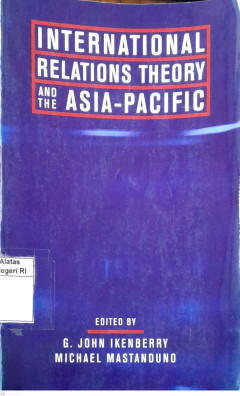
International relations theory and the Asia-Pacific
Annotation What will the Asia-Pacific rim look like in the years ahead? What tools will international relations theorists need to understand the complex relationship among China, Japan, and the United States as the three powers shape the economic and political future of this crucial region?Some of the best and most innovative scholars in international relations and Asian area studies gather her…
- Edisi
- -
- ISBN/ISSN
- 978-0-231-12590-1
- Deskripsi Fisik
- vi, 450 pages : index ; 24 cm
- Judul Seri
- -
- No. Panggil
- 327.095 Ike i
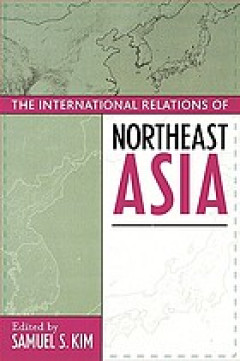
The international relations of northeast Asia
Written by a team of leading scholars, this volume presents a variety of theoretical perspectives and case studies to offer a comprehensive analysis of the pressures that shape the policy choices of China, Russia, Japan, the United States, North and South Korea, and Taiwan
- Edisi
- -
- ISBN/ISSN
- 0-7425-1695-4
- Deskripsi Fisik
- xiv, 370 pages : index ; 24cm.
- Judul Seri
- -
- No. Panggil
- 327 Kim t

The transformation of Southeast Asia: International perspectives on decoloniz…
This volume moves beyond the traditional view of decolonization as simply a transfer of power. Instead the chapters emphasize the process rather than events to provide a framework for discussion. The editors have brought together Asian, American and European scholars to share different perspectives & insights in the post-colonial era.
- Edisi
- -
- ISBN/ISSN
- 9971-69-293-7
- Deskripsi Fisik
- xiv, 358 pages : illustrations : index ; 23 cm
- Judul Seri
- -
- No. Panggil
- 325.5909045 Fre t

The transformation of Southeast Asia: International perspectives on decoloniz…
This work provides the basis for a reconceptualization of key features in Southeast Asia's history. It examines evolutionary patterns of Europe's and Japan's Southeast Asian empires from the late 19th century through World War II, and offer insights into the events of the 1940s, 1950s, and 1960s.
- Edisi
- -
- ISBN/ISSN
- 0-7656-1140-6
- Deskripsi Fisik
- xiv, 358 pages : index ; 24 cm.
- Judul Seri
- -
- No. Panggil
- 325.5909045 Fre t
 Karya Umum
  Filsafat
  Agama
Agama  Ilmu-ilmu Sosial
  Bahasa
  Ilmu-ilmu Murni
  Ilmu-ilmu Terapan
  Kesenian, Hiburan, dan Olahraga
  Kesusastraan
  Geografi dan Sejarah