Ditapis dengan

Revolution in the third world
Revolution in the Third World provides a comprehensive analysis of revolutionary movements across Asia, Africa, and Latin America during the post–World War II era. Gérard Chaliand examines the historical conditions, political dynamics, and strategies that shaped guerrilla struggles and socialist-oriented revolutions in developing regions. Drawing on comparative cases, the book explores the i…
- Edisi
- -
- ISBN/ISSN
- 0-14-04796-4
- Deskripsi Fisik
- xxii, 202 pages ; 20 cm
- Judul Seri
- -
- No. Panggil
- 320.5 CHA r

Community conflicts in Nigeria: Management, resolution and transformation
This volume explores the nature, causes, and dynamics of community conflicts in Nigeria, providing analytical and practical insights into their management, resolution, and transformation. Edited by Onigu Otite and Isaac Olawale Albert, the book draws on sociological, historical, and policy-oriented perspectives to examine ethnic tensions, communal violence, resource struggles, and political con…
- Edisi
- -
- ISBN/ISSN
- 978–029–105–9
- Deskripsi Fisik
- xi, 378 pages ; 21 cm
- Judul Seri
- -
- No. Panggil
- 303.69 OTI c
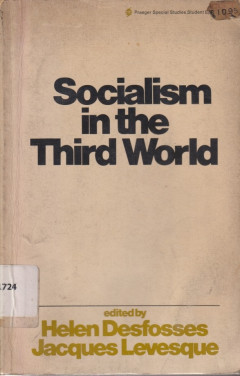
Socialism in the third world
This edited volume explores the development and adaptation of socialist ideas in the Third World during the post-colonial era. Through a series of essays and lectures, contributors examine how newly independent nations incorporated socialist principles into their political and economic systems. The book analyzes case studies across Asia, Africa, and Latin America, highlighting the challenges of…
- Edisi
- -
- ISBN/ISSN
- 0-275-55560-7
- Deskripsi Fisik
- xvi, 318 pages ; 23 cm
- Judul Seri
- -
- No. Panggil
- 335.009 DES s

The Lexus and the olive tree
The Lexus and the Olive Tree explores the rise of globalization as the defining international system of the post–Cold War era. Thomas L. Friedman examines how technological innovation, free markets, and global integration shape political, economic, and cultural dynamics across nations. Through vivid reporting and analytical insights, Friedman contrasts the forces of modernization (“the Lexu…
- Edisi
- -
- ISBN/ISSN
- 0-374-19203-0
- Deskripsi Fisik
- xix, 394 pages : illustration ; 23,5 cm
- Judul Seri
- -
- No. Panggil
- 337 FRI l
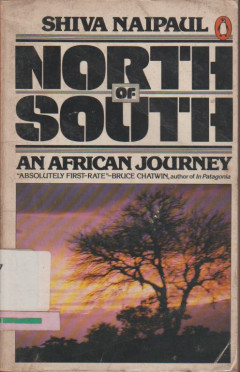
North of south: An African journey
North of South: An African Journey is a vivid travel narrative by Shiva Naipaul that chronicles his explorations across Kenya, Tanzania, and Zambia during the late 1970s. Through sharp, reflective, and often provocative observations, Naipaul examines the complex ethnic, political, and cultural landscapes of post-independence East Africa. The book captures the region’s tensions between tradit…
- Edisi
- -
- ISBN/ISSN
- 0-14-00.4894-4
- Deskripsi Fisik
- 349 pages : illustration ; 19,5 cm
- Judul Seri
- -
- No. Panggil
- 916.7 NAI n

Histoire des classes sociales dans l'Afrique de l'Ouest II le Senegal
Majhemout Diop's book, *Histoire des Classes Sociales dans l’Afrique de l’Ouest. II: Le Sénégal*, is an in-depth sociological study of the development of social classes in Senegal. Using a historical and empirical approach, Diop traces the changing structure of Senegalese society from pre-colonial, colonial, and modern times. The book examines elite formation, the dynamics of interclass r…
- Edisi
- -
- ISBN/ISSN
- 2-85802-625-1
- Deskripsi Fisik
- 277 pages; 22 cm
- Judul Seri
- -
- No. Panggil
- 966.3 DIO h
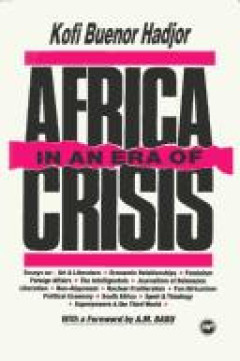
Africa in an era of crisis
Kofi Buenor Hadjor's Africa in an Era of Crisis examines the multidimensional crises facing Africa at the end of the 20th century, encompassing economic decline, political pressure, internal conflict, and development challenges. Hadjor outlines how global intervention, international economic policies, and domestic political dynamics contributed to the crisis situations in various African countr…
- Edisi
- -
- ISBN/ISSN
- 0-86543-150-7
- Deskripsi Fisik
- iii, 226 pages;23 cm
- Judul Seri
- -
- No. Panggil
- 960.328 HAD a
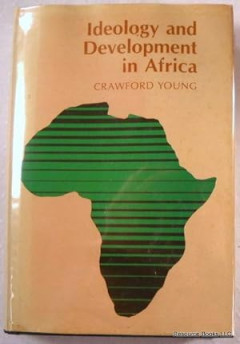
Ideology development in Africa
Crawford Young's Ideology and Development in Africa examines the relationship between political ideology and development processes in post-independence African countries. The book examines how various ideological strands—nationalism, African socialism, state capitalism, and single-party systems—influenced the economic and political policies of African countries. Young examines the successes…
- Edisi
- -
- ISBN/ISSN
- 0-300-03096-7
- Deskripsi Fisik
- xi, 376 pages; 21 cm
- Judul Seri
- -
- No. Panggil
- 960.32 YOU i

The Fate of Africa: From the hopes of freedom to the heart of despair — A H…
Martin Meredith's The Fate of Africa presents a comprehensive history of the fifty-year journey of African nations since gaining independence. The book depicts the early hopes of independence, the various political conflicts, economic challenges, civil wars, dictatorships, and the social dynamics that have shaped modern Africa. Using a journalistic approach and in-depth historical research, Mer…
- Edisi
- -
- ISBN/ISSN
- 1-58648-246-7
- Deskripsi Fisik
- vi, 752 pages : illustration ; 23,5 cm
- Judul Seri
- -
- No. Panggil
- 960.32 MER f

Et demain l'Afrique
This book presents Edem Kodjo’s visionary analysis of Africa’s future within its political, economic, and social context. Kodjo outlines the major challenges facing the continent and offers strategic perspectives for advancing Africa in the modern era. It serves as an essential reference in the study of African geopolitics, development, and international relations.
- Edisi
- -
- ISBN/ISSN
- 2-234-01791-2
- Deskripsi Fisik
- 366 pages; 24 cm
- Judul Seri
- -
- No. Panggil
- 960 KOD e
 Karya Umum
  Filsafat
  Agama
Agama  Ilmu-ilmu Sosial
  Bahasa
  Ilmu-ilmu Murni
  Ilmu-ilmu Terapan
  Kesenian, Hiburan, dan Olahraga
  Kesusastraan
  Geografi dan Sejarah