Ditapis dengan

The Arab Spring & The Gulf States: Time to embrace change
The most challenging question today for the citizens of any country in the Gulf region is whether it is heading in the right direction to become a durable, sustainable system, fully supported by its people and capable of being defended from internal and external threats. In The Author, a former minister in the Qatari government, analyses the domestically important areas of demography, security,…
- Edisi
- -
- ISBN/ISSN
- 9781781250730
- Deskripsi Fisik
- 136 pages ; 25 cm
- Judul Seri
- -
- No. Panggil
- 338.93536 Alt a

The Palestine-Israel conflict: A basic introduction
The Palestine-Israel conflict is the most notorious and ingrained conflict of the twentieth century. Yet the way it is reported in the media is often confusing, leading many to assume the hostilities stretch back to an ancient period. This is the first book to provide a clear, accessible, and annotated introduction that covers the full 2,000-year history of the region, from biblical times until…
- Edisi
- -
- ISBN/ISSN
- 978-0-7453-2734-1
- Deskripsi Fisik
- xxiv, 255 pages : illustrations (black and white) ; 20 cm
- Judul Seri
- -
- No. Panggil
- 953.1 Har p
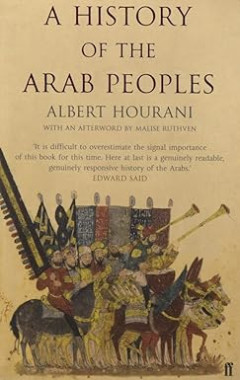
A history of the Arab peoples
A History of the Arab Peoples covers not only political history, but also culture, society, economy and thought, in a work of profound and lasting importance. A magnificent display of the late Albert Hourani's lifetime of scholarship, it was a best-seller on first publication in 1991. This new edition, updated by Malise Ruthven, includes such recent events as the on-going crisis in Iraq, the ci…
- Edisi
- -
- ISBN/ISSN
- 978-0-571-22664-1
- Deskripsi Fisik
- xviii, 566 pages : illustrations (black and white) ; 20 cm
- Judul Seri
- -
- No. Panggil
- 953 Hou h
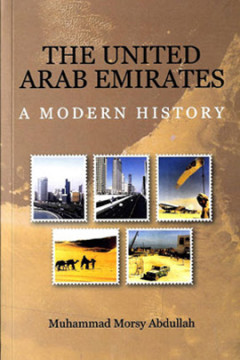
The United Arab Emirates: A modern history
The British withdrawal from the Gulf in 1971 brought to an end the British Imperial era in the history of the Trucial States and marked the birth of the United Arab Emirates. This book, first published in 1978, establishes the political, social, economic and cultural heritage of the UAE and explains the formative issues in the development of the new state. From 1892 to 1971 the history of t…
- Edisi
- -
- ISBN/ISSN
- 0-903696-37-1
- Deskripsi Fisik
- 365 pages : illustrations (black and white) ; 23 cm
- Judul Seri
- -
- No. Panggil
- 953.5 Abd u

The new Middle East
The late summer headlines of a landmark peace accord between the government of Israel and the Palestine Liberation Organization stunned and delighted citizens of conscience from every walk of life and from all over the world. Here, at last, were the first glimmerings of harmony for a region whose bloody, intractable conflicts between Arab and Jew had outlived hot and cold wars alike to become a…
- Edisi
- ed.1
- ISBN/ISSN
- 0-8050-3323-8
- Deskripsi Fisik
- x, 224 pages ; 24 cm
- Judul Seri
- -
- No. Panggil
- 956 Per n

The iron wall: Israel and the Arab world
When Zionist leaders formulated the "Iron Wall" strategy in the 1920s they hoped that Israel would be able to make peace with its Arab neighbours. This has been an elusive hope. In this text, Shlaim explores the reason for Israel's long reliance on military power in the absence of a settlement.
- Edisi
- -
- ISBN/ISSN
- 0-14-028870-8
- Deskripsi Fisik
- xxv, 670 pages : illustration ; 25 cm.
- Judul Seri
- -
- No. Panggil
- 956 Shl i
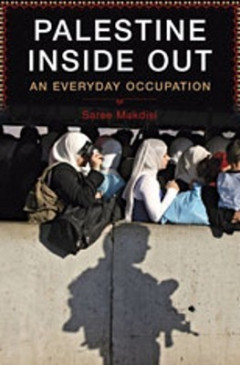
Palestine inside out: An everyday occupation
This book is not about suicide bombers. Tending one's fields, visiting a relative, going to the hospital: for ordinary Palestinians, such everyday activities require negotiating permits and passes, curfews and closures, "sterile roads" and "seam zones"―bureaucratic hurdles ultimately as deadly as outright military incursion. Not since the late Edward Said has there been such an articulate Ara…
- Edisi
- -
- ISBN/ISSN
- 978-0-393-06606-7
- Deskripsi Fisik
- xvi, 365 pages : illustrations (black and white) ; 24 cm
- Judul Seri
- -
- No. Panggil
- 956.95 Mak p
Saudi Arabia and the gulf war
Contents: 1. Brief history of the Kingdom of Saudi Arabia 2. Phenomenal progress at home and spreading godwill abroad 3. Historical perspective on Iraq and the gulf 4. The invasion of Kuwait 5. Occupation of Kuwait and atrocities of an aggressor 6. Coutdown to war in the gulf.
- Edisi
- -
- ISBN/ISSN
- 0-940485-01-X
- Deskripsi Fisik
- xi, 564 pages : illustrations (black and white) ; 23 cm
- Judul Seri
- -
- No. Panggil
- 956.7 Ras s
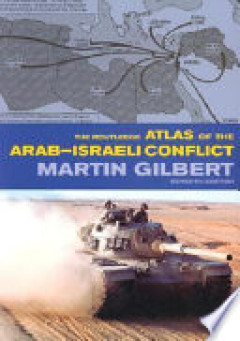
The routledge atlas of the Arab-Israeli conflict
The Routledge Atlas of the Arab-Israeli Conflict traces not only the tangled and bitter history of the Arab-Jewish struggle from the early twentieth century to the present, it also illustrates the move towards finding peace and the efforts to bring the horrors of the fighting to an end through negotiation and proposals for agreed boundaries. In 155 maps, the complete history of the conflict is …
- Edisi
- Ed. 7
- ISBN/ISSN
- 0-415-28117-2
- Deskripsi Fisik
- 156 pages : illustrations (black and white) ; 24 cm
- Judul Seri
- -
- No. Panggil
- 911.5694 Gil r
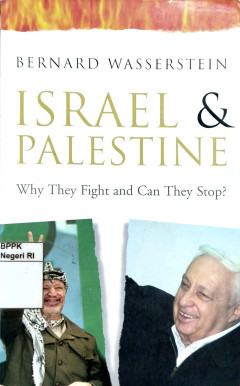
Israel & Palestine: Why they fight and can they stop?
This book presents a new interpretation of the historical and contemporary realities of the Israeli-Palestinian conflict. Bernard Wasserstein challenges the conventional view of the struggle as driven primarily by irrational, nationalist and religious ideologies. Instead he focuses on hitherto relatively neglected dimensions population, labour, environment and the social dynamics of political c…
- Edisi
- Cet. 1
- ISBN/ISSN
- 1-86197-534-1
- Deskripsi Fisik
- xii, 224 pages : illustrations (black and white) ; 21 cm
- Judul Seri
- -
- No. Panggil
- 953.1 Was i
 Karya Umum
  Filsafat
  Agama
Agama  Ilmu-ilmu Sosial
  Bahasa
  Ilmu-ilmu Murni
  Ilmu-ilmu Terapan
  Kesenian, Hiburan, dan Olahraga
  Kesusastraan
  Geografi dan Sejarah