Ditapis dengan
Ataturk
Atatürk, published by the Turkish Historical Society (Türk Tarih Kurumu), presents a detailed and authoritative account of the life and legacy of Mustafa Kemal Atatürk, the founder of the modern Turkish Republic. The book explores Atatürk’s early career as a military officer, his decisive leadership in the Turkish War of Independence, and his role in abolishing the Ottoman Sultanate to es…
- Edisi
- -
- ISBN/ISSN
- -
- Deskripsi Fisik
- 232 pages : Ilustration ; 23,8 cm
- Judul Seri
- -
- No. Panggil
- 956.1024 TIM a

The Japan reader 2: Postwar Japan: 1945 to the present
A comprehensive collection of essays, documents, and analyses covering Japan’s postwar history. The book examines Japan’s political, economic, and social reconstruction after World War II, including democratization, economic growth, and cultural transformation. Livingston highlights key challenges and achievements, such as the development of modern institutions, international relations, and…
- Edisi
- -
- ISBN/ISSN
- 0-14-02-1968-4
- Deskripsi Fisik
- xxi, 600 pages ; 19,5 cm
- Judul Seri
- -
- No. Panggil
- 952 LIV j
Modern Turkey
Modern Turkey by Geoffrey Lewis provides a concise and insightful overview of Turkey’s transformation from the final years of the Ottoman Empire to the establishment and development of the modern Turkish Republic. The book examines the profound political, social, and cultural reforms initiated under Mustafa Kemal Atatürk, as well as the continued evolution of Turkish society throughout the 2…
- Edisi
- -
- ISBN/ISSN
- 0-275-33400-7
- Deskripsi Fisik
- 241 pages : Ilustrations ; 22,3 cm
- Judul Seri
- -
- No. Panggil
- 956.1 LEW m

Singapore: Struggle for success
Singapore: Struggle for Success explores Singapore’s rapid transformation from a small colonial trading post into an independent, economically vibrant nation. Drysdale highlights the political challenges, ethnic complexities, and strategic decisions that shaped the country’s path to stability. The book examines how strong leadership, social cohesion, and economic planning contributed to Sin…
- Edisi
- -
- ISBN/ISSN
- 9971-65-081-9
- Deskripsi Fisik
- 506 pages : illustrations ; 23,5 cm
- Judul Seri
- -
- No. Panggil
- 959.52 DRY s

The Pebble in the shoe: The Diplomatic struggle for East Timor
The Pebble in the Shoe: The Diplomatic Struggle for East Timor presents former Indonesian Foreign Minister Ali Alatas’s detailed account of the diplomatic challenges surrounding the East Timor issue. Written from the perspective of a key negotiator, the book explores the complex historical, political, and international dimensions that shaped Indonesia’s policy and interactions with the Unit…
- Edisi
- -
- ISBN/ISSN
- 979-3851-09-0
- Deskripsi Fisik
- xx, 330 pages : Ilustration ; 23,5 cm
- Judul Seri
- -
- No. Panggil
- 959.85 ALI p

Merdeka!: British rule and the struggle for independence in Malaya, 1945-1957
Merdeka! describes the explosive situation in Malaya between the end of the Second World War until the termination of direct British rule in 1957. It discusses how the leading contenders for power and influence manoeuvered for pre-eminence in the political arena. The author suggests that the political reforms of the 1950s and the British government’s support of and final transfer of power to …
- Edisi
- -
- ISBN/ISSN
- -
- Deskripsi Fisik
- xii, 220 pages ; 23 cm
- Judul Seri
- -
- No. Panggil
- 959.5 HOO m

Early Singapore 1300s-1819: Evindece in Maps, Text and Artefacts
This volume brings together nine essays that explore Singapore’s pre-colonial history through a rich combination of maps, historical texts, and archaeological artefacts. It argues that the island, known as Temasek, was already an important regional port and trading hub centuries before Stamford Raffles arrived in 1819. Through excavation findings such as ceramics, coins, and glassware the aut…
- Edisi
- -
- ISBN/ISSN
- 981-05-0283-4
- Deskripsi Fisik
- 148 pages : iilustrations ; 24 cm
- Judul Seri
- -
- No. Panggil
- 959.252 MIK e

So wrong for so long: How the press, the pundits and the president, failed on…
In early 2003, Greg Mitchell was one of the few mainstream journalists to seriously question the stated reasons for invading Iraq. In the years since, he has repeatedly challenged the media to probe its conduct and misconduct in covering the war. Now, he traces the conflict -- from the "run-up" to the "surge" and beyond -- and the many media, and political failures, in this updated edition. In…
- Edisi
- -
- ISBN/ISSN
- 1-4027-5657-7
- Deskripsi Fisik
- xxi, 298 pages ; 23 cm
- Judul Seri
- -
- No. Panggil
- 956.7 GRE s
The Iraq war reader: History, documents, opinions
A compilation of nearly eighty articles, essays, and other documents provides a balanced overview of the war in Iraq, covering such topics as the history of the region, the causes of the conflict, and the opinions of individuals on both sides of the debate, featuring contributions by George W. Bush, Barbara Ehrenreich, Henry Kissinger, Noam Chomsky, Bill Moyers, and others. Original. 50,000 fir…
- Edisi
- -
- ISBN/ISSN
- 0-7432-5347-7
- Deskripsi Fisik
- ix, 715 pages ; 23,5 cm
- Judul Seri
- -
- No. Panggil
- 956.7 SIF t
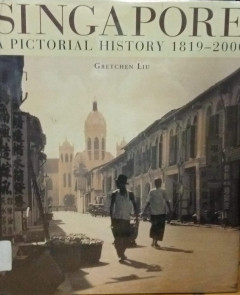
Singapore : A Pictorial history 1819-2000
This richly illustrated coffee-table book chronicles Singapore’s dramatic transformation over nearly two centuries from a humble coastal village in 1819 to a thriving modern city-state by the year 2000. Written by Gretchen Liu, the narrative is anchored by more than 1,200 rare photographs, paintings, lithographs, and engravings, many drawn from archives in Singapore and abroad. The book is o…
- Edisi
- -
- ISBN/ISSN
- 981-3018-81-X
- Deskripsi Fisik
- 400 pages : illustrations ; 29.5 cm
- Judul Seri
- -
- No. Panggil
- 959.52 LIU s
 Karya Umum
  Filsafat
  Agama
Agama  Ilmu-ilmu Sosial
  Bahasa
  Ilmu-ilmu Murni
  Ilmu-ilmu Terapan
  Kesenian, Hiburan, dan Olahraga
  Kesusastraan
  Geografi dan Sejarah