Ditapis dengan
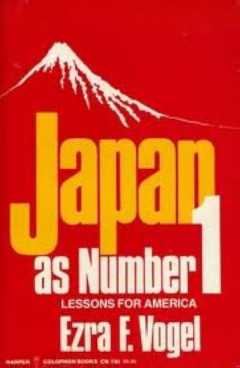
Japan as number one: Lessons for America
Analysis of Japan’s post–World War II transformation into one of the world’s most successful and stable industrial societies. Vogel examines the political, economic, social, and cultural factors that enabled Japan to achieve rapid growth, high educational standards, effective bureaucracy, strong social cohesion, and low crime rates. Rather than presenting Japan as a perfect model, Vogel h…
- Edisi
- -
- ISBN/ISSN
- 0-06-090791-6
- Deskripsi Fisik
- xi, 272 pages ; 20 cm
- Judul Seri
- -
- No. Panggil
- 330.952 VOG j
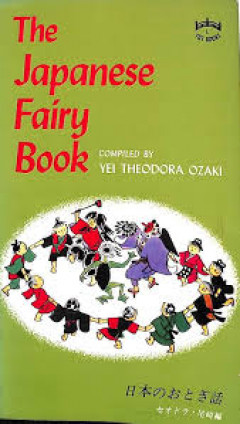
The Japanese fairy book
A curated collection of traditional Japanese fairy tales adapted for Western readers in the early 20th century. Drawing from Japanese folklore, classical storytelling traditions, and oral narratives, Ozaki retells these stories with clarity while preserving their cultural essence and moral themes. The collection features a wide range of tales, including stories of magical animals, brave heroes,…
- Edisi
- -
- ISBN/ISSN
- 0-8048-0885-6
- Deskripsi Fisik
- xv, 296 pages : illustrations ; 18 cm
- Judul Seri
- -
- No. Panggil
- 398.252 OZA j
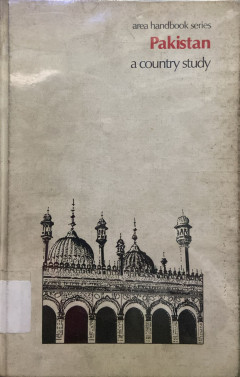
Pakistan: A Country study
Richard F. Nyrop's Pakistan: A Country Study (1983) is a comprehensive study of the geographic, social, political, economic, military, and cultural conditions of Pakistan in the early 1980s. The book is structured as an analytical report that provides a comprehensive overview of Pakistan's historical development from independence to the contemporary era. It examines the diverse social structur…
- Edisi
- -
- ISBN/ISSN
- -
- Deskripsi Fisik
- xvi, 453 pages: illustration; 24 cm
- Judul Seri
- -
- No. Panggil
- 954.910 NYR p
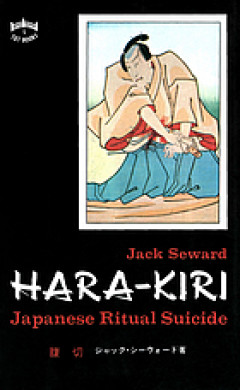
Hara-kiri: Japanese ritual suicide
To the average westerner, the word hara-kiri conjures up an image of excruciating, self-inflicted pain; of a deep, fatal incision. To the Japanese, this kind of suicide embodies the best qualities of courage, honor, and discipline. Through extensive research, author Jack Seward brings to the English-speaking public a dissertation on the subject that is thoroughly enlightening. Fluent in speakin…
- Edisi
- -
- ISBN/ISSN
- 0-8048-0231-9
- Deskripsi Fisik
- 116 pages : illustrations ; 18 cm
- Judul Seri
- -
- No. Panggil
- 364.152252 SEW h

Burma's struggle against British imperialism (1885-1895)
The book Burma’s Struggle Against British Imperialism, 1885–1895 by Ni Ni Myint presents an in-depth analysis of the early period of resistance to British colonialism in Burma after the annexation of Upper Burma in 1885. The author traces the background of the fall of the Konbaung Dynasty and the consequences of political restructuring, including armed resistance in various regions such as …
- Edisi
- -
- ISBN/ISSN
- -
- Deskripsi Fisik
- xv, 243 pages : illustrations ; 25 cm
- Judul Seri
- -
- No. Panggil
- 959.103 MYI b
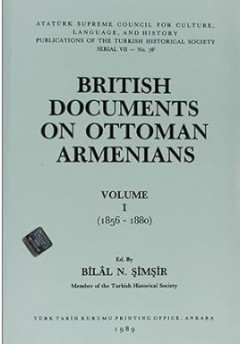
British documents on Ottoman Armenians
British Documents on Ottoman Armenians, Volume I: 1856–1880 by Bilal N. Şimşir presents a comprehensive collection of official British archival documents related to the situation of Armenians within the Ottoman Empire during the mid-19th century. The volume compiles diplomatic correspondence, consular reports, policy analyses, and communications that illuminate Britain’s perspective on th…
- Edisi
- -
- ISBN/ISSN
- -
- Deskripsi Fisik
- lxxiii, 767 pages : Ilustrations ; 24 cm
- Judul Seri
- Volume I
- No. Panggil
- 947 SIM b
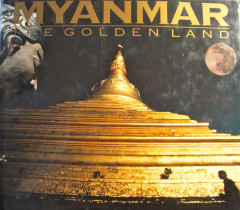
Myanmar : The Golden land
This book provides a comprehensive overview of Myanmar, covering its geography, social diversity, and cultural traditions that shape the country's identity. It begins with an introduction to Myanmar's history and general characteristics, followed by a discussion of its landscape, social life, and preserved traditions. The main section of the book explores important regions such as Mandalay and …
- Edisi
- -
- ISBN/ISSN
- -
- Deskripsi Fisik
- 114 pages : ilustrations ; 25 cm
- Judul Seri
- -
- No. Panggil
- 915.591 OHN m
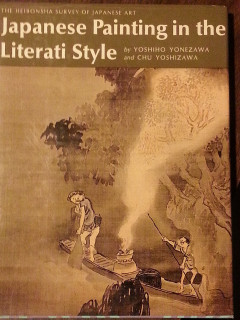
Japanese painting in the literati style
The development and characteristics of the literati (bunjinga) painting tradition in Japan. The book examines its origins, philosophical foundations, and aesthetic principles, emphasizing the influence of Chinese literati art on Japanese painters. Yonezawa discusses notable artists, techniques, and thematic elements such as landscapes, calligraphy, and poetry integration. Through detailed analy…
- Edisi
- -
- ISBN/ISSN
- 0-8348-1019-0
- Deskripsi Fisik
- 190 pages : illustrations ; 23,5 cm
- Judul Seri
- -
- No. Panggil
- 759.952 YON j
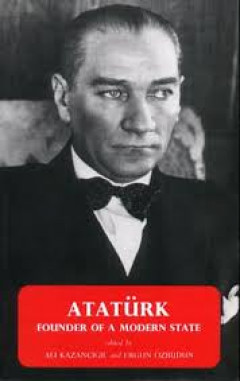
Ataturk: Founder of a modern state
Atatürk: Founder of a Modern State by Ali Kazancigil offers an analytical and insightful exploration of the leadership, political philosophy, and transformative vision of Mustafa Kemal Atatürk. The book examines Atatürk’s pivotal role in leading the Turkish War of Independence and dismantling the remnants of the Ottoman Empire to establish a secular, republican, and modern nation-state. Ka…
- Edisi
- -
- ISBN/ISSN
- 0-905838-67-x
- Deskripsi Fisik
- vi, 243 pages ; 22,3 cm
- Judul Seri
- -
- No. Panggil
- 923.2 KAZ a
The Making of Burma
This book discusses the history of Burma before and during the colonization process, beginning with the arrival of early explorers, the first British traders, and the competition for power on the eastern border of India. The discussion continues with the first and second Anglo-Burmese wars, the development of trade, and Burma's relations with Pegu, Ava, and China. The next section outlines the…
- Edisi
- -
- ISBN/ISSN
- -
- Deskripsi Fisik
- v, 594 pages : 21 cm
- Judul Seri
- -
- No. Panggil
- 959.1 WOO m
 Karya Umum
  Filsafat
  Agama
Agama  Ilmu-ilmu Sosial
  Bahasa
  Ilmu-ilmu Murni
  Ilmu-ilmu Terapan
  Kesenian, Hiburan, dan Olahraga
  Kesusastraan
  Geografi dan Sejarah