Ditapis dengan
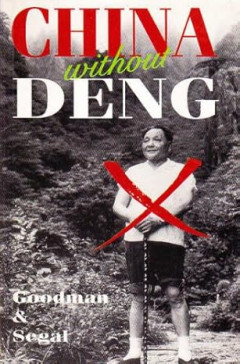
China without Deng
Contents: 1. Introduction 2. Deng and the reform era 3. Foreign policy without Deng
- Edisi
- -
- ISBN/ISSN
- 1-875892-03-6
- Deskripsi Fisik
- 106 pages : illustrations (black and white) ; 20 cm
- Judul Seri
- -
- No. Panggil
- 923.2 Goo c

India and ASEAN: The politics of India look east policy
Daftar isi: 1. Introduction 2. The geopolitical interconnection between 3. ASEAN-India relations during the cold war 4. Regional perceptions of India 5. ASEAN in India's foreign policy 6. In search of a role : India and the ASEAN regional forum 7. India's confrontation with Chinese interests 8. China factor in India's ties with South-East Asia.
- Edisi
- -
- ISBN/ISSN
- 81-7304-330-2
- Deskripsi Fisik
- 248 pages ; 22 cm
- Judul Seri
- -
- No. Panggil
- 954 Gra i

Red China blues: My long March from Mao to now
Red China Blues is Wong's startling and ironic memoir of her rocky six-year romance with Maoism that began to sour as she became aware of the harsh realities of Chinese communism and led to her eventual repatriation to the West. Returning to China in the late eighties as a journalist, she covered both the brutal Tiananmen Square crackdown and the tumultuous era of capitalist reforms under Deng …
- Edisi
- -
- ISBN/ISSN
- 0-553-50545-9
- Deskripsi Fisik
- x, 405 pages : illustrations (black and white) ; 20 cm
- Judul Seri
- -
- No. Panggil
- 920 Won r
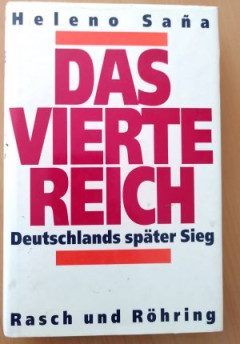
Das vierte Reich: Deutschlands spater sieg
The contents of this book: 1. The moment of truth 2. The performance machine 3. The victors and the vanquished 4. The peaceful revenge, etc.
- Edisi
- -
- ISBN/ISSN
- 3-89136-304-4
- Deskripsi Fisik
- 288 pages ; 22 cm
- Judul Seri
- -
- No. Panggil
- 943 San d

What next? : Surviving the twenty-first century
What Next? tackles the big questions about our global condition and our collective future with a verve and authority no other current commentator or political figure, on either side of the Atlantic or the Channel, could match. Energy, food, water, international crime, weapons proliferation, drug trafficking, climate change, epidemic disease, migration - the challenges facing our world are thems…
- Edisi
- -
- ISBN/ISSN
- 9780713998566
- Deskripsi Fisik
- xii, 490 pages : illustrations. ; 24 cm
- Judul Seri
- -
- No. Panggil
- 909.83 Pat w

Descent into chaos: The United States and the failure of nation building in P…
Ahmed Rashid is the voice of reason amid the chaos of Central Asia today. His unique knowledge of this complex, war-torn region gives him a panoramic vision and grasp of nuance that no Western writer can emulate. In Descent Into Chaos, Rashid reviews the regional conditions since 9/11 and the catastrophic aftermath of America’s failed war on terror. The underlying theme is clear, devastating …
- Edisi
- -
- ISBN/ISSN
- 978-0-670-01970-0
- Deskripsi Fisik
- lviii, 484 pages ; 24 cm
- Judul Seri
- -
- No. Panggil
- 355.02 Ras d
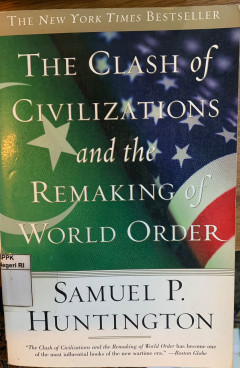
The clash of civilizations and the remaking of world order
Spurred by modernization, global politics is being reconfigured along cultural lines. Peoples and countries with similar cultures are coming together. Peoples and countries with different cultures are coming apart. Alignments defined by ideology and superpower relations are giving way to alignments defined by culture and civilization. Political bound- aries are increasingly redrawn to coincide …
- Edisi
- -
- ISBN/ISSN
- 0-684-84441-9
- Deskripsi Fisik
- 367 pages ; 25 cm
- Judul Seri
- -
- No. Panggil
- 909.829 Hun c
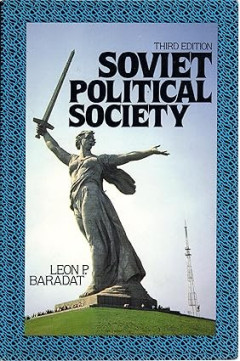
Soviet political society
This revised edition examines the Soviet political system from the perspective of geography, history, cultural factors and social problems as well as from the traditional aspects of the Communist Party and government. Contents: 1. Geography 2. Russian history 3. Soviet history 4. The communist and other parties 5. Soviet governmet, etc.
- Edisi
- ed.3
- ISBN/ISSN
- 0-13-824962-8
- Deskripsi Fisik
- xvi, 461 pages : illustrations (black and white) ; 23 cm
- Judul Seri
- -
- No. Panggil
- 947 Bar s
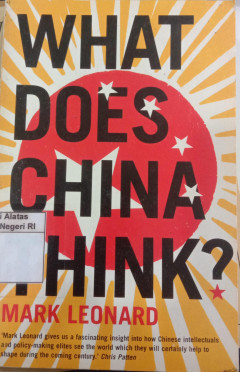
What does China think ?
Although dozens of books have been published about China's rise, most authors treat it as an economic, political or military bloc rather than seeing it as a powerhouse of ideas that could influence our world. They have little to say about China's intellectual debates, or the ideological competition they might pose to the European and American world-views.
- Edisi
- -
- ISBN/ISSN
- 978-0-00-723068-6
- Deskripsi Fisik
- 164 pages : illustration (black and white) ; 20 cm
- Judul Seri
- -
- No. Panggil
- 951 Leo w
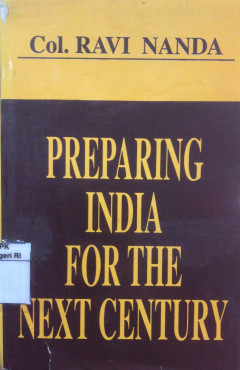
Preparing India for the next century
The contents of this book: 1. Demography and Development 2. Education 3. Political System and Constitutions 4. Governance 5. Economy
- Edisi
- -
- ISBN/ISSN
- 81-7095-063-5
- Deskripsi Fisik
- xvii, 380 pages ; 22 cm
- Judul Seri
- -
- No. Panggil
- 954 Nan p
 Karya Umum
  Filsafat
  Agama
Agama  Ilmu-ilmu Sosial
  Bahasa
  Ilmu-ilmu Murni
  Ilmu-ilmu Terapan
  Kesenian, Hiburan, dan Olahraga
  Kesusastraan
  Geografi dan Sejarah