Ditapis dengan
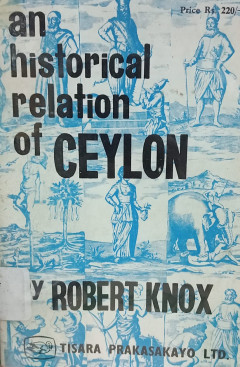
An Historical relation of Ceylon
An Historical Relation of Ceylon presents Robert Knox’s detailed account of his twenty-year captivity in the Kingdom of Kandy in the 17th century. The book describes the island’s geography, society, customs, economy, and political structure based on Knox’s direct observations. His narrative offers valuable insights into daily life in Ceylon and interactions between locals and foreign visi…
- Edisi
- -
- ISBN/ISSN
- -
- Deskripsi Fisik
- 409 pages : 21 cm
- Judul Seri
- -
- No. Panggil
- 954.9301 ROB h
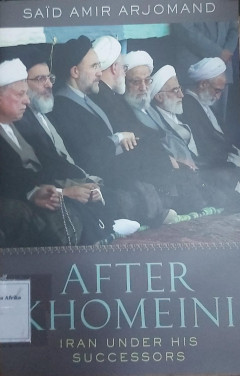
After Khomeini: Iran under his successors
This book provides a comprehensive and insightful analysis of the political and social trajectory of Iran following the death of Ayatollah Ruhollah Khomeini, the founder of the Islamic Republic, in 1989. Saïd Amir Arjomand argues that Khomeini’s passing did not signal the end of the Islamic Revolution, but rather marked the beginning of a prolonged struggle among the "children of the revolut…
- Edisi
- -
- ISBN/ISSN
- 978-0-19-989194-8
- Deskripsi Fisik
- ix, 268 pages ; 23 cm
- Judul Seri
- -
- No. Panggil
- 320 ARJ a

Ceylon: An Account of the island physical, historical and topographical
Ceylon: An Account of the Island, Physical, Historical and Topographical by James Emerson Tennent presents a comprehensive overview of Sri Lanka’s natural landscape, including its climate, flora, and fauna. The book explores the island’s rich historical development, tracing influences from ancient kingdoms to colonial powers. It also provides detailed descriptions of regional geography, cul…
- Edisi
- -
- ISBN/ISSN
- -
- Deskripsi Fisik
- v, 543 pages ; 21,5 cm
- Judul Seri
- -
- No. Panggil
- 915.5493 TEN c

The Japanese discovery of America: A Brief history with documents
This book focuses on the Japanese encounter with the Americans in the mid-nineteenth century, an episode that took place rather late in the "age of discovery," as the last "unknown" lands of Africa and Asia were being probed by Western merchants, explorers, and travelers. Most of the documents assembled here -- poems and political pamphlets, official memorials and private journals, newspaper re…
- Edisi
- -
- ISBN/ISSN
- 0-312-11681-0
- Deskripsi Fisik
- xii, 226 pages ; 21 cm
- Judul Seri
- -
- No. Panggil
- 303.482 DUU j

Social change and the individual: Japan before and after defeat in world war II
A distinguished Japanese scholar counterbalances the current preoccupation among sociologists with childhood socialization by exploring the changes in values and attitudes among adults in Japan before and after World War II. Originally published in 1970. The Princeton Legacy Library uses the latest print-on-demand technology to again make available previously out-of-print books from the disting…
- Edisi
- -
- ISBN/ISSN
- 0-691-09347-4
- Deskripsi Fisik
- 441 pages ; 24 cm
- Judul Seri
- -
- No. Panggil
- 303.452 TSU s
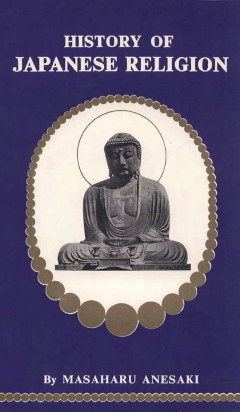
History of Japanese religion
An overview of the development of religious traditions in Japan from ancient to modern times. The book outlines the evolution of Shinto, Buddhism, Confucian influences, and various syncretic practices, showing how these traditions interacted with major historical and cultural changes. Anesaki highlights key periods of religious transformation and explains how religion has influenced Japanese so…
- Edisi
- -
- ISBN/ISSN
- 0-8048-0248-3
- Deskripsi Fisik
- xxi, 423 pages : illustrations ; 23,5 cm
- Judul Seri
- -
- No. Panggil
- 294.30952 ANE h

Heart of a lion
Heart of a Lion presents an inspiring collection of real-life stories highlighting courage, resilience, and compassion in the face of adversity. The book showcases how individuals and communities supported by Mercy Relief rise above disaster and hardship with remarkable strength. Through vivid accounts, it reveals the transformative impact of humanitarian aid on restoring hope and dignity. This…
- Edisi
- -
- ISBN/ISSN
- 978-981-05-7431-4
- Deskripsi Fisik
- 272 pages : illustrations ; 25,5 cm
- Judul Seri
- -
- No. Panggil
- 900.5957 RAH h
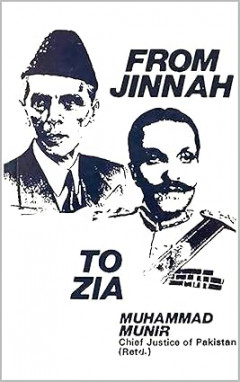
From jinnah to zia
This book concerned with a part of that history, namely, the ideological and geo¬graphical changes in Pakistan. Its aim is to show how from the Secularism of Quaid-i-Azam, Muhammad Ali Jinnah, the State has drafted into the hands of an orthodox element which claims that they will make Pakistan a totally Islamic State, as it was in the days of Nizam-i-Mustafa. There can be no doubt that Jinnah…
- Edisi
- Second Edition
- ISBN/ISSN
- -
- Deskripsi Fisik
- xx, 183 pages; 20 cm
- Judul Seri
- -
- No. Panggil
- 954.9205 MUN f

Policymaking in contemporary Japan
How political institutions, bureaucratic structures, and interest groups interact to shape public policy in modern Japan. Pempel analyzes the roles of key actors—such as government ministries, the Liberal Democratic Party (LDP), business organizations, and advisory councils—in the formulation and implementation of policy. The book highlights Japan’s distinctive consensus-oriented approach…
- Edisi
- -
- ISBN/ISSN
- 0-8014-1048-7
- Deskripsi Fisik
- 345 pages ; 22 cm
- Judul Seri
- -
- No. Panggil
- 354.52 PEM p

Japan as number one: Lessons for America
Analysis of Japan’s post–World War II transformation into one of the world’s most successful and stable industrial societies. Vogel examines the political, economic, social, and cultural factors that enabled Japan to achieve rapid growth, high educational standards, effective bureaucracy, strong social cohesion, and low crime rates. Rather than presenting Japan as a perfect model, Vogel h…
- Edisi
- -
- ISBN/ISSN
- 4-8053-0470-7
- Deskripsi Fisik
- xi, 272 pages ; 18 cm
- Judul Seri
- -
- No. Panggil
- 330.952 VOG j
 Karya Umum
  Filsafat
  Agama
Agama  Ilmu-ilmu Sosial
  Bahasa
  Ilmu-ilmu Murni
  Ilmu-ilmu Terapan
  Kesenian, Hiburan, dan Olahraga
  Kesusastraan
  Geografi dan Sejarah