Ditapis dengan
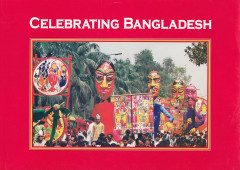
Celebrating Bangladesh
This book presents a vibrant exploration of Bangladesh's rich culture, national identity, and heritage. Through a combination of essays, photographs, and descriptions of major cultural events and festivals, it explores the traditions, values, and spirit that shape the nation's identity. This volume is aimed at both international readers and the Bangladeshi diaspora, serving as a public diplo…
- Edisi
- -
- ISBN/ISSN
- -
- Deskripsi Fisik
- 89 pages : illustrations ; 21 cm
- Judul Seri
- -
- No. Panggil
- 954.92 TAS c
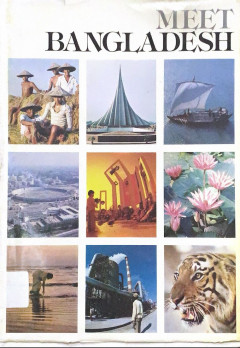
Meet Bangladesh
Meet Bangladesh, 2nd edition, directed by Lt. Col. Shah Salahuddin and published by the Department of Films & Publications, Ministry of Information, Dhaka, is a picture book of approximately 200 pages that serves as a comprehensive introduction to the country. With a combination of vivid photographs, descriptive text, and maps, the book takes readers on a journey through Bangladesh's diverse la…
- Edisi
- 2
- ISBN/ISSN
- -
- Deskripsi Fisik
- 200 pages : illustrations ; 30,5 cm
- Judul Seri
- -
- No. Panggil
- 954.92 SAL m
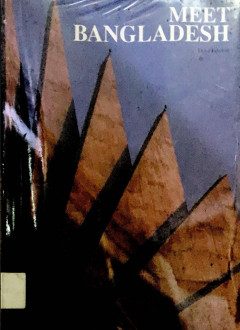
Meet Bangladesh
Meet Bangladesh (3rd edition), edited by Kalam Mahmood, is an illustrated guide published by the Department of Film & Publication, Ministry of Information, Bangladesh. At 200 pages, the book provides a rich visual introduction to Bangladesh's history, culture, landscape, and national identity. Through color photographs, maps, and explanatory text, readers are taken through major cities, rural a…
- Edisi
- 3
- ISBN/ISSN
- -
- Deskripsi Fisik
- 200 pages : illustrations ; 30,5 cm
- Judul Seri
- -
- No. Panggil
- 954.92 MAH m

Bangladesh: a new nation in an old setting
Bangladesh: A New Nation in an Old Setting by Craig Baxter provides a comprehensive overview of Bangladesh's history, identity, and development from pre-colonial to post-independence times. Baxter chronicles Bengal's journey from Hindu and Buddhist times, through Muslim rule and British colonial rule, to its entry into Pakistan and finally to its independence as Bangladesh. He explores the soci…
- Edisi
- -
- ISBN/ISSN
- 0-86531-630-9
- Deskripsi Fisik
- xi, 130 pages ; 23,5 cm
- Judul Seri
- -
- No. Panggil
- 954.92 BAX b
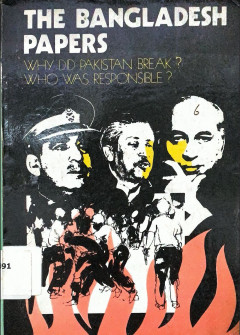
The Bangladesh papers
The Bangladesh Papers is a collection of recorded statements, speeches, and important political declarations by key leaders from 1969–1971, including Zulfikar Ali Bhutto, Sheikh Mujibur Rahman, and General A.M. Yahya Khan. Published by Vanguard Books Ltd., this book collects their public speeches and political pronouncements during the critical years leading up to the partition of Pakistan an…
- Edisi
- -
- ISBN/ISSN
- -
- Deskripsi Fisik
- xii, 306 pages ; 22,5 cm
- Judul Seri
- -
- No. Panggil
- 338.95491 BHU b
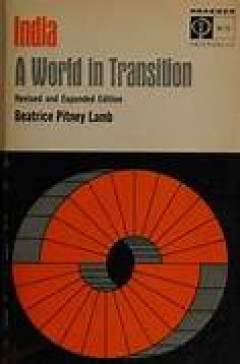
India: A World in transition
India: A World in Transition by Beatrice Pitney Lamb is a comprehensive analysis of contemporary India (at the time of publication), examining how India's traditions, politics, and social structures are undergoing profound change. Lamb presents a comprehensive overview of India's long history while highlighting post-independence challenges such as social reform, education, language, and economi…
- Edisi
- 3
- ISBN/ISSN
- -
- Deskripsi Fisik
- xii, 428 pages : illustrations ; 20,2 cm
- Judul Seri
- -
- No. Panggil
- 954 LAM i
Changing pattern of Indian villages
G. R. Madan's Changing Patterns of Indian Villages is a profound sociological and demographic study of the transformation of rural society in India during the post-independence period through the mid-20th century. Madan explores how old social structures—such as caste, rural family structure, and agrarian relations—evolved and adapted under the pressures of modernization, land reform, and l…
- Edisi
- -
- ISBN/ISSN
- -
- Deskripsi Fisik
- vii, 508 pages ; 18,5 cm
- Judul Seri
- -
- No. Panggil
- 954.3 MAD c
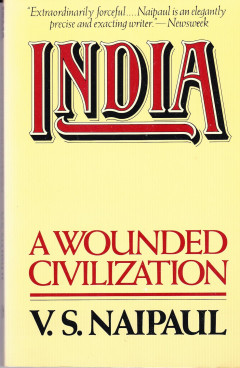
India: A Wounded civilization
V. S. Naipaul's India: A Wounded Civilization is both a personal reflection and a trenchant analysis of India, written after his visit to the country in 1975 during the Emergency. Naipaul examines India's complex history, religion, and social structure, arguing that centuries of foreign rule have left deep psychological and cultural scars. He depicts a nation grappling with poverty, disillusion…
- Edisi
- -
- ISBN/ISSN
- 0-394-72463-1
- Deskripsi Fisik
- xi, 191 pages ; 20 cm
- Judul Seri
- -
- No. Panggil
- 954 NAI i
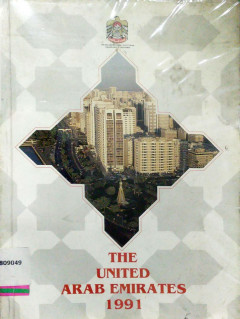
The United Arab Emirates 1991
The United Arab Emirates (1991), published by the Ministry of Information and Culture, provides a comprehensive overview of the nation’s rapid transformation during the late 20th century. The book highlights the UAE’s political formation, economic expansion, and social development following unification in 1971. It documents the country’s achievements in modernization, including advancemen…
- Edisi
- -
- ISBN/ISSN
- -
- Deskripsi Fisik
- 188 pages : Ilustrations ; 28,5 cm
- Judul Seri
- -
- No. Panggil
- 953.809049 TIM u

Fifty years of light and dark: The Hirohito era
A panoramic chronicle of the reign of Emperor Hirohito (Shōwa period), blending historical narrative with photo-essay elements. Edited by Hiroshi Fujimoto and published by the Mainichi Newspapers, the book portrays Japan’s traumatic wartime experience — including WWII, defeat, and reconstruction — as well as its astonishing postwar economic revival.
- Edisi
- -
- ISBN/ISSN
- -
- Deskripsi Fisik
- 464 pages : illustrations ; 23,5 cm
- Judul Seri
- -
- No. Panggil
- 923.153 FUJ g
 Karya Umum
  Filsafat
  Agama
Agama  Ilmu-ilmu Sosial
  Bahasa
  Ilmu-ilmu Murni
  Ilmu-ilmu Terapan
  Kesenian, Hiburan, dan Olahraga
  Kesusastraan
  Geografi dan Sejarah