Ditapis dengan
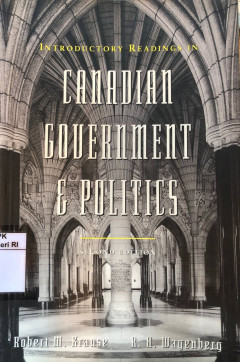
Introductory readings in Canadian government & politics
This collection of original essay is a comprehensive introduction to the study of Canadian government and politics. In addition to including those topic most frequently covered in a introduction survey course-the constitution, federal-provincial relations, the prime minister and cabinet, parties, bureaucracy, Canada's regions-the book also contains the chapters on foreign policy, local governme…
- Edisi
- Second Edition
- ISBN/ISSN
- 077305405
- Deskripsi Fisik
- viii, 471 pages : index ; 23 cm
- Judul Seri
- -
- No. Panggil
- 320.971 Kra i
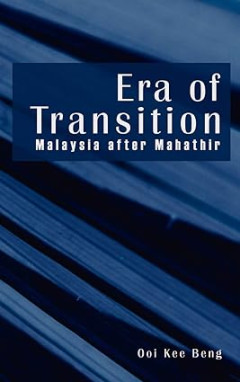
Era of transition: Malaysia after Mahathir
This is a collection of opinion pieces written by Ooi Kee Beng and published in the mass media after Abdullah Badawi became Malaysia's Prime Minister in October 2004. The articles analyse the many difficult aspects of leadership that have been facing Abdullah Badawi over the last two years. The book discusses the country's underlying problems, the dilemma involved in succeeding Mahathir Mohamad…
- Edisi
- First Published
- ISBN/ISSN
- 981-230-379-0
- Deskripsi Fisik
- xxiii, 183 pages : index ; 21 cm
- Judul Seri
- -
- No. Panggil
- 320.9595 Ben e
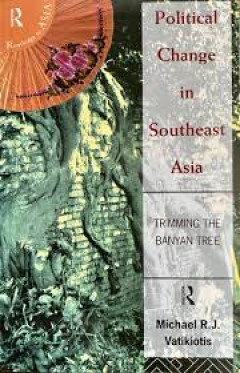
Political change in Southeast Asia: Trimming the banyan tree
Southeast Asia was one of the poorest regions in the world; it is now one of the most desirable areas for foreign investment. An economic miracle? Perhaps. Development in Southeast Asia, however, is not fuelling political change quite as quickly as might be predicted from the experience of industrialisation in the West. Progress towards participatory democracy has been slow. Is Southeast Asia s…
- Edisi
- First Published
- ISBN/ISSN
- 0-415-13484-6
- Deskripsi Fisik
- xiv, 230 pages : index ; 22 cm
- Judul Seri
- -
- No. Panggil
- 320.959 Vat p
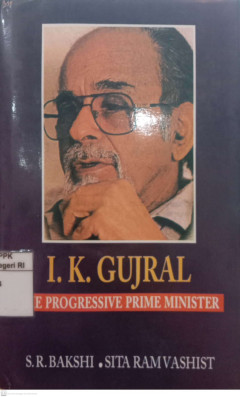
I. K. Gujral: The progressive prime minister
This book is a narrative of the long struggle, Gujral continued from his pre-independence period of life to the post- independence period and his ultimately capturing the highest seat of government at the age of 77.
- Edisi
- first published
- ISBN/ISSN
- 81-7391-199-1
- Deskripsi Fisik
- 280 pages : index ; 24 cm
- Judul Seri
- -
- No. Panggil
- 321.80430954 Bak i
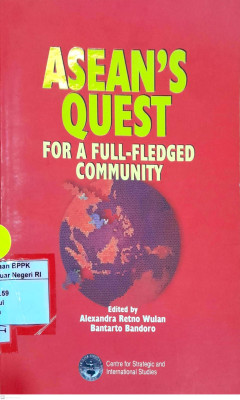
ASEAN's quest for a full-fledged community
In 2003 ASEAN member states decided to transform ASEAN into security community. This is perhaps the most important step taken by ASEAN in the post economic and financial crises which will bring ASEAN into a new nature of internal and external interactions. At the Kuala Lumpur Summit in 2005, the member states agreed to enact a charter providing institutional framework for solving various proble…
- Edisi
- -
- ISBN/ISSN
- 978-979-1295-04-8
- Deskripsi Fisik
- v, 116 pages : illustrations ; 24 cm
- Judul Seri
- -
- No. Panggil
- 327.0959 Wul a

The politics of Asean: An introduction to Southeast Asian regionalism
Solidum (retired, political science, U. of the Philippines) examines the formation, functions, and politics of regional organization, the Association of Southeast Asian Nations. Stand-alone chapters address the beginnings of ASEAN, the formation of its principles, functional cooperation in a variety of social and political spheres, economic cooperation, external relations, and security issues.
- Edisi
- -
- ISBN/ISSN
- 981-210-249-3
- Deskripsi Fisik
- viii, 263 pages : bibl.; 248-251 : index ; 23 cm
- Judul Seri
- -
- No. Panggil
- 320.959 Sol p

The second world: Empires and influence in the new global order
This global tour of the 21st century world shows how America's dominance has been suddenly replaced by a geopolitical marketplace wherein the European Union and China compete with the United States to shape world order. This contest is hottest in the Second World: pivotal regions in Eastern Europe, Central Asia, Latin America, the Middle East, and East Asia. International affairs expert Khanna …
- Edisi
- First Edition
- ISBN/ISSN
- 978-1-4000-6508-0
- Deskripsi Fisik
- xxviii, 466 pages : index ; 24 cm
- Judul Seri
- -
- No. Panggil
- 327.1 Kha s
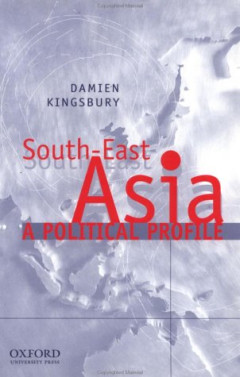
South-East Asia: A political profile
In addition to outlining the political processes and institutions of the countries in Southeast Asia, this valuable volume traces their past and explains how they have transformed themselves into the countries they are today. It is the perfect text for undergraduate and postgraduate students of Asian studies, political science, and history. It is also the ideal book for all those desiring a bet…
- Edisi
- -
- ISBN/ISSN
- 0-19-551003-8
- Deskripsi Fisik
- xvii, 444 pages : illustrations (black and white) : bibl.; 419-434 : index ; 22 cm
- Judul Seri
- -
- No. Panggil
- 320.959 Kin s

State-Society dynamics policy making in arstored democracy
State Society dynamics is a much-needed addition to works about our political life. It provides a seldom-seen picture of the policy-making process as it thoughtfully studies the wealth of experience generated during the Aquino administration for greater political learning, especially with regard to democratization.
- Edisi
- -
- ISBN/ISSN
- 971-550-438-8
- Deskripsi Fisik
- x, 226 pages : bibl.; 196-219 : index ; 23 cm
- Judul Seri
- -
- No. Panggil
- 320.959 Mag s

Southeast Asia in the new international era
The fourth edition of Southeast Asia in the New International Era updates the region at a time of critical change. In the 1990s, Southeast Asia was known as an area of stability and movement toward development and democracy. At the beginning of the millennium, many of the region's nations are undergoing rapid change that belies the standard perception of stability. Since January 2000, Indonesia…
- Edisi
- -
- ISBN/ISSN
- 0813339928
- Deskripsi Fisik
- xv, 301 pages : index ; 23 cm
- Judul Seri
- -
- No. Panggil
- 327.59 Neh s
 Karya Umum
  Filsafat
  Agama
Agama  Ilmu-ilmu Sosial
  Bahasa
  Ilmu-ilmu Murni
  Ilmu-ilmu Terapan
  Kesenian, Hiburan, dan Olahraga
  Kesusastraan
  Geografi dan Sejarah