Ditapis dengan

The Iraq war: A Military history
The Iraq War puts the recent conflict into context. Drawing on their extensive military expertise, the authors assess the opposing aims of the Coalition forces and the Iraqi regime and explain the day-to-day tactical and logistical decisions of infantry and air command, as British and American troops moved into Basra and Baghdad. They simultaneously step back to examine long-running debates wit…
- Edisi
- -
- ISBN/ISSN
- 0-674-01280-1
- Deskripsi Fisik
- 312 pages : ilustarations ; 21 cm
- Judul Seri
- -
- No. Panggil
- 956.7 WIL i

Inside Iraq: The History, the People, and the modern conflicts of the world's…
Known as the cradle of civilization, Iraq has a diverse and complex culture that dates back to ancient Mesopotamia. Now, with the U.S.-Iraq conflict over weapons of mass destruction continuing to grow, it is increasingly important for us to seek insight and solutions to this troubled region. Inside Iraq helps make sense of this nation's longstanding travails, detailing the past, present, and fu…
- Edisi
- -
- ISBN/ISSN
- 1-56924-480-4
- Deskripsi Fisik
- x, 294 pages ; 23 cm
- Judul Seri
- -
- No. Panggil
- 956.7 MIL i

A History of modern Japan
This book provides a concise historical overview of Japan’s transformation from the late Tokugawa period to the post–World War II era. Richard Storry examines the fall of the shogunate, the reforms and modernization of the Meiji Restoration, and Japan’s emergence as an imperial power. The narrative highlights key political, social, and military developments, including Japan’s expansion …
- Edisi
- -
- ISBN/ISSN
- -
- Deskripsi Fisik
- 300 pages ; 18 cm
- Judul Seri
- -
- No. Panggil
- 952.04 STO h

Gandhi: A Memoir
Gandhi: A Memoir presents William L. Shirer’s personal reflections on his encounters with Mahatma Gandhi and his impressions of Gandhi’s political and moral influence. Shirer, an American journalist covering India, shares his personal observations about Gandhi—from his simplicity and spiritual discipline to his brilliance in leading a nonviolent resistance against British imperialism. Shi…
- Edisi
- -
- ISBN/ISSN
- 0-671-25079-5
- Deskripsi Fisik
- 255 pages : illustrations ; 24 cm
- Judul Seri
- -
- No. Panggil
- 923.254 SHI g

Jepang dulu dan sekarang
Tinjauan ringkas tetapi padat mengenai perjalanan sejarah Jepang, mulai dari era kuno hingga masa modern. Sakamoto membahas bagaimana struktur sosial-politik dan budaya Jepang berubah dari sistem feodal dan keshogunan ke era modern melalui proses modernisasi, kontak dengan Barat, dan transformasi militer serta ekonomi. Dalam buku ini juga dijelaskan dinamika sosial seperti peran samurai, transf…
- Edisi
- -
- ISBN/ISSN
- -
- Deskripsi Fisik
- xxiv, 95 halaman : ilustrasi ; 22 cm
- Judul Seri
- -
- No. Panggil
- 952.031 SAK j

The Singapore story: Memoirs of Lee Kuan Yew
Singapore's former Senior Minister Lee Kuan Yew provides an account of his personal and political life and provides a blow-by-blow chronicle of his dealings with political groups and leaders, both Malaysian and international, on the road to independence. Includes b & w photographs. Annotation c. Book News, Inc., Portland.
- Edisi
- -
- ISBN/ISSN
- 981-204-983-5
- Deskripsi Fisik
- 680 pages : illustrations (black and white) ; 25 cm
- Judul Seri
- -
- No. Panggil
- 923.1 YEW s

From third world to first: The Singapore story 1965-2000
"Few gave tiny Singapore much chance of survival when it was granted independence in 1965. How is it, then, that today the former British colonial trading post is a thriving Asian metropolis?" "The story of that transformation is told here by Lee Kuan Yew. Rising from a legacy of divisive colonialism, the devastation of the Second World War, and general poverty and disorder following the withdr…
- Edisi
- -
- ISBN/ISSN
- 981-204-984-3
- Deskripsi Fisik
- 778 pages : index ; 24 cm
- Judul Seri
- -
- No. Panggil
- 923.1 ANN f

India through the lens: Photography 1840-1911
India Through the Lens: Photography 1840–1911, curated by Vidya Dehejia and a distinguished cast of contributors, charts the history of early photography in the Indian subcontinent. Through a collection of essays and photographs, the book examines how photography developed in India, from cityscapes, architecture, and natural landscapes to portraits of citizens and rulers. It also explores the…
- Edisi
- -
- ISBN/ISSN
- 1-890206-24-5
- Deskripsi Fisik
- 315 pages : illustrations ; 24 cm
- Judul Seri
- -
- No. Panggil
- 954.779 DEH i

Sri Lanka a lost revolution?: The History of JVP
Rohan Gunaratna’s book provides a detailed insider account of the Janatha Vimukthi Peramuna (JVP), a radical left-wing movement in Sri Lanka. It traces its origins, ideology, leadership structure, and the socio-political conditions that fueled its rise. Gunaratna examines the JVP’s armed insurrections particularly those in 1971 and the late 1980s and the failures that led to its ultimate do…
- Edisi
- -
- ISBN/ISSN
- 955-26-004-9
- Deskripsi Fisik
- 366 pages: 22 cm
- Judul Seri
- -
- No. Panggil
- 954.9303 GUN s
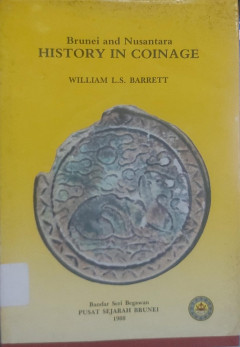
Brunei and Nusantara history in coinage
A comprehensive numismatic analysis of the role of coins as a primary historical source for the Brunei Sultanate and the Nusantara region as a whole. This work aims to uncover the economic, political, and trade relations development of Brunei from ancient to modern times through an in-depth study of circulating currency. The coins examined, including local currency minted by the Sultanate as we…
- Edisi
- -
- ISBN/ISSN
- -
- Deskripsi Fisik
- 273 pages : illustrations ; 25 cm
- Judul Seri
- -
- No. Panggil
- 959.55 BAR b
 Karya Umum
  Filsafat
  Agama
Agama  Ilmu-ilmu Sosial
  Bahasa
  Ilmu-ilmu Murni
  Ilmu-ilmu Terapan
  Kesenian, Hiburan, dan Olahraga
  Kesusastraan
  Geografi dan Sejarah