Ditapis dengan
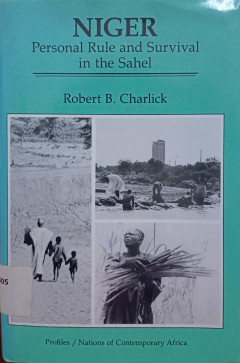
Niger: Personal rule and survival in the Sahel
This book examines the political system of Niger with particular emphasis on personal rule and strategies of political survival in the Sahel region. Robert B. Charlick analyzes the historical development of Niger’s post-independence government, the role of political elites, and the interaction between political authority and economic conditions. The study provides insights into state formatio…
- Edisi
- -
- ISBN/ISSN
- 0-89158-968-6
- Deskripsi Fisik
- xv, 189 pages : illustration ; 24 cm
- Judul Seri
- -
- No. Panggil
- 966.26 CHA n
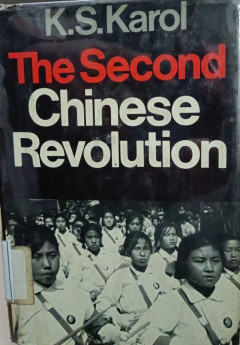
The Second Chinese revolution
The Second Chinese Revolution examines China’s political, social, and economic transformation in the years after 1949. The book describes how the country attempted to reshape its agricultural and industrial sectors, reorganize society under socialist principles, and navigate internal debates over ideology and policy. It also discusses the shifting dynamics within the Chinese Communist Party, …
- Edisi
- -
- ISBN/ISSN
- 0-8090-8516-X
- Deskripsi Fisik
- 472 pages : 20 cm
- Judul Seri
- -
- No. Panggil
- 320.95105 KAR s
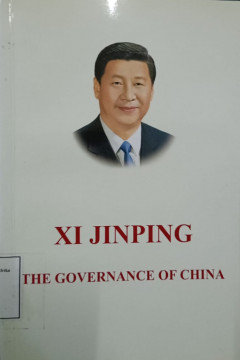
Xi Jinping : The Governance of China
Xi Jinping: The Governance of China is a compilation of key speeches, interviews, instructions, and correspondence from Xi Jinping, the President of China, covering the period from November 15, 2012, to June 13, 2014. The book provides a comprehensive overview of Xi’s political philosophy and vision for the future of China, focusing on the country's governance under the leadership of the Comm…
- Edisi
- -
- ISBN/ISSN
- 9787119090238
- Deskripsi Fisik
- xviii, 515 pages : illustrations ; 24 cm
- Judul Seri
- -
- No. Panggil
- 320.53 JIN g

The Invisible China : The overseas Chinese and the politics of Southeast Asia
The Invisible China explores the influence and role of overseas Chinese communities in shaping the political dynamics of Southeast Asia. The book examines how these communities—often economically influential yet politically marginalized—navigate issues of identity, citizenship, and allegiance within multicultural and multiethnic societies. It analyzes the historical migration patterns that …
- Edisi
- -
- ISBN/ISSN
- -
- Deskripsi Fisik
- xiv, 264 pages : illustration ; 21 cm
- Judul Seri
- -
- No. Panggil
- 320.51 ALE i
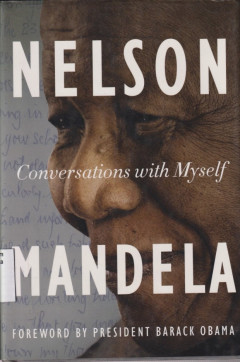
Conversations with myself
Conversations with Myself is a collection of Nelson Mandela's personal writings, including letters, diaries, prison archives, interview transcripts, and previously unpublished reflections on his life. This book offers an intimate look at Mandela's life, including his struggle against apartheid, his experiences in prison for more than two decades, and his role in South Africa's transition to dem…
- Edisi
- -
- ISBN/ISSN
- 978-0-374-12895-1
- Deskripsi Fisik
- xxi, 454 pages : illustration ; 23,5 cm
- Judul Seri
- -
- No. Panggil
- 968.06092 MAN c

Le Sahel au XXIe siècle : un essai de réflexion prospective sur les sociét…
This book provides a prospective and analytical reflection on the social, economic, and political transformations of Sahelian societies in the twenty-first century. Jacques Giri examines the historical background, structural challenges, and future trajectories of the Sahel region, focusing on issues such as environmental vulnerability, demographic growth, governance, and development policies. B…
- Edisi
- -
- ISBN/ISSN
- -
- Deskripsi Fisik
- 342 pages ; 21 cm
- Judul Seri
- -
- No. Panggil
- 963.5 GIR l
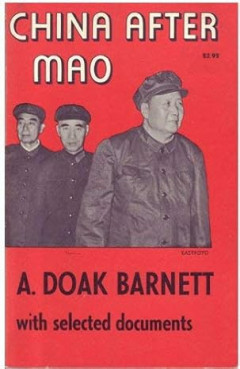
China after Mao
One of America's leading authorities on China outlines and assesses the implications of the inevitable passing of Mao Tse-tung and the older generation of revolutionary leaders from their position of command in China. Describing the mid-1960’s as "a transitional period of great historic significance," the author outlines the basic unsolved problems and unresolved issues that face Peking’s l…
- Edisi
- -
- ISBN/ISSN
- 978-0691000008
- Deskripsi Fisik
- vii, 287 pages : 19 cm
- Judul Seri
- -
- No. Panggil
- 320.551 BAR c
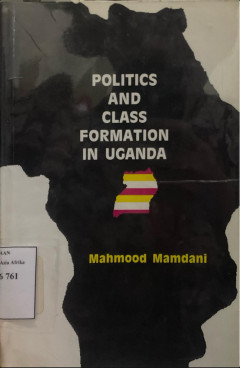
Politics and class formation in Uganda
Politics and Class Formation in Uganda examines the historical and political processes that have shaped class structures in Ugandan society. The book analyzes how colonial legacies, state policies, economic transformations, and political power struggles contributed to the emergence of distinct social classes. Through detailed case studies and theoretical discussion, the author explores the rela…
- Edisi
- 1
- ISBN/ISSN
- 9970 02 167 2
- Deskripsi Fisik
- vii, 316 pages ; 20 cm
- Judul Seri
- -
- No. Panggil
- 301.5 MAM p
The Making of the president 1972
The Making of the President 1972 is Theodore H. White’s detailed narrative of the 1972 U.S. presidential election, offering an inside view of campaign strategies, political maneuvers, and the national atmosphere surrounding the Nixon–McGovern race. As the fourth volume in White’s influential series on American presidential elections, the book blends investigative journalism with political…
- Edisi
- -
- ISBN/ISSN
- -
- Deskripsi Fisik
- xxviii, 326 pages ; 18 cm
- Judul Seri
- -
- No. Panggil
- 324.973 WHI m
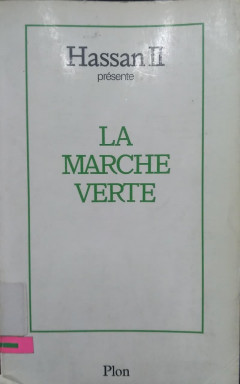
La marche verte
The book "Hassan II presents La Marche Verte" is a non-fiction book based on official speeches and documents, rather than a fictional narrative. It documents a real political event, namely the peaceful mass march of King Hassan II from Morocco to the Spanish Sahara in 1975, known as the "Green March."
- Edisi
- -
- ISBN/ISSN
- 2-259-02218-9
- Deskripsi Fisik
- 472 Pages : 22,5 cm
- Judul Seri
- -
- No. Panggil
- 923.164 VED l
 Karya Umum
  Filsafat
  Agama
Agama  Ilmu-ilmu Sosial
  Bahasa
  Ilmu-ilmu Murni
  Ilmu-ilmu Terapan
  Kesenian, Hiburan, dan Olahraga
  Kesusastraan
  Geografi dan Sejarah