Ditapis dengan
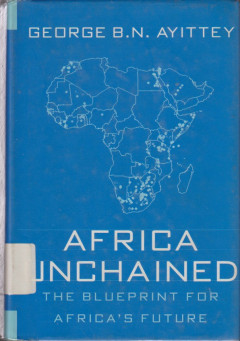
Africa unchained: The Blueprint for Africa’s future
George B. N. Ayittey's Africa Unchained examines the underlying causes of economic and political stagnation in Africa and offers a blueprint for a brighter future. Ayittey highlights the failure of postcolonial governance, corruption, and ineffective economic policies as key obstacles to development. The book advocates a return to traditional African values, the strengthening of institutions, f…
- Edisi
- -
- ISBN/ISSN
- 1–4039–6359–2
- Deskripsi Fisik
- xxvi, 483 pages ; 21,5 cm
- Judul Seri
- -
- No. Panggil
- 338.96 AYI a
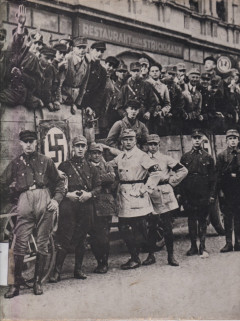
Prelude to war
Prelude to War explores the political, economic, and social conditions that led to the outbreak of World War II. Written by Robert T. Elson and the editors of Time-Life Books, the volume examines the rise of totalitarian regimes in Germany, Italy, and Japan, the failures of diplomacy, and the global tensions of the 1930s. The book highlights key events such as Hitler’s consolidation of power,…
- Edisi
- -
- ISBN/ISSN
- -
- Deskripsi Fisik
- 216 pages : illustration ; 29 cm
- Judul Seri
- -
- No. Panggil
- 940.542 ELS p
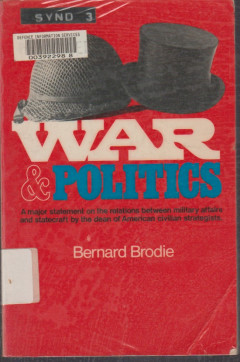
War & politics
Bernard Brodie's War and Politics is a classic study of the relationship between war and state policy. Brodie, a pioneer of nuclear strategy theory, examines how states use military power as a political instrument and how war shapes strategic decisions in international relations. The book evaluates the development of modern military theory, United States defense policy, and the strategic challe…
- Edisi
- -
- ISBN/ISSN
- 0-02-315020-3
- Deskripsi Fisik
- xii, 514 pages ; 21 cm
- Judul Seri
- -
- No. Panggil
- 355.02 BRO w
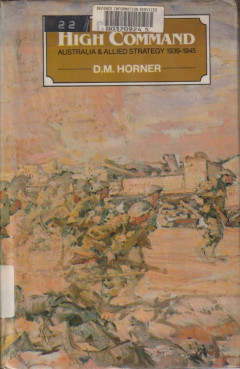
High command: Australia and allied strategy 1939–1945
This book provides an in-depth analysis of Australia's strategic decision-making and military leadership during the Second World War. D.M. Horner explores how Australia coordinated its defence strategy with Allied powers, examining the challenges, political pressures, and high-level command structures that shaped the nation's wartime policies from 1939 to 1945. Through detailed research and arc…
- Edisi
- -
- ISBN/ISSN
- 0-86861-084-4
- Deskripsi Fisik
- xxiii, 556 pages : illustration ; 22,5 cm
- Judul Seri
- -
- No. Panggil
- 940.54012 HOR h

New Zealand foreign policy: Statements and documents, 1943–1957
New Zealand Foreign Policy: Statements and Documents, 1943–1957 is an official compilation issued by the Ministry of Foreign Affairs, presenting key policy statements, diplomatic correspondence, and government positions during a critical period of New Zealand’s international engagement. Covering the years from World War II through early Cold War developments, the volume provides insight int…
- Edisi
- -
- ISBN/ISSN
- -
- Deskripsi Fisik
- 495 pages ; 25 cm
- Judul Seri
- -
- No. Panggil
- 327.931 MIN n
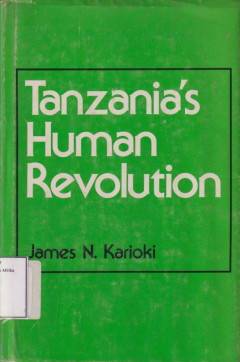
Tanzania's human revolution
This book analyzes the social, political, and economic changes in post-independence Tanzania, particularly through the human development policies initiated during the era of President Julius Nyerere. James N. Karioki evaluates the implementation of Ujamaa socialism, collective village development, and their impact on the country's social structure. In addition to discussing theory and policy, t…
- Edisi
- -
- ISBN/ISSN
- 0-271-00206-9
- Deskripsi Fisik
- 225 pages ; 23,5 cm
- Judul Seri
- -
- No. Panggil
- 309.1678 KAR t

The Battle of public enterprises in Côte d’Ivoire: The Story of an interna…
The Battle of Public Enterprises in Côte d’Ivoire examines the internal dynamics, political struggles, and economic pressures surrounding the restructuring of state-owned enterprises during a period of major economic adjustment. Written by Bernard Contamin and Yves-André Fauré, the book provides an in-depth analysis of how institutional actors, government agencies, international donors, an…
- Edisi
- -
- ISBN/ISSN
- 2-86537-241-2
- Deskripsi Fisik
- 369 pages ; 21,5 cm
- Judul Seri
- -
- No. Panggil
- 338.096668 CON b

Madagascar in the whirlwind of international relations: At The heart of the I…
This book by Serge Zafimahova offers a critical and insightful analysis of Madagascar’s international and regional political dynamics within the Indian Ocean. Drawing on the author’s extensive experience as a former international affairs correspondent and presidential adviser, the work examines the interaction between global politics and Madagascar’s domestic policy. It highlights issues …
- Edisi
- -
- ISBN/ISSN
- 2-913015-01-8
- Deskripsi Fisik
- 210 pages ; 23,5 cm
- Judul Seri
- -
- No. Panggil
- 327.669 ZAF m

Our Zimbabwe: An element of political economy
Our Zimbabwe: An Element of Political Economy offers an analytical overview of Zimbabwe’s economic and political structures in the years following independence. Arthur Jim Patsanza examines the nation’s development challenges, economic policies, and the relationship between political decision-making and economic outcomes. The book discusses issues such as state planning, resource distributi…
- Edisi
- -
- ISBN/ISSN
- 0-7974-0832-0
- Deskripsi Fisik
- 246 pages ; 21,5 cm
- Judul Seri
- -
- No. Panggil
- 338.9689 PAT o
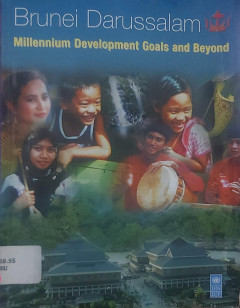
Brunei Darussalam: Millennium development goals and beyond
This publication offers a comprehensive review of Brunei Darussalam's achievements regarding the United Nations Millennium Development Goals (MDGs), analyzing the country's performance across the eight defined global targets for the period leading up to 2015. The report documents that Brunei Darussalam successfully reached or is on track to achieve almost all MDG targets, notably eradicating ex…
- Edisi
- -
- ISBN/ISSN
- 99917-918-0-9
- Deskripsi Fisik
- 51 pages : illustrations ; 28 cm
- Judul Seri
- -
- No. Panggil
- 959.55 DEP b
 Karya Umum
  Filsafat
  Agama
Agama  Ilmu-ilmu Sosial
  Bahasa
  Ilmu-ilmu Murni
  Ilmu-ilmu Terapan
  Kesenian, Hiburan, dan Olahraga
  Kesusastraan
  Geografi dan Sejarah