Ditapis dengan
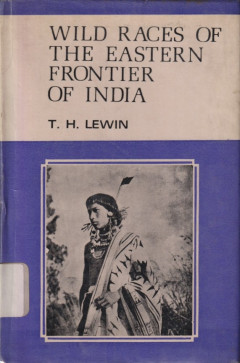
Wild races of the eastern frontier of India
A classic ethnographic account of the indigenous tribes inhabiting the eastern frontier regions of colonial India, particularly areas that are now part of Assam, Mizoram, and surrounding hill regions. The book provides detailed descriptions of tribal customs, rituals, kinship structures, social practices, warfare traditions, and daily life. Lewin documents cultural diversity, linguistic charac…
- Edisi
- -
- ISBN/ISSN
- -
- Deskripsi Fisik
- vi, 352 pages ; 22 cm
- Judul Seri
- -
- No. Panggil
- 305.89540954 LEW w

Socialist transformation of Indian economy: A Study in social analysis, criti…
Socialist Transformation of Indian Economy by Gyan Chand provides an analytical study of India’s efforts to shape its economic development within a socialist-oriented framework. The book evaluates India’s economic structure, social conditions, and political foundations during the transition from colonial rule to a planned economic system. Chand examines major policy initiatives, land reform…
- Edisi
- -
- ISBN/ISSN
- -
- Deskripsi Fisik
- vii pages ; 22,5 cm
- Judul Seri
- -
- No. Panggil
- 330.954 CHA s

Trade and civilisation in the Indian ocean: An Economic history from the rise…
A landmark study examining the economic and commercial interactions that shaped the Indian Ocean region from the rise of Islam (7th century) to the mid-18th century. The book explores long-distance maritime trade, commercial networks, economic institutions, cultural exchanges, and the role of ports and trading communities across Asia, the Middle East, and East Africa. Chaudhuri analyzes how tra…
- Edisi
- -
- ISBN/ISSN
- 0-521-25359-9
- Deskripsi Fisik
- xiii pages : illustrations ; 24,5 cm
- Judul Seri
- -
- No. Panggil
- 382.0954 CHA t
Innovative India: Review of science & technology
A comprehensive overview of India’s scientific and technological landscape. Edited by L. K. Sharma and Sima Sharma, this publication highlights major national achievements in research, industry, biotechnology, communication, and applied sciences. Supported by contributions from leading organizations—including the Department of Biotechnology, Videsh Sanchar Nigam Limited, Indian Oil, Relianc…
- Edisi
- -
- ISBN/ISSN
- -
- Deskripsi Fisik
- illustrations ; 30,5 cm
- Judul Seri
- -
- No. Panggil
- 509.54 SHA i
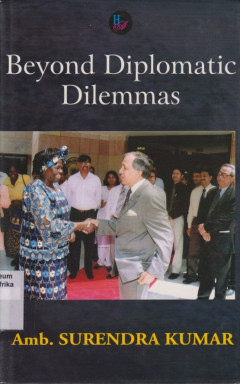
Beyond diplomatic dilemmas
A compelling account of India’s diplomatic engagements and global challenges from the perspective of a seasoned diplomat. Through essays and reflections, the author explores critical foreign policy issues, bilateral and multilateral relations, and the complexities behind diplomatic decision-making. The book discusses India’s role in global affairs, the evolution of strategic partnerships, a…
- Edisi
- -
- ISBN/ISSN
- 978-93-5154-089-2
- Deskripsi Fisik
- 328 pages : illustrations ; 23 cm
- Judul Seri
- -
- No. Panggil
- 327.540092 KUM b
Some aspects of cultural policies in India
Some Aspects of Cultural Policies in India by Kapila Malik Vatsyayan presents an in-depth analysis of the evolution, framework, and implementation of cultural policies in India. The book explores the role of government institutions, cultural organizations, and national development plans in shaping India’s cultural identity. Vatsyayan discusses issues such as cultural preservation, education, …
- Edisi
- -
- ISBN/ISSN
- -
- Deskripsi Fisik
- 105 pages : illustrations ; 24 cm
- Judul Seri
- -
- No. Panggil
- 303.4840954 VAT s
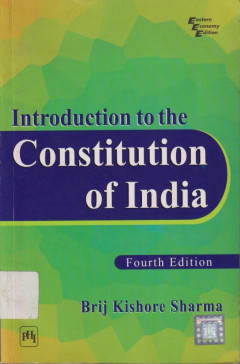
Introduction to the constitution of India
A comprehensive and accessible overview of the constitutional framework of India. The book explains the historical background of the Constitution, its structure, basic principles, and major institutions of governance. Key topics include federalism, fundamental rights, directive principles of state policy, the functioning of Parliament, the judiciary, and administrative mechanisms. The author al…
- Edisi
- 4
- ISBN/ISSN
- 978-81-203-3217-8
- Deskripsi Fisik
- xxxvi, 398 pages ; 24 cm
- Judul Seri
- -
- No. Panggil
- 342.5402 SHA i
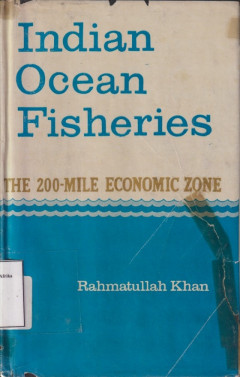
The 200-mile economic zone : Indian ocean fisheries
The 200-Mile Economic Zone: Indian Ocean Fisheries by Rahmatullah Khan analyzes the economic, legal, and strategic implications of establishing Exclusive Economic Zones (EEZs) in the Indian Ocean region. The book discusses the potential of marine fisheries, resource management challenges, and the importance of ocean governance for coastal nations. Khan examines India’s role within the broader…
- Edisi
- -
- ISBN/ISSN
- -
- Deskripsi Fisik
- xiv, 264 pages 22,5 ; cm
- Judul Seri
- -
- No. Panggil
- 333.956 KHA t
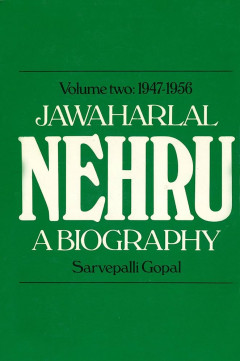
Jawaharlal Nehru : A Biography, Volume II 1947-1956
The second volume of Sarvepalli Gopal's remarkable work covers the first nine years of Nehru's prime ministership. Like the first volume, it is more than a biography, describing and analysing in detail both domestic and foreign issues of the period: the struggle between India and Pakistan for Kashmir, the first elections of free India based on adult suffrage; Korea, the Suez crisis, the invasio…
- Edisi
- -
- ISBN/ISSN
- -
- Deskripsi Fisik
- 346 pages : illustrations ; 23 cm
- Judul Seri
- -
- No. Panggil
- 923.54 GOP j
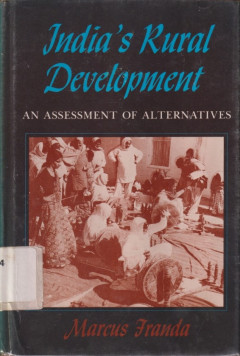
India's rural development : An Assessment of alternatives
India’s Rural Development: An Assessment of Alternatives examines the various strategies, programs, and policy approaches that have shaped rural development in India. Marcus Franda analyzes governmental initiatives, community-based projects, agricultural reforms, and rural modernization efforts from both economic and political perspectives. The book evaluates the successes and limitations of …
- Edisi
- -
- ISBN/ISSN
- 0-253-33832-9
- Deskripsi Fisik
- ix, 306 pages ; 21,5 cm
- Judul Seri
- -
- No. Panggil
- 338.954 FRA i
 Karya Umum
  Filsafat
  Agama
Agama  Ilmu-ilmu Sosial
  Bahasa
  Ilmu-ilmu Murni
  Ilmu-ilmu Terapan
  Kesenian, Hiburan, dan Olahraga
  Kesusastraan
  Geografi dan Sejarah