Ditapis dengan

The Middle East: A Political and economic survey
This volume provides a comprehensive political and economic survey of the Middle East, examining the region’s historical background, political developments, economic structures, and social dynamics. Edited by Peter Mansfield, the book offers analytical perspectives on the shifting geopolitical landscape, regional conflicts, modernization issues, and the economic challenges faced by Middle Eas…
- Edisi
- -
- ISBN/ISSN
- 0-19-215851-1
- Deskripsi Fisik
- ix, 579 pages : illustration ; 22 cm
- Judul Seri
- -
- No. Panggil
- 956.05 MAN t
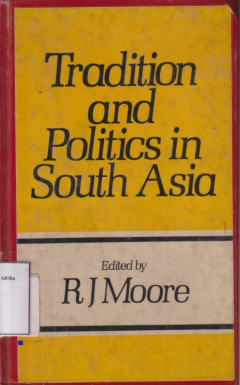
Tradition and politics in South Asia
This volume examines the complex interactions between political structures, traditional institutions, and cultural practices in South Asia. Edited by R. J. Moore, the book brings together scholarly essays that explore how historical traditions have shaped political behavior, governance, and social change across countries such as India, Pakistan, Bangladesh, and Sri Lanka. The work provides insi…
- Edisi
- -
- ISBN/ISSN
- 0-7069-0608-X
- Deskripsi Fisik
- xxii, 266 pages ; 21 cm
- Judul Seri
- -
- No. Panggil
- 320.954 MOO t
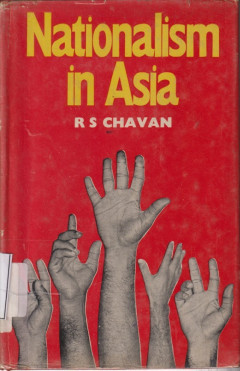
Nationalism in Asia
This book provides an analytical overview of the rise and development of nationalism in various regions of Asia. R. S. Chavan examines the historical roots, political dynamics, and socio-cultural forces that shaped nationalist movements across the continent. The work highlights key events, ideological influences, and regional variations that contributed to the formation of modern Asian nation-s…
- Edisi
- -
- ISBN/ISSN
- 0-7069-0608-X
- Deskripsi Fisik
- xvi, 595 pages ; 22 cm
- Judul Seri
- -
- No. Panggil
- 320.54095 CHA n

Megatrends Asia: The eight Asian megatrends that are changing the world
While Western attention has been focused on the Soviet Union and Eastern Europe, a quieter, cumulative revolution has occurred in Asia that may have greater consequences for world history. As we move towards the year 2000, Asia will become the dominant region in the world: economically, politically and culturally. Until the 1990s, the West set the rules. Now, Asians are making their own rules a…
- Edisi
- -
- ISBN/ISSN
- 1-85788-144-3
- Deskripsi Fisik
- vi, 312 pages : index ; 23 cm
- Judul Seri
- -
- No. Panggil
- 950 NAI m

Asian Dilemma: The Essence of social progress in the transitional period
This book examines the fundamental dilemmas faced by Asian countries during the transitional period of social and economic development. Ulyanovsky and Pavlov analyze the social progress of Asian nations as they move from traditional structures toward modern economic systems. The authors discuss key issues such as economic transformation, social change, political development, and the challenges …
- Edisi
- -
- ISBN/ISSN
- -
- Deskripsi Fisik
- 256 pages ; 20,5 cm
- Judul Seri
- -
- No. Panggil
- 330.95 ULY a

The Westernization of Asia: A Comparative political analysis
This book provides a comparative political analysis of the Westernization process in Asia. Frank C. Darling examines how Asian societies responded politically, culturally, and institutionally to Western influence from the nineteenth to the twentieth century. The study explores major themes including political modernization, social transformation, colonial legacies, and the development of contem…
- Edisi
- -
- ISBN/ISSN
- 0-8161-9005-4
- Deskripsi Fisik
- xxii, 503 pages : illustrations ; 24 cm
- Judul Seri
- -
- No. Panggil
- 320.95 DAR w

The Westernization of Asia: A Comparative political analysis
This book offers a comparative political analysis of the Westernization process in Asia. Frank C. Darling examines the historical, political, and social forces that have shaped the region’s responses to Western influence. The study explores how Asian countries adapted or resisted Western political models, and evaluates the impact of Westernization on governance, social structures, and nationa…
- Edisi
- -
- ISBN/ISSN
- 0-8161-9005-4
- Deskripsi Fisik
- xxii, 503 pages ; 21 cm
- Judul Seri
- -
- No. Panggil
- 320.95 DAR w

Dynastie en cultuur in België
Dynasties and Culture in Belgium is a comprehensive study of the relationship between the institution of monarchy and cultural development in Belgium. Written by leading historians and academics led by Herman Balthazar and Jean Stengers, the book examines how Belgian royal dynasties have shaped national identity, art, architecture, social life, and cultural policy since the 19th century. It ref…
- Edisi
- -
- ISBN/ISSN
- 90-6153-235-3
- Deskripsi Fisik
- 419 pages : illustration ; 33 cm
- Judul Seri
- -
- No. Panggil
- 949.3 BAL d

Cold war captives: Imprisonment, escape, and brainwashing
This book examines the ways imprisonment, escape, and the notion of “brainwashing” shaped American cultural and political perceptions during the Cold War. Susan L. Carruthers explores how captivity narratives, political prisoners, defections, and repatriation stories were represented in media, motion pictures, literature, and popular culture. Through historical documentation and cultural an…
- Edisi
- -
- ISBN/ISSN
- 978-0-520-25730-6
- Deskripsi Fisik
- xiii, 335 pages : illustration ; 23 cm
- Judul Seri
- -
- No. Panggil
- 909.825 CAR c
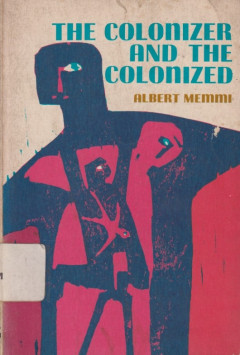
The Colonizer and the colonized
The Colonizer and the Colonized is a classic analysis of the psychology, structures, and consequences of colonialism. Albert Memmi explores the complex and often destructive relationship between the oppressor and the oppressed, revealing how the colonizer maintains domination and how the colonized internalizes inferiority. Through philosophical, sociological, and historical insights, Memmi illu…
- Edisi
- -
- ISBN/ISSN
- 0-8070-0297-6
- Deskripsi Fisik
- xviii, 153 pages ; 20 cm
- Judul Seri
- -
- No. Panggil
- 325.3 MEM c
 Karya Umum
  Filsafat
  Agama
Agama  Ilmu-ilmu Sosial
  Bahasa
  Ilmu-ilmu Murni
  Ilmu-ilmu Terapan
  Kesenian, Hiburan, dan Olahraga
  Kesusastraan
  Geografi dan Sejarah