Ditapis dengan
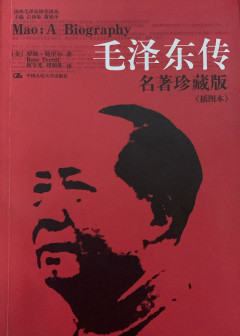
Mao: A Biography Maozedong chuan
This book presents a comprehensive biography of Mao Zedong, from his childhood and education to his encounter with Marxism, his involvement in the revolution, to the peak of his power and the period of his rule in the People's Republic of China. The author analyzes Mao's character, ideology, political and military decisions, and the historical impact of his leadership, both achievements and con…
- Edisi
- -
- ISBN/ISSN
- 978-7-300-12621-0
- Deskripsi Fisik
- 545 pages : illustrations ; 24 cm
- Judul Seri
- -
- No. Panggil
- 923.1 TER m
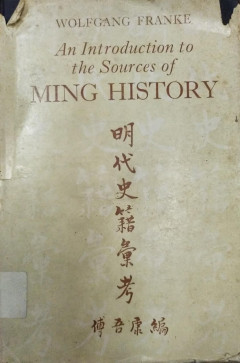
An Introduction to the sources of Ming history
An Introduction to the Sources of Ming History by Wolfgang Franke is a foundational scholarly guide to primary sources essential for studying the Ming dynasty (1368–1644). The book surveys major historical texts, official records, private writings, archival materials, and bibliographic tools relevant to Ming historiography. Franke provides detailed evaluations of the reliability, structure, a…
- Edisi
- -
- ISBN/ISSN
- -
- Deskripsi Fisik
- xxv, 347 pages ; 26 cm
- Judul Seri
- -
- No. Panggil
- 951 FRA a
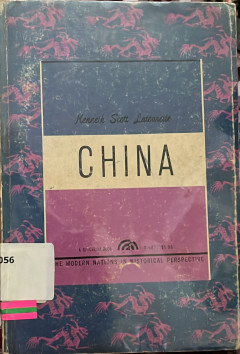
China : The Modern nations in modern perspective
The book China: The Modern Nation in Modern Perspective by Kenneth Scott Latourette presents a comprehensive overview of China's journey from the late imperial period to its transformation into a modern nation. Latourette outlines the political, social, economic, and cultural developments that shaped modern China, including the collapse of the Qing Dynasty, interactions with Western powers, the…
- Edisi
- -
- ISBN/ISSN
- -
- Deskripsi Fisik
- v, 152 pages ; 20 cm
- Judul Seri
- -
- No. Panggil
- 951.056 LAT c
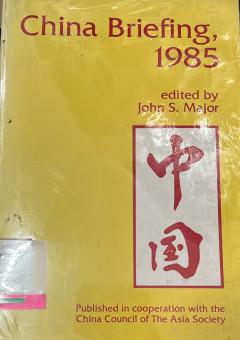
China briefing, 1985
China Briefing, 1985 offers a comprehensive review of the political, social, economic, educational, and international dynamics of the People's Republic of China (PRC) in 1984, viewed from a long-term perspective. With contributions from a number of leading experts on China, this volume reviews important events such as the student demonstrations in the spring and summer of 1984 and their impact …
- Edisi
- -
- ISBN/ISSN
- 0-8133-0383-4
- Deskripsi Fisik
- ix, 134 pages : illustrations ; 23 cm
- Judul Seri
- -
- No. Panggil
- 951.09048 MAJ c
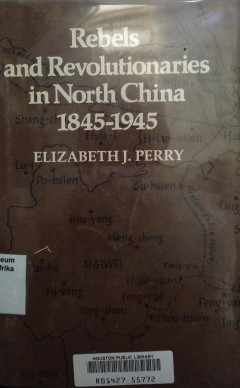
Rebels and revolutionaries in North China, 1845–1945
This influential historical study examines a century of rebellion, social unrest, and revolutionary activity in North China from 1845 to 1945. Elizabeth J. Perry analyzes the roots of social conflicts, the organization of rebel groups, the role of peasants and local elites, and the political and economic pressures that shaped revolutionary movements. Drawing on extensive archival research and f…
- Edisi
- -
- ISBN/ISSN
- 0-8047-1055-4
- Deskripsi Fisik
- xiii, 324 pages ; 22,5 cm
- Judul Seri
- -
- No. Panggil
- 950 PER r
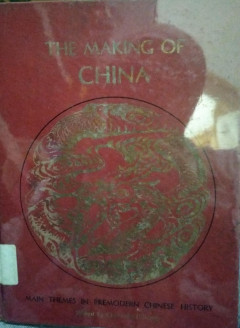
The making of China: Main themes in premodern Chinese history
This scholarly volume, edited by Chun-shu Chang, examines major themes in premodern Chinese history from prehistoric times through the late imperial era. Through contributions from leading historians and sinologists, the book explores key developments in Chinese civilization including the formation of political institutions, philosophical traditions, social structures, interstate relations, and…
- Edisi
- -
- ISBN/ISSN
- 0-13-554660-1
- Deskripsi Fisik
- xiv, 347 pages ; 24 cm
- Judul Seri
- -
- No. Panggil
- 951 CHA m
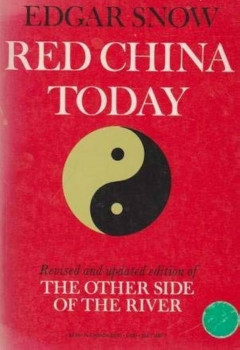
Red China today
Red China Today by Edgar Snow is an in-depth journalistic report on the development of the People's Republic of China during the early years of Mao Zedong's leadership. Continuing his monumental work Red Star Over China, Snow returned to China to review the political, social, and economic changes that occurred after the revolution was successfully established. This book captures the major trans…
- Edisi
- -
- ISBN/ISSN
- 0-394-71681-7
- Deskripsi Fisik
- 749 pages : 20 cm
- Judul Seri
- -
- No. Panggil
- 951.057 SNO r
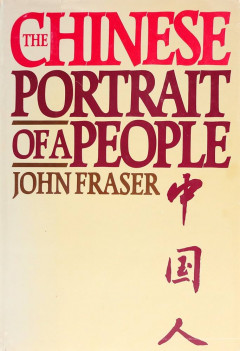
The Chinese portrait of a people
Portrait of a People by John Fraser is an in-depth report on the life of the Chinese people at the end of the 20th century, written based on the author's direct experience as a foreign correspondent living and working in China. Fraser describes the social, cultural, and political realities of China through keen observation and interviews with various segments of society, from government officia…
- Edisi
- -
- ISBN/ISSN
- 0-671-44873-0
- Deskripsi Fisik
- 463 pages : illustrations ; 24 cm
- Judul Seri
- -
- No. Panggil
- 951.057 FRA c
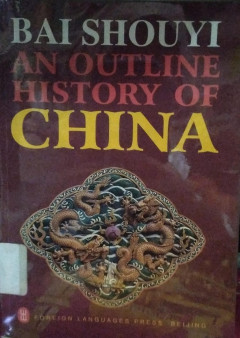
An outline history of China
This revised edition of An Outline History of China, written by the distinguished historian Bai Shouyi and contributed to by several prominent scholars, offers a comprehensive overview of China’s long and complex history from ancient times to the modern era. The book covers major dynasties, political changes, cultural developments, and social transformations. Designed for both general readers…
- Edisi
- -
- ISBN/ISSN
- 7-119-02347-0
- Deskripsi Fisik
- ii, 803 pages : Ilustrations ; 20,2 cm
- Judul Seri
- -
- No. Panggil
- 951 SHO a
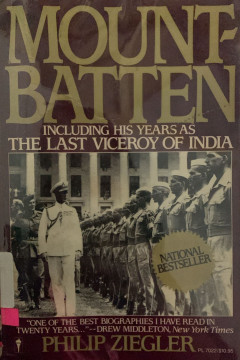
Mountbatten: Including his years as the last viceroy of India
Mountbatten by Philip Ziegler is an authoritative and comprehensive biography of Lord Louis Mountbatten, one of the most influential British military leaders and statesmen of the 20th century. Drawing on exclusive access to personal papers, government documents, and private interviews, Ziegler presents Mountbatten’s life from his early naval career, his leadership during World War II as Supre…
- Edisi
- -
- ISBN/ISSN
- 0-06-097022-7
- Deskripsi Fisik
- 784 pages : illustrations ; 20,5 cm
- Judul Seri
- -
- No. Panggil
- 923.142 ZIE m
 Karya Umum
  Filsafat
  Agama
Agama  Ilmu-ilmu Sosial
  Bahasa
  Ilmu-ilmu Murni
  Ilmu-ilmu Terapan
  Kesenian, Hiburan, dan Olahraga
  Kesusastraan
  Geografi dan Sejarah