Ditapis dengan
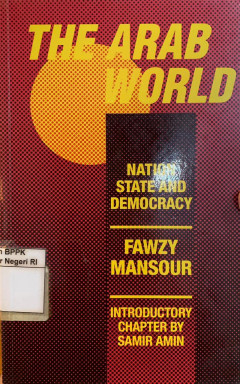
The Arab world: Nation state and democracy
Why did the Arab world, once at the forefront of urban life, commerce and knowledge, fail to develop capitalism and democracy? this book examines the arguments surrounding this paradox. It traces the historical evolution of the Arab speaking peoples and sets this survey in the context of the changing world economic system. Focusing in more detail on Egypt, Saudi Arabia and Algeria. It looks at …
- Edisi
- -
- ISBN/ISSN
- 0-86232-885-3
- Deskripsi Fisik
- viii, 135 pages : index ; 21 cm
- Judul Seri
- -
- No. Panggil
- 320.953 Man a
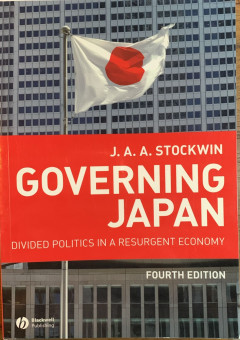
Governing Japan: Divided politics in a resurgent economy
This fourth edition provides an in-depth, up-to-date, chronological analysis of Japan’s current political system and the contributions of its leaders. It emphasizes why Japan and its politics matters in a global society. This book contains: 1. Ideal for college courses on Japanese or comparative politics as well as for those interested in Japanese war memory, constitutional revision, an…
- Edisi
- Ed. 4
- ISBN/ISSN
- 978-1-4051-5416-1
- Deskripsi Fisik
- xvi, 298 pages : index ; 24 cm.
- Judul Seri
- -
- No. Panggil
- 320.952 Sto g

North Korea: The politics of regime Survival
Featuring contributions by some of the leading experts in Korean studies, this book examines the political content of Kim Jong-Il's regime maintenance, including both the domestic strategy for regime survival and North Korea's foreign relations with South Korea, Russia, China, Japan, and the United States. It considers how and why the Democratic People's Republic of Korea (DPRK) became a "hermi…
- Edisi
- -
- ISBN/ISSN
- 0-7656-1639-4
- Deskripsi Fisik
- xi, 322 pages : bibl: hlm 299-308 : index ; 23 cm
- Judul Seri
- -
- No. Panggil
- 320.95193 Kih n
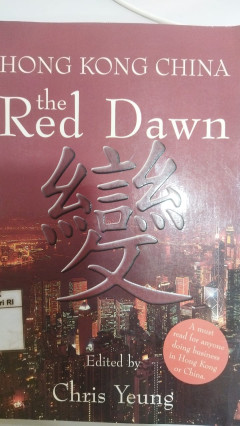
Hong Kong China the red dawn
this book is essential reading for anyone with a vested interest in the future of Hong Kong and China and its impact on global business
- Edisi
- -
- ISBN/ISSN
- 981-4024-89-9
- Deskripsi Fisik
- xiii,218 Halaman
- Judul Seri
- -
- No. Panggil
- 320.95125 Yeu h

Hong Kong & China: Pursuing a new destiny
Hong Kong was torn from China in the ninteeenth century by Britain to create colony thet has become one of the world's economic marvels. The articles about Hong Kong as a part of China, as a society in its own right, an as an important partner of the United States, Hong Kong and its people,it institutions and the prees is vigorous and sets an example for all of Asia. Whatever the outcome will b…
- Edisi
- -
- ISBN/ISSN
- 981-00-8423-4
- Deskripsi Fisik
- 172 pages : index ; 22 cm
- Judul Seri
- -
- No. Panggil
- 320.95125 Ski h

From post-maoism to post-marxism: The erosion of official ideology in Deng's …
This text chronicles Deng Xiaoping's institution of far-reaching and practical economic reforms that seem at odds with Communist theory and its emphasis on ideology. In fact, while Deng often turned to Mao for ideological justification of his reforms, those very reforms seemed to wear away to official ideology. Ultimately, even though the post-Mao government has fostered economic growth, improv…
- Edisi
- -
- ISBN/ISSN
- 0-415-92033-7
- Deskripsi Fisik
- xviii,270 pages : bibl: hlm 225-257 : index ; 22 cm
- Judul Seri
- -
- No. Panggil
- 320.951 Mis f

Rising China and Asian democratization: Socialization to global culture in th…
Annotation This book argues that democratization is inherently international: states democratize through a process of socialization to a liberal-rational global culture. This can clearly be seen in Taiwan and Thailand, where the elites and attentive public now accept democracy as universally valid. But in China, the ruling communist party resists democratization, in part because its leaders bel…
- Edisi
- -
- ISBN/ISSN
- 978-0-8047-6104-8
- Deskripsi Fisik
- xviii, 299 pages : bibl: hlm 255-291 : index ; 23 cm
- Judul Seri
- -
- No. Panggil
- 320.951 Lyn r
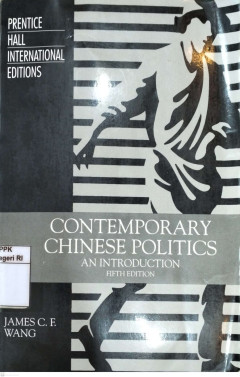
Contemporary Chinese politics: An introduction
The fifth edition contains several major changes. One is a new introductory chapter that briefly reviews China's past history and cultural heritage. Several reviewers who have used the textbook for their classes have pointed out the need to provide historical perspective for those students who have not been exposed to Chi- nese history and cultural traditions.
- Edisi
- Ed.5
- ISBN/ISSN
- 0-13-311598-4
- Deskripsi Fisik
- xviii, 371 Pages : Bibliografi; 24 cm
- Judul Seri
- -
- No. Panggil
- 320.951 Jam c

Searching for peace in Asia Pacific : an overview of conflict prevention and …
This book is one of the major outcomes of the Searching for Peace in Asia Pacific project of the European Centre for Conflict Prevention (ECCP). Numerous individuals and organizations from the Asia Pacific region, Europe. the United States, and Canada provided their advice, insights, and support in shaping the project, participated in workshops and seminars, gave feedback on draft texts, contri…
- Edisi
- -
- ISBN/ISSN
- 1-58826-239-1
- Deskripsi Fisik
- xvi, 848 pages : index ; 24 cm
- Judul Seri
- -
- No. Panggil
- 320.9509049 Hei t
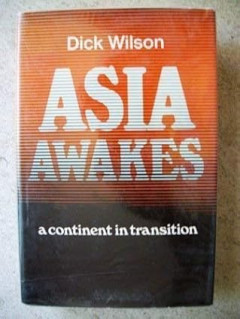
Asia awakes: A continent in transition
During the ascendency of European colonial power, the single word "Asia" was casually employed to encompass the vast area stretching from Pakistan to Japan, from Mongolia to Borneo. Only recently has the Western mind begun to comprehend the myriad variations in culture, religion, race, and political structure that exist within Asia, and their sharp differences in approaching the universal chall…
- Edisi
- -
- ISBN/ISSN
- -
- Deskripsi Fisik
- 460 pages : illustrations : index ; 22 cm
- Judul Seri
- -
- No. Panggil
- 320.95 Wil a
 Karya Umum
  Filsafat
  Agama
Agama  Ilmu-ilmu Sosial
  Bahasa
  Ilmu-ilmu Murni
  Ilmu-ilmu Terapan
  Kesenian, Hiburan, dan Olahraga
  Kesusastraan
  Geografi dan Sejarah