Ditapis dengan
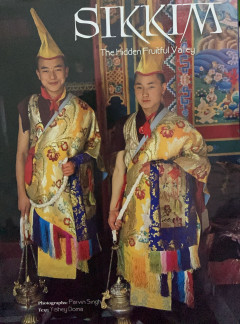
Sikkim: The Hiddden fruitfull valley
This comprehensive guide explores the region of Sikkim, known as the "Hidden Fruitful Valley." It covers Sikkim's rich history, diverse culture, stunning geography (including mountains, flora, and fauna), and provides practical guidance for travelers. It serves as an in-depth introduction to the natural attractions, spirituality, and cultural heritage of this Indian state located in the Eastern…
- Edisi
- -
- ISBN/ISSN
- 978 81 7234 170 1
- Deskripsi Fisik
- 167 pages : illustrations ; 30 cm
- Judul Seri
- -
- No. Panggil
- 915.4169 DOM s
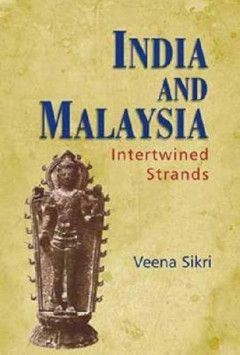
India and Malaysia
This book offers a panoramic yet in-depth historical analysis of the inter-linkages between India and Malaysia, which are a microcosm of the much larger relationship between South Asia and Southeast Asia, as these have evolved for more than two millennia. Both regions shared rich traditions, first of their Hindu and Buddhist, and later of their Islamic heritage. Till the arrival of European col…
- Edisi
- -
- ISBN/ISSN
- 978-93-5098-016-3
- Deskripsi Fisik
- xviii, 490 pages : illustrations ; 22 cm
- Judul Seri
- -
- No. Panggil
- 327.5954 SIK i
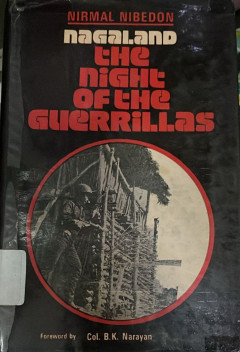
Nagaland : The Night of the guerrillas
This is the explosive story of the underground movement in Nagaland never written before. It is an investigative report of the secret trails where the dew never dries, a trail which ended far beyond the Indian borders, snaking into the monsoon-soaked jungles of Kachin, where men like Zewtu fought and died unsung. These were the forests of no return where men like Kaito, Zhukiye. Mowu, Zuheto a…
- Edisi
- -
- ISBN/ISSN
- 978-18978-2938-7
- Deskripsi Fisik
- 404 pages : illustrations ; 23 cm
- Judul Seri
- -
- No. Panggil
- 954.165 NIB n
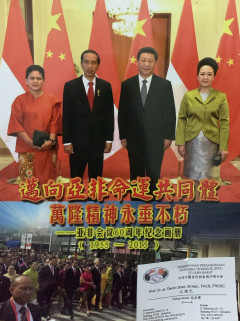
Mài xiàng yà fēi mìngyùn gòngtóngtǐ wàn lóng jīngshén yǒngchuí…
This illustrated commemorative album is dedicated to the 60th anniversary of the Asian-African Conference (1955-2015). It visually and narratively documents the development of Asian-African nations, the significance of the Ten Principles of Bandung (Dasa Sila Bandung), and the ongoing efforts to build a community of shared destiny (Mìngyùn Gòngtóngtǐ). The album highlights the spirit of so…
- Edisi
- -
- ISBN/ISSN
- 978-602-74781-2-1
- Deskripsi Fisik
- iv, 378 pages : illustrations ; 28 cm
- Judul Seri
- -
- No. Panggil
- 950.42 ZHU m
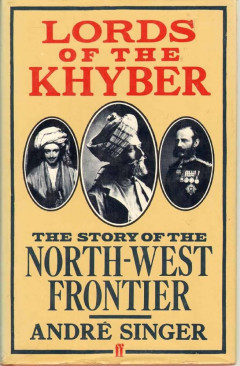
Lord of the Kyber : The Story of the North West frontier
One hundred and forty years before Russians invaded Afghanistan in 1979, causing an outcry of protest from the West. The British had marched into Kabul and put their puppet king on the throne. The years which followed saw three wars, countless skirmishes and thousands of deaths - but the Pathans, or Pushtuns, and their fellow tribesmen of the NorthWest Frontier, remained undefeated. Pushtun…
- Edisi
- -
- ISBN/ISSN
- 0-571-11796-1
- Deskripsi Fisik
- 234 pages : illustrations ; 23 cm
- Judul Seri
- -
- No. Panggil
- 954.91 SIN l

Chinese art history: Zhōngguó yìshù shǐ
This textbook presents a comprehensive chronology of the development of Chinese art from prehistoric times to the modern period. It covers a wide range of art forms, including painting, calligraphy, sculpture, architecture, ceramics, and folk art. Emphasis is placed on the distinctive characteristics of each dynasty, its philosophical influences, and the stylistic evolution that shape China's r…
- Edisi
- 1
- ISBN/ISSN
- 978-7-5461-1850-5
- Deskripsi Fisik
- 447 pages : illustrations ; 29 cm
- Judul Seri
- -
- No. Panggil
- 709.51 QIN c

Chinese art history: Zhōngguó yìshù shǐ
This textbook or reference book presents a comprehensive survey of the history of Chinese visual arts, spanning the period from the Neolithic to the 20th century. It covers the evolution of styles in painting, calligraphy, sculpture, ceramics, and architecture, highlighting important works, leading artists, and the philosophical and historical contexts that shaped China's unique and profound ar…
- Edisi
- 2
- ISBN/ISSN
- -
- Deskripsi Fisik
- 859 pages : illustrations ; 29 cm
- Judul Seri
- -
- No. Panggil
- 709.51 QIN c
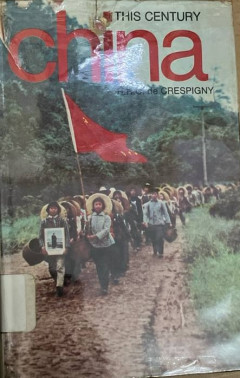
China this century
For all the world China is a great and important country. The Peking government controls the greatest population in the world and one of the largest areas of land China in this Century links the events of recent years in China with the debates of the present and the problems of the future. In the three quarters of a century since 1900 the people of China have been ruled by emperors, warlords, r…
- Edisi
- -
- ISBN/ISSN
- 17-004983-3
- Deskripsi Fisik
- xi, 299 pages : illustrations ; 22 cm
- Judul Seri
- -
- No. Panggil
- 951.041 CRE c

The Long march : The Untold story
By retracing the path, interviewing the survivors, and studying the archives, Salisbury chronicles the two-thousand-mile escape march from Chiang Kai-Shek in 1932 that marked the beginning of Chinese communism's rise to power under Mao Zedong.
- Edisi
- -
- ISBN/ISSN
- 9-780330-29451-5
- Deskripsi Fisik
- 419 pages : illustrations ; 20 cm
- Judul Seri
- -
- No. Panggil
- 951.04 SAL l
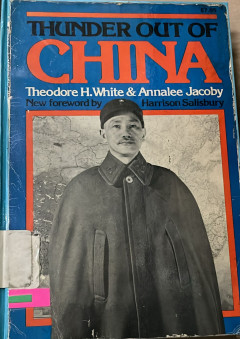
Thunder out of China
From the first outbreak of hostilities in northern China in 1937 to the Japanese surrender aboard the U.S.S. Missouri in 1945, this book recreates the decade of upheaval when China was caught in the grip of revolution and war and torn from its feudal past. The authors, Time-Life correspondents during the war years, report firsthand on the rise and fall of the Kuomintang nationalist government a…
- Edisi
- -
- ISBN/ISSN
- 0-306-80128-0
- Deskripsi Fisik
- viii, 331 pages : illustrations ; 21 cm
- Judul Seri
- -
- No. Panggil
- 951.042 WHI t
 Karya Umum
  Filsafat
  Agama
Agama  Ilmu-ilmu Sosial
  Bahasa
  Ilmu-ilmu Murni
  Ilmu-ilmu Terapan
  Kesenian, Hiburan, dan Olahraga
  Kesusastraan
  Geografi dan Sejarah