Ditapis dengan

Japan unmasked
An accessible and candid insight into the realities of Japanese society, culture, and national character. Kawasaki explains how historical experiences, social structures, traditions, and group-centered values shape everyday life in Japan. The book highlights key themes such as work ethic, social discipline, modernization, and the tension between tradition and change. Through clear observations …
- Edisi
- -
- ISBN/ISSN
- -
- Deskripsi Fisik
- 231 pages : illustrations ; 18 cm
- Judul Seri
- -
- No. Panggil
- 952 KAW j
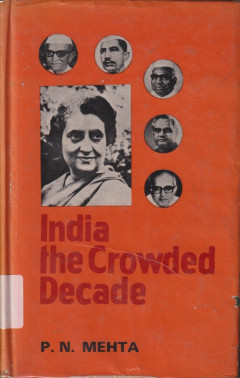
India: The Crowded decade
India: The Crowded Decade by P. N. Mehta offers an insightful analysis of a pivotal decade in India’s post-independence history. The book examines major political events, economic developments, social changes, and demographic pressures shaping the nation during this period. Mehta evaluates government policies, leadership challenges, and the impact of rapid population growth on national planni…
- Edisi
- -
- ISBN/ISSN
- -
- Deskripsi Fisik
- 446 pages ; 22,5 cm
- Judul Seri
- -
- No. Panggil
- 954.04 MEH i

Trade and civilisation in the Indian ocean: An Economic history from the rise…
A landmark study examining the economic and commercial interactions that shaped the Indian Ocean region from the rise of Islam (7th century) to the mid-18th century. The book explores long-distance maritime trade, commercial networks, economic institutions, cultural exchanges, and the role of ports and trading communities across Asia, the Middle East, and East Africa. Chaudhuri analyzes how tra…
- Edisi
- -
- ISBN/ISSN
- 0-521-25359-9
- Deskripsi Fisik
- xiii pages : illustrations ; 24,5 cm
- Judul Seri
- -
- No. Panggil
- 382.0954 CHA t

The Rise and fall of the Shah: 1941–1979
The Rise and Fall of the Shah provides an in-depth political and historical analysis of Iran under the rule of Mohammad Reza Shah Pahlavi from 1941 until his overthrow in 1979. Amin Saikal examines the Shah’s consolidation of power, the role of foreign influence, economic and social reforms, and the political tensions that ultimately contributed to the collapse of his regime. The book offers …
- Edisi
- -
- ISBN/ISSN
- 0-207-14412-5
- Deskripsi Fisik
- xiii, 279 pages ; 22 cm
- Judul Seri
- -
- No. Panggil
- 955.03 SAI r
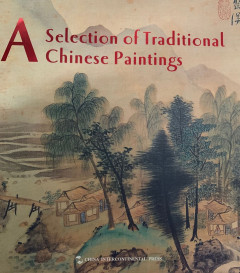
A Selection of traditional Chinese paintings
This collection of traditional Chinese paintings (album) includes 260 masterpieces from various dynasties, systematically showcasing the origins, styles, and development of traditional Chinese painting, and providing an overview of its history. Rich in content and engaging, this album is highly valuable for collectors.
- Edisi
- -
- ISBN/ISSN
- 978-7-5085-1030-9
- Deskripsi Fisik
- 229 pages : illustrations ; 29 cm
- Judul Seri
- -
- No. Panggil
- 751.4251 FEN s
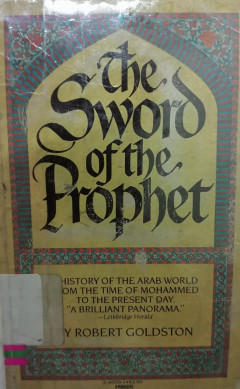
The Sword of the Prophet
The Sword of the Prophet is a concise yet sweeping history of the Arab world from the time of Muhammad up to the modern era. Goldston traces the rise and spread of Islam, examining its religious foundations, political evolution, and cultural impact. He explores how Islam united vast territories, how the Arab empires rose and fell, and how in the 20th century the Arab world re-emerged as a force…
- Edisi
- -
- ISBN/ISSN
- 0-449-24393-1
- Deskripsi Fisik
- 224 pages ; 15 cm
- Judul Seri
- -
- No. Panggil
- 953.8 GOL s

Masa jaya dan jatuhnya Shah Iran: (Who Shah Iran?)
This book provides an overview of the rise and downfall of Mohammad Reza Shah Pahlavi, the last monarch of Iran. It explores the political, social, and economic landscape of Iran during his rule, highlighting the Shah’s efforts at modernization, Westernization, and consolidation of power. The narrative also discusses the tensions between the monarchy, religious leaders, and the Iranian people…
- Edisi
- -
- ISBN/ISSN
- -
- Deskripsi Fisik
- 155 pages : illustrations ; 20 cm
- Judul Seri
- -
- No. Panggil
- 955.053 STO m

Ancient history of Western Asia, India, and Crete
Ancient History of Western Asia, India, and Crete presents a comprehensive overview of the early civilizations that shaped the ancient world. Bedřich Hrozný discusses the political, cultural, and social development of Western Asia, including Mesopotamia and the Near East, alongside the evolving civilizations of ancient India and Crete. Through archaeological findings, inscriptions, and histor…
- Edisi
- -
- ISBN/ISSN
- -
- Deskripsi Fisik
- viii, 259 pages ; 25 cm
- Judul Seri
- -
- No. Panggil
- 954 HRO a
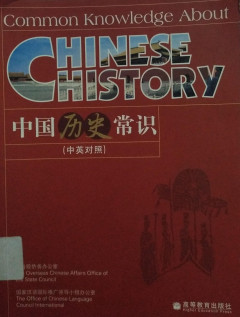
Common knowledge about Chinese history
This bilingual Chinese–English reference book provides an accessible overview of the major events, dynasties, and developments in Chinese history. Published by the Higher Education Press under the guidance of the Overseas Chinese Affairs Office of the State Council and the Office of Chinese Language Council International, it is designed for international students and readers seeking foundatio…
- Edisi
- -
- ISBN/ISSN
- 978-7-04-020717-0
- Deskripsi Fisik
- 260 pages : Ilustrations : 23,5 cm
- Judul Seri
- -
- No. Panggil
- 951 TIM c

Chinese art history: Zhōngguó yìshù shǐ
This textbook or reference book presents a comprehensive survey of the history of Chinese visual arts, spanning the period from ancient times to the modern period. Discussions cover the evolution of styles in painting, calligraphy, sculpture, ceramics, and architecture. It highlights key works, leading artists, and the philosophical and historical contexts that shaped China's unique and profoun…
- Edisi
- 3
- ISBN/ISSN
- 978-7-5461-1850-5
- Deskripsi Fisik
- 1309 pages : illustrations ; 29 cm
- Judul Seri
- -
- No. Panggil
- 709.51 QIN c
 Karya Umum
  Filsafat
  Agama
Agama  Ilmu-ilmu Sosial
  Bahasa
  Ilmu-ilmu Murni
  Ilmu-ilmu Terapan
  Kesenian, Hiburan, dan Olahraga
  Kesusastraan
  Geografi dan Sejarah