Ditapis dengan
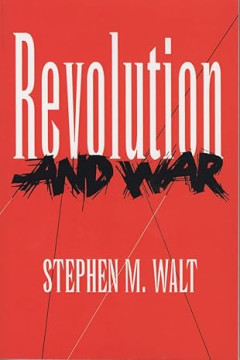
Revolution and war
Revolution within a state almost invariably leads to intense security competition between states, and often to war. In Revolution and War, Stephen M. Walt explains why this is so, and suggests how the risk of conflicts brought on by domestic upheaval might be reduced in the future. In doing so, he explores one of the basic questions of international relations: What are the connections between d…
- Edisi
- Cet. 1
- ISBN/ISSN
- 0-8014-3205-7
- Deskripsi Fisik
- x, 365 pages : index ; 24 cm
- Judul Seri
- -
- No. Panggil
- 303.64 Wal r

Carry me home: Birmingham, Alabama: The climactic battle of the civil rights …
"The Year of Birmingham," 1963, was a cataclysmic turning point in America's long civil rights struggle. That spring, child demonstrators faced down police dogs and fire hoses in huge nonviolent marches for desegregation. A few months later, Ku Klux Klansmen retaliated by bombing the Sixteenth Street Baptist Church and killing four young black girls. Diane McWhorter, journalist and daughter of …
- Edisi
- -
- ISBN/ISSN
- 0-7432-1772-1
- Deskripsi Fisik
- 719 pages : illustrations (black and white) : bibl: hlm 677-685 : index ; 23 cm
- Judul Seri
- -
- No. Panggil
- 303.64 Mcw c

At war's end : Building peace after civil conflict
Exploring the challenge of rehabilitating countries after civil wars, this study finds that attempting to transform war-shattered states into liberal democracies with market economies can backfire badly. Roland Paris contends that the rapid introduction of democracy and capitalism in the absence of effective institutions can increase rather than decrease the danger of renewed fighting. A more e…
- Edisi
- -
- ISBN/ISSN
- 0-521-54197-2
- Deskripsi Fisik
- xi, 289 pages : bibl: hlm 237-279 : index ; 23 cm
- Judul Seri
- -
- No. Panggil
- 303.64 Par a
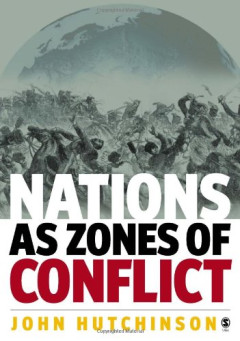
Nations as zones of conflict
Part 1: Zones Of Conflict Part 2: The Revivalist Revolution Part 3: Cultural Wars
- Edisi
- -
- ISBN/ISSN
- 0-7619-5727-8
- Deskripsi Fisik
- viii, 213 pages : bibl: hlm 197-205 : index ; 24 cm
- Judul Seri
- -
- No. Panggil
- 303.64 Hut n

Seeds of terror: An eyewitness account of Al-Qaeda's newest center of operati…
For anyone wishing to understand the next, post-9/11 generation of al-Qaeda planning, leadership, and tactics, there is only one place to begin: Southeast Asia. In fact, such countries as the Philippines, Indonesia, Thailand, and Malaysia have been crucial nodes in the al-Qaeda network since long before the strikes on the Pentagon and World Trade Center, but when the allies overran Afghanistan,…
- Edisi
- -
- ISBN/ISSN
- 0-7432-5133-4
- Deskripsi Fisik
- xvi, 254 pages : index ; 23 cm
- Judul Seri
- -
- No. Panggil
- 303.6250959 Res s
Strategy and security in the Asia-Pacific
Strategy and Security in the Asia-Pacific provides the analytical frameworks needed to make sense of this complex but exciting strategic universe. Offering a unique mix of global strategic thinking and Asia-Pacific security analysis, this book is for readers from Sydney to Seoul who want to put their own local security challenges in a wider regional and global context. It is also for North Amer…
- Edisi
- First Published
- ISBN/ISSN
- 1-74114-798-0
- Deskripsi Fisik
- xxiii, 343 pages : index ; 23 cm
- Judul Seri
- -
- No. Panggil
- 303.625095 Ays s
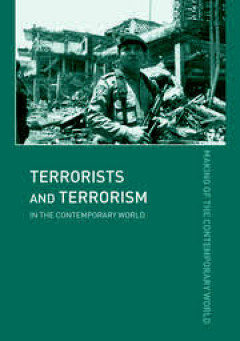
Terrorists and terrorism in the contemporary world
Terrorists and Terrorism in the Contemporary World surveys this topical and complex subject. The book concentrates on the terrorists themselves and on their psychology in an historical context. Focusing on a variety of both prominent and less notorious terrorist groups the author encourages readers to think about the mindset, motivation and tactics of terrorists. He also discusses the lines of …
- Edisi
- Cet. 1
- ISBN/ISSN
- 0-415-32086-0
- Deskripsi Fisik
- viii, 172 pages : illustrations (black and white) : index ; 21 cm
- Judul Seri
- -
- No. Panggil
- 303.625 Whi t
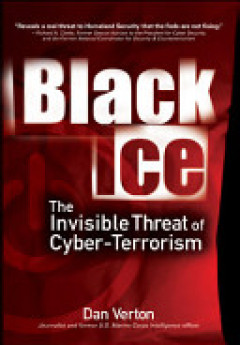
Black ice: The invisible threat of cyber-terrorism
The first book to define the clear and present danger posed by a cyber-terrorist attack on the U.S. computer- and network-dependent infrastructure. The pages are packed with interviews from members of terrorist groups, including al-Qaida, as well as key insiders involved in planning and executing the U.S. plan for the defense of cyberspace, including Tom Ridge, James Gilmore, CIA and NSA offici…
- Edisi
- -
- ISBN/ISSN
- 0-07-222787-7
- Deskripsi Fisik
- xxviii, 273 pages : illustrations (black and white) : index ; 23 cm
- Judul Seri
- -
- No. Panggil
- 303.625 Ver b

Winning against terrorism: Speeches by Singapore Prime Minister Goh Chok Tong
The thread that binds the three speeches is the argument that the war against terrorism must be simultaneously fought on the ideological and geopolitical front. This war cannot be won by military might alone. Everyone in the civilised world Muslims and non-Muslims alike must unite and fight the common enemy the jihadist who have propagated violence and terror in the name of Islam. The United St…
- Edisi
- -
- ISBN/ISSN
- 981-05-1429-8
- Deskripsi Fisik
- 51 pages : 23 cm.
- Judul Seri
- -
- No. Panggil
- 303.625 Ton w
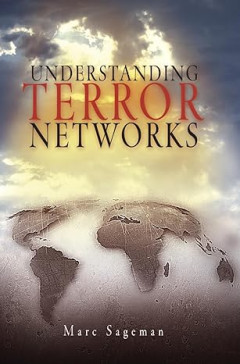
Understanding terror networks
Understanding Terror Networks combines Sageman's scrutiny of sources, personal acquaintance with Islamic fundamentalists, deep appreciation of history, and effective application of network theory, modeling, and forensic psychology. Sageman's unique research allows him to go beyond available academic studies, which are light on facts, and journalistic narratives, which are devoid of theory. The …
- Edisi
- -
- ISBN/ISSN
- 0-8122-3808-7
- Deskripsi Fisik
- ix, 220 pages : illustrations (black and white) : bibl: hlm 193-212 : index ; 23 cm
- Judul Seri
- -
- No. Panggil
- 303.625 Sag u
 Karya Umum
  Filsafat
  Agama
Agama  Ilmu-ilmu Sosial
  Bahasa
  Ilmu-ilmu Murni
  Ilmu-ilmu Terapan
  Kesenian, Hiburan, dan Olahraga
  Kesusastraan
  Geografi dan Sejarah