Ditapis dengan
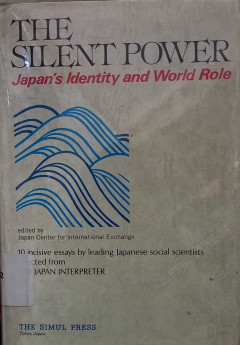
The Silent power: Japan's identity and world role
How Japan’s cultural traditions, historical experiences, and national identity shape its behavior and position in the international community. The book examines Japan’s preference for subtle, indirect, and consensus-driven strategies in diplomacy, economics, and global engagement—an approach often described as “silent power.” It analyzes how Japan balances pacifist principles with eco…
- Edisi
- -
- ISBN/ISSN
- -
- Deskripsi Fisik
- xi, 251 pages ; 21 cm
- Judul Seri
- -
- No. Panggil
- 327.352 EXC s
One trench or two
One Trench or Two presents Saddam Hussein’s political reflections on unity, conflict, and national struggle within the context of Iraq and the Arab world. The book outlines his views on leadership, ideological commitment, and the necessity of unified action in confronting external and internal challenges. Through a combination of political commentary and strategic argumentation, Saddam Hussei…
- Edisi
- 1
- ISBN/ISSN
- -
- Deskripsi Fisik
- 49 pages; 20 cm
- Judul Seri
- -
- No. Panggil
- 335 HUS o
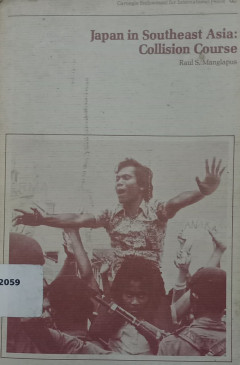
Japan in Southeast Asia: Collision course
Japan’s expanding political and economic presence in Southeast Asia during the postwar and early contemporary periods. Manglapus analyzes how Japan’s rapid economic growth, increasing investment, and regional diplomatic activities influence Southeast Asian nations and reshape regional power dynamics. The book explores both opportunities and tensions arising from Japan’s involvement—rang…
- Edisi
- -
- ISBN/ISSN
- 0-87003-004-3
- Deskripsi Fisik
- vi, 151 pages : illustrations ; 23 cm
- Judul Seri
- -
- No. Panggil
- 327.252059 MAN j

Iraq: The Eternal fire 1972 Iraqi oil nationalizaation in perspective
Iraq: The Eternal Fire – 1972 Iraqi Oil Nationalization in Perspective examines one of the most significant turning points in Iraq’s modern economic and political history: the nationalization of its oil industry in 1972. The book analyzes the circumstances that led to the decision, including international pressures, domestic political shifts, and Iraq’s growing assertion of sovereignty ov…
- Edisi
- 11
- ISBN/ISSN
- 0 86199 004 8
- Deskripsi Fisik
- 255 pages; 22,5 cm
- Judul Seri
- -
- No. Panggil
- 338.2 HUS i

Japanese politics--an Inside view: Readings from Japan
Presents a collection of essays and analyses written by Japanese scholars that provide an insider’s perspective on Japan’s political system. The book explores key aspects of political institutions, party dynamics, bureaucratic influence, local governance, and policy-making processes. By highlighting viewpoints rooted in Japan’s own academic and political discourse, the volume offers reade…
- Edisi
- -
- ISBN/ISSN
- 0-8014-0735-4
- Deskripsi Fisik
- x, 248 pages : illustrations ; 21,5 cm
- Judul Seri
- -
- No. Panggil
- 320.95204 ITO j
Political development in modern Japan
A comprehensive analysis of Japan’s political transformation from the late Tokugawa period to the post–World War II era. Ward examines the major forces—social, institutional, intellectual, and international—that shaped Japan’s transition from a feudal order to a modern nation-state. The book highlights key developments such as the Meiji Restoration, constitutional formation, party pol…
- Edisi
- -
- ISBN/ISSN
- 0-691-00017-4
- Deskripsi Fisik
- xii, 637 pages ; 20 cm
- Judul Seri
- -
- No. Panggil
- 320.952 WAR p

Le Senegal et la Gambie
Senegal and Gambia by Hubert Deschamps is a comprehensive study of the history, geography, society, and political dynamics that shape two neighboring countries in West Africa: Senegal and Gambia. Using a historical and ethnographic approach, Deschamps traces the development of this region from pre-colonial times, through the period of European exploration and French-British colonization, to the…
- Edisi
- -
- ISBN/ISSN
- -
- Deskripsi Fisik
- 125 pages; 18 cm
- Judul Seri
- -
- No. Panggil
- 966.3 DES l

Thought and behaviour in modern Japanese politics
A seminal study that analyzes the intellectual foundations, patterns of thought, and political behavior that shaped modern Japanese politics. Maruyama examines how the legacy of feudalism, traditional power structures, and hierarchical norms influenced Japan’s political development before and after World War II. The book explores the relationship between ideology, political institutions, and …
- Edisi
- -
- ISBN/ISSN
- 0-19-580453-8
- Deskripsi Fisik
- ix, 407 pages ; 20 cm
- Judul Seri
- -
- No. Panggil
- 320.952 MAR t
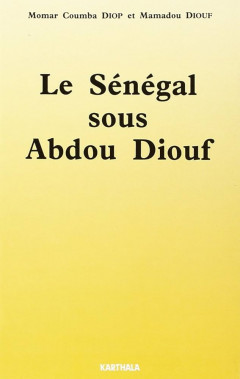
Le Senegal sous Abdou Diouf : Etat et Societe
Senegalese democracy is considered exemplary by foreign observers and by a large section of the African intelligentsia, which is under siege from multifaceted forms of state terrorism. Given the democratic demands currently shaking Africa, it is tempting to view Senegal as a model. And yet, for a large majority of Senegalese, more and better democracy has become the central demand that mobilize…
- Edisi
- -
- ISBN/ISSN
- 2-86537-275-8
- Deskripsi Fisik
- 436 pages ; 21 cm
- Judul Seri
- -
- No. Panggil
- 324.2663 DIO l
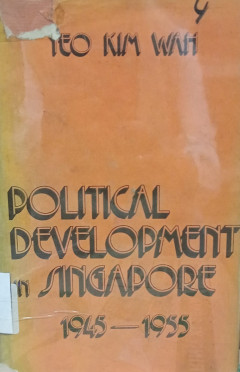
Political development in Singapore 1945-55
This book examines Singapore’s political transformation in the decade following World War II, highlighting the emergence of new political institutions and rising local political consciousness. It analyzes the interplay between British colonial policies and the growing demand for self-governance among Singapore’s diverse population. The author explores key political movements, societal chang…
- Edisi
- -
- ISBN/ISSN
- -
- Deskripsi Fisik
- x, 230 pages ; 22 cm
- Judul Seri
- -
- No. Panggil
- 320.959 WAH p
 Karya Umum
  Filsafat
  Agama
Agama  Ilmu-ilmu Sosial
  Bahasa
  Ilmu-ilmu Murni
  Ilmu-ilmu Terapan
  Kesenian, Hiburan, dan Olahraga
  Kesusastraan
  Geografi dan Sejarah