Ditapis dengan

Modern South Africa : A volume in the comparative societies series
One in a series of short books devoted to different countries that offers much-needed cross-cultural and global material to instructors. Used alongside an introductory sociology text or as a supplement in courses on comparative societies, comparative politics, comparative economics, or social stratification, this book brings a rich global perspective into the undergraduate classroom. The openin…
- Edisi
- -
- ISBN/ISSN
- 0-07-235211-6
- Deskripsi Fisik
- xvi, 219 pages : illustrations : index ; 23 cm
- Judul Seri
- -
- No. Panggil
- 306.0968 Gay m
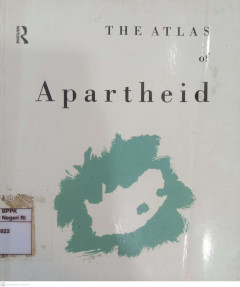
The atlas of apartheid
The Atlas describes the legislation and impact of apartheid and the resistance, both local and international, to its racial policies. The integration of detailed maps and text reinforces the specifically spatial nature of apartheid, the way the map of South Africa was redrawn and continues to be redrawn
- Edisi
- -
- ISBN/ISSN
- 0-415-10268-5
- Deskripsi Fisik
- xi, 212 pages : illustration : index ; 26 cm
- Judul Seri
- -
- No. Panggil
- 305.800968022 Chr a

Against global apartheid : South Africa meets the world bank, IMF and interna…
Critiquing the neoliberal economics formulated and imposed by the World Bank and IMF on developing countries generally, and Africa specifically, this book details the consequences of these policies. Demonstrated are the extraordinary economic and human damage these practices have wrought over the past decade, and how they have displaced the originally radical and pro-people orientation of the A…
- Edisi
- -
- ISBN/ISSN
- 1-842-77393-3
- Deskripsi Fisik
- xxiv, 326 pages : illustrations (black and white) : index ; 22 cm
- Judul Seri
- -
- No. Panggil
- 301.241 Bon a

Desmond Tutu: The rainbow people of God : South Africa's victory over of apar…
This book chronicles the extraordinary events in South Africas recent history, from the 76 Soweto riots, the euphoria of Nelson Mandelas release, to the 1994 elections and the final shattering of the reviled apartheid system
- Edisi
- -
- ISBN/ISSN
- 0-553-40886-0
- Deskripsi Fisik
- xvi, 286 pages : illustrations (black and white) ; 20 cm
- Judul Seri
- -
- No. Panggil
- 960 All d

Not just the 'other emerging powers': Indonesia, South Africa and Turkey in t…
This contents of this book: 1. Emerging powers: Between BRIC and non-BRIC 2. Pivot state and analytic eclectism 3. Background for the case studies 4. Indonesia as a pivot? An analysis of three case studies
- Edisi
- -
- ISBN/ISSN
- 978-979-456-710-4
- Deskripsi Fisik
- xx, 329 pages ; 21 cm
- Judul Seri
- -
- No. Panggil
- 327.598 San n
Brazilian views on South African foreign policy
The contents of this book: - South African Foreign Policy (1945-1999) - South Africa's Foreign Policy: From Internationalisation to Globalisation - The Foreign Economic Policy of South Africa
- Edisi
- -
- ISBN/ISSN
- -
- Deskripsi Fisik
- 284 pages, 22 cm
- Judul Seri
- -
- No. Panggil
- 327.68 Gui b

Tomorrow is another country: The inside story of South Africa's negotiated re…
South Africa's transformation from apartheid to a non-racial democracy has been called a miracle. But behind the public story lies another, the story of how the Afrikaners' own secret brotherhood, the Broderbund, saw the need for change and met secretly with the ANC in an English village
- Edisi
- -
- ISBN/ISSN
- 1-875015-11-6
- Deskripsi Fisik
- 254 pages : index ; 20 cm
- Judul Seri
- -
- No. Panggil
- 968 Spa t

Namibia's liberation struggle: The two-edged sword
The story that emerges is one of endurance and heroism in face of atrocious brutality on the part of the colonialists. But it reveals that it was also one of painful compromises imposed by the conditions of the struggle and the subordination of internal democracy within the liberation movement to the single goal of military and diplomatic victory. The study will be of keen interest to everyone…
- Edisi
- -
- ISBN/ISSN
- 0-85255-374-9
- Deskripsi Fisik
- x, 212 pages : maps, index ; 23 cm
- Judul Seri
- -
- No. Panggil
- 320.966884 Ley n
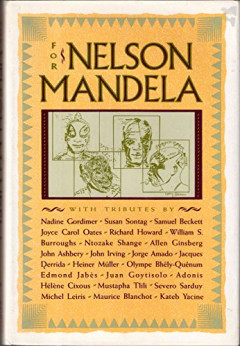
For Nelson Mandela
Since June 1964, Nelson Mandela has been imprisoned in South Africa. His speeches and writings have been banned, his words and voice cut off from his people. A whole generation has been born and grown up while he has been in jail, yet, in the words of Nadine Gordimer, "there is no black child in whose face, at the mention of his name, there is not instant recognition." For Nelson Mandela is a l…
- Edisi
- First Edition
- ISBN/ISSN
- 0805005811
- Deskripsi Fisik
- xv, 256 pages : biography ; 22 cm
- Judul Seri
- -
- No. Panggil
- 808.80358 Der n
 Karya Umum
  Filsafat
  Agama
Agama  Ilmu-ilmu Sosial
  Bahasa
  Ilmu-ilmu Murni
  Ilmu-ilmu Terapan
  Kesenian, Hiburan, dan Olahraga
  Kesusastraan
  Geografi dan Sejarah