Ditapis dengan

Political development in modern Japan
A comprehensive analysis of Japan’s political transformation from the late Tokugawa period to the post–World War II era. Ward examines the major forces—social, institutional, intellectual, and international—that shaped Japan’s transition from a feudal order to a modern nation-state. The book highlights key developments such as the Meiji Restoration, constitutional formation, party pol…
- Edisi
- -
- ISBN/ISSN
- 0-691-00017-4
- Deskripsi Fisik
- xii, 637 pages ; 20 cm
- Judul Seri
- -
- No. Panggil
- 320.952 WAR p

Thought and behaviour in modern Japanese politics
A seminal study that analyzes the intellectual foundations, patterns of thought, and political behavior that shaped modern Japanese politics. Maruyama examines how the legacy of feudalism, traditional power structures, and hierarchical norms influenced Japan’s political development before and after World War II. The book explores the relationship between ideology, political institutions, and …
- Edisi
- -
- ISBN/ISSN
- 0-19-580453-8
- Deskripsi Fisik
- ix, 407 pages ; 20 cm
- Judul Seri
- -
- No. Panggil
- 320.952 MAR t

Japan: The Intellectual foundations of modern Japanese politics
Explores the major ideas and intellectual traditions that shaped Japan’s political development from the late Tokugawa era to modern times. The book highlights how thinkers and reformers debated issues such as modernization, authority, democracy, and national identity. Najita shows how these evolving ideas influenced the formation of Japan’s political institutions and guided the country’s …
- Edisi
- -
- ISBN/ISSN
- 0-226-56803-2
- Deskripsi Fisik
- viii, 152 pages ; 20 cm
- Judul Seri
- -
- No. Panggil
- 320.52 NAJ j

The Japan of today
An overview of Japan’s contemporary political, economic, and social landscape, highlighting the forces that have shaped the nation’s modern identity. The book examines postwar developments, governmental structure, industrial growth, technological innovation, demographic change, and cultural trends. It explores the balance between tradition and modernization, the role of education and work c…
- Edisi
- -
- ISBN/ISSN
- -
- Deskripsi Fisik
- 157 pages : illustrations ; 22,5 cm
- Judul Seri
- -
- No. Panggil
- 306.52 INT j

Japanese culture A Study of origins and characteristics
Explores the historical roots and key characteristics of Japanese cultural identity. Through an anthropological perspective, Ishida examines how geography, early social structures, religious traditions, and external influences shaped Japan’s values, rituals, and patterns of thought. The book offers a concise overview of the main cultural factors that have defined Japan’s development over time.
- Edisi
- -
- ISBN/ISSN
- -
- Deskripsi Fisik
- ix, 156 pages ; 23,5 cm
- Judul Seri
- -
- No. Panggil
- 306.152 ISH j

The Japanese discovery of America: A Brief history with documents
This book focuses on the Japanese encounter with the Americans in the mid-nineteenth century, an episode that took place rather late in the "age of discovery," as the last "unknown" lands of Africa and Asia were being probed by Western merchants, explorers, and travelers. Most of the documents assembled here -- poems and political pamphlets, official memorials and private journals, newspaper re…
- Edisi
- -
- ISBN/ISSN
- 0-312-11681-0
- Deskripsi Fisik
- xii, 226 pages ; 21 cm
- Judul Seri
- -
- No. Panggil
- 303.482 DUU j

Social change and the individual: Japan before and after defeat in world war II
A distinguished Japanese scholar counterbalances the current preoccupation among sociologists with childhood socialization by exploring the changes in values and attitudes among adults in Japan before and after World War II. Originally published in 1970. The Princeton Legacy Library uses the latest print-on-demand technology to again make available previously out-of-print books from the disting…
- Edisi
- -
- ISBN/ISSN
- 0-691-09347-4
- Deskripsi Fisik
- 441 pages ; 24 cm
- Judul Seri
- -
- No. Panggil
- 303.452 TSU s

Japanese society
The social structures that shape everyday life in Japan. She argues that Japanese society is organized around “frames,” or group-based affiliations, rather than class. These group ties influence authority, loyalty, and social behavior, helping explain how cohesion and hierarchy function within Japanese institutions. The book offers a concise framework for understanding the foundations of Ja…
- Edisi
- -
- ISBN/ISSN
- 0-14-02-1682-0
- Deskripsi Fisik
- 162 pages : illustrations ; 18 cm
- Judul Seri
- -
- No. Panggil
- 301.52 NAK j
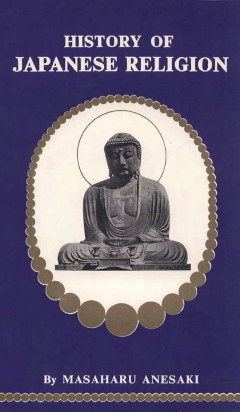
History of Japanese religion
An overview of the development of religious traditions in Japan from ancient to modern times. The book outlines the evolution of Shinto, Buddhism, Confucian influences, and various syncretic practices, showing how these traditions interacted with major historical and cultural changes. Anesaki highlights key periods of religious transformation and explains how religion has influenced Japanese so…
- Edisi
- -
- ISBN/ISSN
- 0-8048-0248-3
- Deskripsi Fisik
- xxi, 423 pages : illustrations ; 23,5 cm
- Judul Seri
- -
- No. Panggil
- 294.30952 ANE h

Japanese religion: A Survey by the agency for cultural affairs
An extensive overview of the historical development, structure, and contemporary practice of religion in Japan. The book examines major religious traditions—such as Shinto, Buddhism, Christianity, and various new religious movements—while analyzing their beliefs, rituals, institutions, and social roles. It highlights how religious practices have adapted over time in response to cultural cha…
- Edisi
- -
- ISBN/ISSN
- 0-87011-467-0
- Deskripsi Fisik
- 263 pages : illustrations ; 18 cm
- Judul Seri
- -
- No. Panggil
- 200.952 ICH j
 Karya Umum
  Filsafat
  Agama
Agama  Ilmu-ilmu Sosial
  Bahasa
  Ilmu-ilmu Murni
  Ilmu-ilmu Terapan
  Kesenian, Hiburan, dan Olahraga
  Kesusastraan
  Geografi dan Sejarah