Ditapis dengan
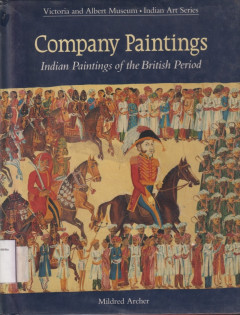
Company paintings: Indian paintings of the British period
Company Paintings: Indian Paintings of the British Period by Mildred Archer provides an authoritative study of the hybrid artistic tradition that emerged in India during the rule of the British East India Company. Known as "Company School" paintings, these works combine Indian artistic techniques with European themes, perspectives, and patronage. The book explores the development of this style …
- Edisi
- -
- ISBN/ISSN
- 0-948035-96-2
- Deskripsi Fisik
- 240 pages : illustrations ; 28 cm
- Judul Seri
- -
- No. Panggil
- 759.954 ARC c

The Ajanta caves: Artistic wonder of ancient buddhist India
The Ajanta Caves: Artistic Wonder of Ancient Buddhist India by Benoy K. Behl is a richly illustrated study of one of the world’s greatest monuments of Buddhist art. Featuring high-resolution photographs and detailed commentary, the book explores the murals, sculptures, narrative cycles, and architectural features of the Ajanta cave complex, dating from the 2nd century BCE to the 6th century C…
- Edisi
- -
- ISBN/ISSN
- 0-8109-1879-8
- Deskripsi Fisik
- 256 pages : illustrations ; 30 cm
- Judul Seri
- -
- No. Panggil
- 704.948952 BEH a
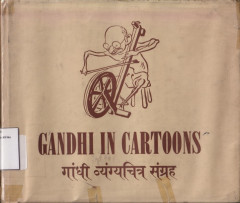
Gandhi in cartoons
Gandhi in Cartoons is a visual compilation presenting the life, ideas, and public presence of Mahatma Gandhi through political cartoons published across various Indian newspapers and magazines. This collection highlights how cartoonists interpreted Gandhi’s leadership, non-violence philosophy, encounters with British authorities, and his role in India’s freedom struggle. The volume captures…
- Edisi
- -
- ISBN/ISSN
- -
- Deskripsi Fisik
- 238 pages : illustrations ; 19 cm
- Judul Seri
- -
- No. Panggil
- 741.56954 NAV g
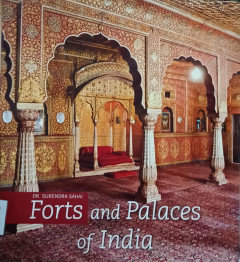
Forts and palaces of India
An extensively illustrated survey of India’s most iconic architectural monuments. Combining historical research, architectural analysis, and vivid photography, the book explores the origins, development, and cultural significance of forts and palaces built across various regions of India. Sahai examines their construction techniques, defensive features, artistic styles, royal patronage, and t…
- Edisi
- -
- ISBN/ISSN
- 978-81-7234-179-4
- Deskripsi Fisik
- 249 pages : illustrations ; 30 cm
- Judul Seri
- -
- No. Panggil
- 720.954 SAH f
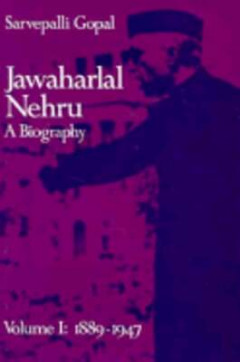
Jawaharlal Nehru : A Biography, Volume I 1889-1947
This first volume of Sarvepalli Gopal's remarkable biography, covering Nehru's youth and ending with independence in 1947, is written from first-hand knowledge of the man whom he served for ten years in the Ministry for External Affairs and from the free access granted him by Prime Minister Indira Gandhi to her father's private papers. The only surviving son of a politically ambitious lawyer, …
- Edisi
- -
- ISBN/ISSN
- 0-674-47310-8
- Deskripsi Fisik
- 398 pages : illustrations ; 24 cm
- Judul Seri
- -
- No. Panggil
- 923.54 GOP j
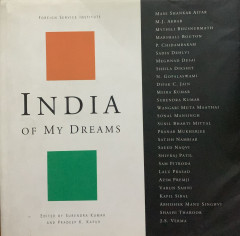
India of my dreams
This book is a comprehensive collection of Mahatma Gandhi's writings that summarize his vision of an ideal India (Swaraj). Gandhi outlines his views on various aspects of national life, including education, the rural economy, political structure, the role of religion, the status of women, and community development. It is a blueprint for the India he envisioned, based on the principles of truth …
- Edisi
- -
- ISBN/ISSN
- 978-81-7188-689-0
- Deskripsi Fisik
- 299 pages : illustrations ; 25 cm
- Judul Seri
- -
- No. Panggil
- 954.035 KUM i

The Ramayana: Love and valour in India's great epic — The Mewar ramayana m…
A richly illustrated exploration of the celebrated Mewar Ramayana, one of the most magnificent manuscript traditions in Indian art history. Written by J. P. Losty, this volume showcases exquisite miniature paintings commissioned by Maharana Jagat Singh of Mewar in the 17th century. The book examines the narrative structure of the Ramayana, its artistic interpretation, stylistic features, and cu…
- Edisi
- -
- ISBN/ISSN
- 978-93-85285-17-9
- Deskripsi Fisik
- illustrations ; 25,5 cm
- Judul Seri
- -
- No. Panggil
- 891.212 LOS r

India in crisis
India in Crisis by J. D. Sethi offers a critical examination of the political, economic, and social upheavals that shaped India during a turbulent period of its post-independence history. Sethi analyzes internal conflicts, policy failures, leadership challenges, and the pressures created by rapid population growth and economic instability. The book discusses major national crises, including pol…
- Edisi
- -
- ISBN/ISSN
- -
- Deskripsi Fisik
- 233 pages ; 22 cm
- Judul Seri
- -
- No. Panggil
- 954.05 SET i
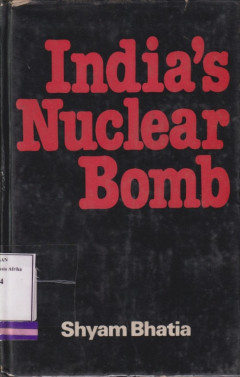
India's nuclear bomb
An in-depth investigation into India’s pursuit of nuclear capability during the Cold War era. The book examines political motivations, scientific developments, and strategic calculations behind India’s nuclear programme. Bhatia discusses key events leading to the first nuclear test in 1974 (“Smiling Buddha”), responses from global powers, and the domestic debates surrounding nuclear pol…
- Edisi
- -
- ISBN/ISSN
- 0-7069-0770-5
- Deskripsi Fisik
- 169 pages ; 22 cm
- Judul Seri
- -
- No. Panggil
- 355.8251 BHA i
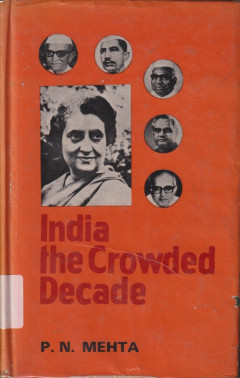
India: The Crowded decade
India: The Crowded Decade by P. N. Mehta offers an insightful analysis of a pivotal decade in India’s post-independence history. The book examines major political events, economic developments, social changes, and demographic pressures shaping the nation during this period. Mehta evaluates government policies, leadership challenges, and the impact of rapid population growth on national planni…
- Edisi
- -
- ISBN/ISSN
- -
- Deskripsi Fisik
- 446 pages ; 22,5 cm
- Judul Seri
- -
- No. Panggil
- 954.04 MEH i
 Karya Umum
  Filsafat
  Agama
Agama  Ilmu-ilmu Sosial
  Bahasa
  Ilmu-ilmu Murni
  Ilmu-ilmu Terapan
  Kesenian, Hiburan, dan Olahraga
  Kesusastraan
  Geografi dan Sejarah