Ditapis dengan
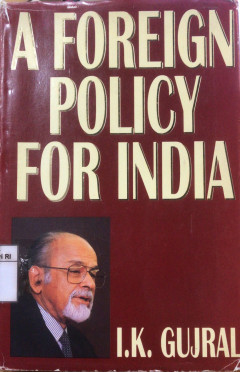
A foreign policy for India
The contents of this book: 1. Essential Tenets - Retrospective and Prospects - Enlighletened Globalism 2. Bilateral Dialogue - India and South Africa: Blueprint for the Future - India and South Africa: Economic Partnership
- Edisi
- -
- ISBN/ISSN
- -
- Deskripsi Fisik
- 337 pages : index ; 23 cm
- Judul Seri
- -
- No. Panggil
- 327.1 Guj f
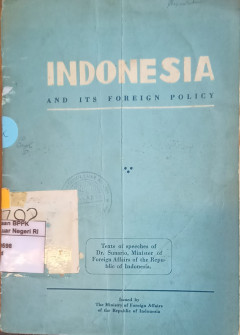
Indonesia and its Foreign policy
Indonesia's foreign policy is characterized by its commitment to an independent and active role in international affairs. This compilation explores the core principles, objectives, and key features of Indonesia's foreign policy. It emphasizes Indonesia's pursuit of a free and active foreign policy, its adherence to the principles of non-alignment and diplomacy, and its dedication to regional st…
- Edisi
- -
- ISBN/ISSN
- -
- Deskripsi Fisik
- 36 pages ; 22 cm
- Judul Seri
- -
- No. Panggil
- 327.9598 Ind i

Nigerian politics and moral behavior: A study in politics and ethics
This book examines political concepts and processes in relation to principles of behaviour. It discusses ethical concept and principles which underlie and validate political law and constitution. Discussions about moral behavior politics include conduct of population census, electoral process, political language, crises and violence.
- Edisi
- Cet.1
- ISBN/ISSN
- 978-36421-0-3
- Deskripsi Fisik
- xii, 115 pages : bibl: hlm 99-108 : index ; 23 cm
- Judul Seri
- -
- No. Panggil
- 327.669 Dzu n

Hatta and Indonesia's independent and Active foreign policy : Retrospect and …
This book gathers a dozen rising scholars and analysts of Indonesian foreign policy to examine the conditions and extent to which “independent and active principle” - first articulated by Vice President Mohammad Hatta in 1948 - has been used and abused in various strategic policy issues. The book launch event aims to introduce this book to the public, especially stakeholders related to the…
- Edisi
- -
- ISBN/ISSN
- 978-979-1295-44-4
- Deskripsi Fisik
- v, 181 pages : bibl: hlm 155 ; 25 cm
- Judul Seri
- -
- No. Panggil
- 327.1 Lak h
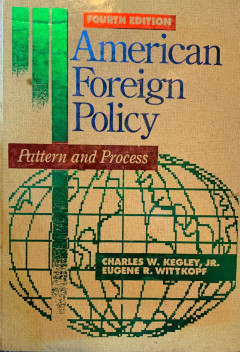
American foreign policy: Pattern and process
kegley and wittkopf have responded to the tumultuos changes of the past eighteen months with major revisions in the text of American foreign policy. The fourth edition includes: Discussions of the implications for American foreign policy of the Gorbachev-era reforms in the Soviet Union and the changes in Eastern Europe in particular, the text considers the future of "containment" and shifts …
- Edisi
- Ed. 4
- ISBN/ISSN
- 0-312-03656-6
- Deskripsi Fisik
- xii, 643 pages : index ; 25 cm
- Judul Seri
- -
- No. Panggil
- 327.1 Keg a

India's foreign policy and non-alignment
This book attempts to trace the origin and growth of the concept of non-alignment and how it shaped India's foreign policy. The books purports to analyze the position India enjoys in the Non-Aligned Movement especially after the 'healing touch' provided to the Movement under the leadership of Indira Gandhi, who assumed the chairpersonship of the Movement in the New Delhi Conference.
- Edisi
- -
- ISBN/ISSN
- 81-86565-72-8
- Deskripsi Fisik
- viii, 349 pages : bibl: hlm 320-335 : index ; 22 cm
- Judul Seri
- -
- No. Panggil
- 327.1 Jai i
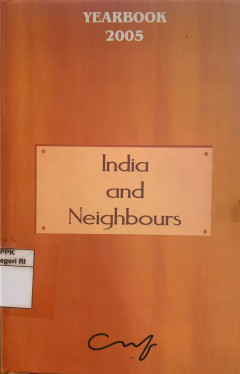
India and neighbours
While India has quietly moved from cold war politics to globalizations, barring China, India's other neighbours are yet to overcome the Cold War mentality. The result is that a section of the ruling elite among India's neighbours perceive things in terms of pressure points vis-a-vis India or try to thrive on anti-India sentiment. This has retarded the growth of healthier relations between India…
- Edisi
- -
- ISBN/ISSN
- 81-89357-00-X
- Deskripsi Fisik
- 283 pages : bibl: hlm 269-275 : index ; 22 cm
- Judul Seri
- -
- No. Panggil
- 327.1 Fea i

Contemporary European foreign policy
This major new book introduces and examines the latest developments in European foreign policy. It provides a complete overview of the ways in which the very nature of foreign policy in Europe has changed and advances new insights into contemporary European foreign policy analysis. The book is structured around three parts. Part one provides a concise overview of the latest theories and concep…
- Edisi
- -
- ISBN/ISSN
- 0-4129-0001-8
- Deskripsi Fisik
- x, 278 pages : illustrations (black and white) : index ; 24 cm
- Judul Seri
- -
- No. Panggil
- 327.1 Car c

Global good Samaritans: Human rights as foreign policy
Global good Samaritans shows why and how some states promote human rights internationally, risking lives, treasure, and diplomatic repercussions to protect helpless foreigners. With six case studies of classic and emerging promoters, this book demonstrates that humanitarian internationalism is a pattern of persistent principled politics. It illustrates how, even in a world of security dilemmas,…
- Edisi
- -
- ISBN/ISSN
- 978-0-19-538158-0
- Deskripsi Fisik
- ix, 287 pages : bibl: 235-267 : index ; 24 cm
- Judul Seri
- -
- No. Panggil
- 172.4 Bry g

Before & after : US foreign policy and the war on terrorism
Before & After examines the role of US foreign policy in the terrorism/anti-terrorism crisis that began―publicly―with the attack on the World Trade Center, but which in fact has roots that began long before that September day. It dissects not only the specific Middle East policies long identified with public opposition in the region (for example: support for Israeli occupation of Palestinia…
- Edisi
- -
- ISBN/ISSN
- 1-56656- 462-X
- Deskripsi Fisik
- xvii, 246 pages : index ; 23 cm
- Judul Seri
- -
- No. Panggil
- 303.625 Ben b
 Karya Umum
 Filsafat
 Agama
 Ilmu-ilmu Sosial
 Bahasa
 Ilmu-ilmu Murni
 Ilmu-ilmu Terapan
 Kesenian, Hiburan, dan Olahraga
 Kesusastraan
 Geografi dan Sejarah