Ditapis dengan
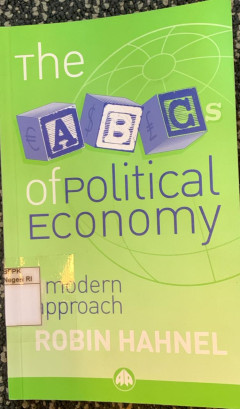
The ABCs of political economy
The ABCs of political economy is an accessible introduction to modern political economy. While informed by the work of Marx, Keynes, Veblen, Kalecki, Robinson and other great political economists. ABCs teaches readers the essential tools necessary to understand economic issues today from a modern perspective. Dispelling myths about markets, macroeconomic policies, and globalization, ABCs offers…
- Edisi
- -
- ISBN/ISSN
- 0-7453-1857-6
- Deskripsi Fisik
- xv, 304 pages ; 22 cm
- Judul Seri
- -
- No. Panggil
- 330 Hah a

Africa's third liberation
Between 2000 and 2010, six of the ten fastest-growing economies worldwide were African. In this favorable environment, how do we make sure jobs and poverty reduction follow? Now is the time for African countries to consider how economic growth and political liberalization should reinforce each other. Africa has experienced two liberations: the first from colonial and racist regimes and the seco…
- Edisi
- -
- ISBN/ISSN
- 978-0143528883
- Deskripsi Fisik
- xii, 248 pages : illustration (black and white) ; 23,5 cm.
- Judul Seri
- -
- No. Panggil
- 338.96 Her a
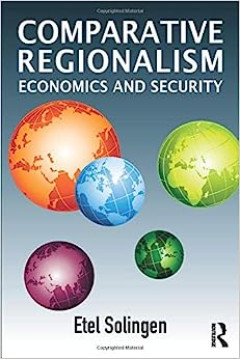
Comparative regionalism economics and security
This book comprises key essays on comparative regionalism and, more broadly, on regional conflict and cooperation by Professor Etel Solingen. The study of regionalism, a subject pioneered by Solingen in the 1990s, is now an established field of inquiry, with a large community of scholars and practitioners around the world. This book provides a window into an evolving conceptual framework for c…
- Edisi
- cet.1
- ISBN/ISSN
- 978-0-415-62779-0
- Deskripsi Fisik
- xiv, 290 pages : illustrations (black and white) ; 23 cm
- Judul Seri
- -
- No. Panggil
- 337 Sol c

How rich countries got rich...and why poor countries stay poor
In this refreshingly revisionist history, Erik Reinert shows how rich countries developed through a combination of government intervention, protectionism, and strategic investment, rather than through free trade. Reinert suggests that this set of policies in various combinations has driven successful development from Renaissance Italy to the modern Far East. Yet despite its demonstrable sucess,…
- Edisi
- -
- ISBN/ISSN
- 978-1-84529-874-6
- Deskripsi Fisik
- vi, 365 pages ; 23,5 cm.
- Judul Seri
- -
- No. Panggil
- 338.900922 Rei h

The economics of sustainable development: The case of India
This book provides a look at the current status and future potential of sustainable development in India. Macroeconomic developments, regional disparity and poverty situation, the trend in natural resource depletion and environmental degradation, trajectory of economic development, and conventional wealth are discussed.
- Edisi
- -
- ISBN/ISSN
- 978-0-387-98175-8
- Deskripsi Fisik
- xiv, 297 pages : illustration (black and white) ; 27 cm.
- Judul Seri
- -
- No. Panggil
- 338.1 Kum t

Radical transitions: The survival and revival of enterpreneurship in the GDR
A study of entrepreneurship under communist rule in the GDR. It sets out to show how the private sector became integrated into the socialist system that prevailed from the end of World War II until 1989, and then developed in the rapid transition to a market economy and new socioeconomic order.
- Edisi
- -
- ISBN/ISSN
- 0-8133-8354-4
- Deskripsi Fisik
- xii, 242 pages : illustration (black and white) : 21 cm.
- Judul Seri
- -
- No. Panggil
- 338.0409431 Pic r
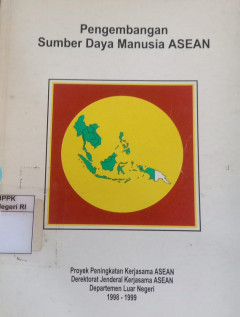
Pengembangan sumber daya manusia ASEAN
Pengembangan Sumber Daya Manusia (SDM) adalah salah satu aspek penting dalam upaya mencapai tujuan-tujuan ASEAN. ASEAN, atau Association of Southeast Asian Nations, merupakan organisasi regional yang terdiri dari sepuluh negara anggota di Asia Tenggara. Pengembangan SDM ASEAN mencakup berbagai bidang, termasuk pendidikan, pelatihan, keterampilan, dan peningkatan kapasitas individu dan organisasi.
- Edisi
- -
- ISBN/ISSN
- -
- Deskripsi Fisik
- v, 113 halaman ; 22 cm
- Judul Seri
- -
- No. Panggil
- 330. 959 Ind p

Kerjasama ASEAN di Bidang Hak Atas Kekayaan Intelektual (HAKI)
Kerjasama ASEAN di Bidang Hak Atas Kekayaan Intelektual (HAKI) telah menjadi fokus penting dalam upaya meningkatkan perlindungan, pengaturan, dan pemanfaatan karya intelektual di kawasan ASEAN. Menggambarkan tentang inisiatif dan upaya kolaboratif yang diambil oleh negara-negara anggota ASEAN untuk memperkuat kerangka hukum HAKI, mempromosikan inovasi dan kreativitas, serta menciptakan lingkung…
- Edisi
- -
- ISBN/ISSN
- -
- Deskripsi Fisik
- xiv, 141 halaman ; 22 cm
- Judul Seri
- -
- No. Panggil
- 330.959 Ind k
The affluent society
On the whole, economics is rather progressive in making the improvements and refinements and rather backward in accommodating itself to underlying change. Dozens of com- petent scholars have labored to show how the individual and the community react to the problem of consumer choice. Demand curves and indifference surfaces have given increas- ing precision to these ideas. The course by which, i…
- Edisi
- -
- ISBN/ISSN
- -
- Deskripsi Fisik
- xiv, 368 index ; 21 cm
- Judul Seri
- -
- No. Panggil
- 339.2 Gal a

The stages of economic growth: A non-communist manifesto
This book is a generalitation from the whole span of modern history. It gives an account of economic growth, based on a dynamic theory of production and interpreted in terms of actual societies. It helps to explain historical changes and to predict major political and economic trends: and it provides the significant links between economic and non-economic behavior which Karl Marx failed to discern
- Edisi
- -
- ISBN/ISSN
- -
- Deskripsi Fisik
- x, 178 pages : index ; 21 cm
- Judul Seri
- -
- No. Panggil
- 338.9 Ros s
 Karya Umum
  Filsafat
  Agama
Agama  Ilmu-ilmu Sosial
  Bahasa
  Ilmu-ilmu Murni
  Ilmu-ilmu Terapan
  Kesenian, Hiburan, dan Olahraga
  Kesusastraan
  Geografi dan Sejarah