Ditapis dengan
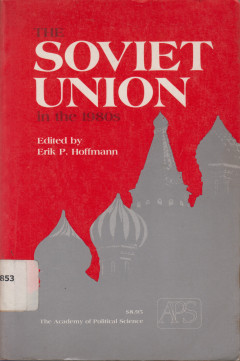
The Soviet Union in the 1980s
The Soviet Union in the 1980s is a scholarly volume featuring articles presented in the Proceedings of the Academy of Political Science. This issue analyzes the political, economic, and social dynamics of the USSR during a transformative decade marked by stagnation, leadership transitions, and the early stages of reform. Contributors examine Soviet domestic and foreign policy, ideological devel…
- Edisi
- -
- ISBN/ISSN
- 0065-0684
- Deskripsi Fisik
- xii, 244 pages ; 23 cm
- Judul Seri
- -
- No. Panggil
- 947.085 HOF s
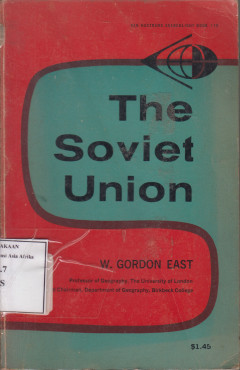
The Soviet Union
This book provides a comprehensive geographical and socio-economic survey of the Soviet Union as it existed in the early 1960s. Written by noted geographer W. Gordon East, the work examines the physical landscape, population distribution, natural resources, agriculture, industry, and regional differences across the vast Soviet territory. It also discusses historical influences that shaped the S…
- Edisi
- -
- ISBN/ISSN
- -
- Deskripsi Fisik
- 136 pages : illustrations ; 20,5 cm
- Judul Seri
- -
- No. Panggil
- 914.704 EAS s

Pour un dialogue Nord–Sud : S’associer en libertés
This book presents Michel Guillou's analysis of the importance of dialogue between the North (developed) and South (developing) in building equal cooperation based on freedom. Through an international political and socio-economic perspective, the author highlights the structural barriers that cause global inequality and offers a collaborative approach to creating more equitable relations. With …
- Edisi
- -
- ISBN/ISSN
- -
- Deskripsi Fisik
- 252 pages ; 24 cm
- Judul Seri
- -
- No. Panggil
- 303.482 GOU p
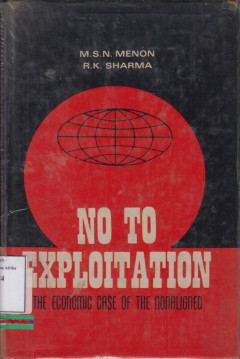
No to exploitation: The Economic sase of the non-aligned
This book examines the economic arguments underlying the Non-Aligned Movement's stance against global economic exploitation. Menon and Sharma outline the structural inequalities between developed and developing countries and offer an analysis of the need for a more equitable international economic order. Through historical, economic, and political analysis, the book explains how non-aligned cou…
- Edisi
- -
- ISBN/ISSN
- -
- Deskripsi Fisik
- xxxii, 163 pages ; 25 cm
- Judul Seri
- -
- No. Panggil
- 327.172 MEN n

Non-alignment in the 1990s: Contributions to an economic agenda
This publication presents a series of analytical papers and background documents prepared by the South Centre in response to a request from the Government of Indonesia during the preparations for the Tenth Non-Aligned Movement Summit in 1992. It examines major economic challenges faced by developing countries in the 1990s and outlines proposals for strengthening South–South cooperation and pr…
- Edisi
- -
- ISBN/ISSN
- -
- Deskripsi Fisik
- 57 pages ; 21 cm.
- Judul Seri
- -
- No. Panggil
- 330.91724 CEN n
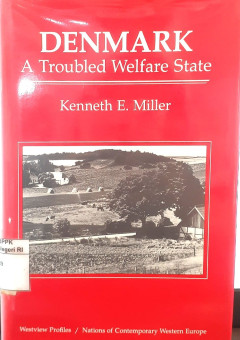
Denmark : A trouble welfare state
Denmark in the 1990s promises to be a stark contrast to the postwar years. In this critical introduction, Professor Kenneth Miller examines Danish social, governmental and public policy, focusing on the changes that have transformed it in the past 40 years. He presents a story of stability and change, of a welfare state in times of challenge and difficulty, and of a small country – despite in…
- Edisi
- -
- ISBN/ISSN
- 0-81330834-8
- Deskripsi Fisik
- xiii, 224 pages ; 24 cm
- Judul Seri
- -
- No. Panggil
- 361.6509 MIL d

Nonaligned states: A Great leap forward — A Study in new international econ…
“This book analyzes the role of nonaligned states in shaping the New International Economic Order during the early 1980s. Attar Chand examines the political and economic aspirations of the Non-Aligned Movement, emphasizing its collective efforts to restructure global economic relations in favor of developing countries. Through detailed assessments of policy positions, international negotiatio…
- Edisi
- -
- ISBN/ISSN
- -
- Deskripsi Fisik
- xxxi, 308 pages ; 22 cm
- Judul Seri
- -
- No. Panggil
- 327.17 CHA n
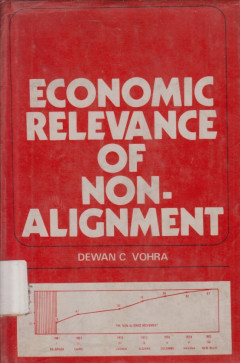
Economic relevance of non-alignment
This book explores the economic dimensions and practical relevance of the Non-Aligned Movement in the global order of the early 1980s. Dewan C. Vohra analyzes how non-aligned countries sought to enhance their economic independence, reshape international economic relations, and reduce dependence on major power blocs. The work examines development challenges, collective economic strategies, and t…
- Edisi
- -
- ISBN/ISSN
- -
- Deskripsi Fisik
- xv, 387 pages ; 22 cm
- Judul Seri
- -
- No. Panggil
- 327.5 VOH e
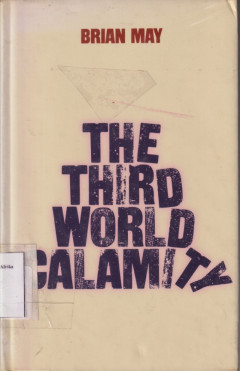
The Third world calamity
This book analyzes the severe social, economic, and political crises affecting Third World countries. Brian May explores the structural causes of underdevelopment, including poverty, inequality, colonial legacies, and global economic imbalances. Through critical examination, the author highlights how these interconnected issues shape the difficult realities faced by developing nations and argue…
- Edisi
- -
- ISBN/ISSN
- 0-7100-0764-7
- Deskripsi Fisik
- xii, 274 pages : illustration ; 22 cm
- Judul Seri
- -
- No. Panggil
- 309.1172 MAY t

The Middle East: A Political and economic survey
This volume provides a comprehensive political and economic survey of the Middle East, examining the region’s historical background, political developments, economic structures, and social dynamics. Edited by Peter Mansfield, the book offers analytical perspectives on the shifting geopolitical landscape, regional conflicts, modernization issues, and the economic challenges faced by Middle Eas…
- Edisi
- -
- ISBN/ISSN
- 0-19-215851-1
- Deskripsi Fisik
- ix, 579 pages : illustration ; 22 cm
- Judul Seri
- -
- No. Panggil
- 956.05 MAN t
 Karya Umum
  Filsafat
  Agama
Agama  Ilmu-ilmu Sosial
  Bahasa
  Ilmu-ilmu Murni
  Ilmu-ilmu Terapan
  Kesenian, Hiburan, dan Olahraga
  Kesusastraan
  Geografi dan Sejarah