Ditapis dengan

Jawaharlal Nehru: The Discovery of India
The Discovery of India by Jawaharlal Nehru is a profound and reflective work written during his imprisonment at Ahmadnagar Fort (1942–1945). Nehru writes about India’s vast cultural, historical, and philosophical journey — from the ancient Indus Valley civilization, through the Vedic period, all the way to the British colonial era and the rise of nationalism. He draws on texts like the Ve…
- Edisi
- -
- ISBN/ISSN
- -
- Deskripsi Fisik
- 582 pages ; 21 cm
- Judul Seri
- -
- No. Panggil
- 954.042 GAN j
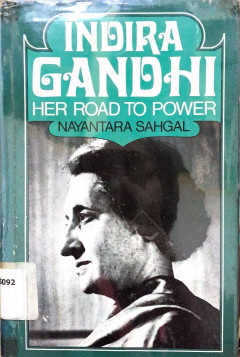
Indira Gandhi: Her road to power
Indira Gandhi: Her Road to Power by Nayantara Sahgal is an analytical biography that explores Indira Gandhi's transformation from an ordinary political figure to a dominant leader in India. Sahgal, also Indira's cousin, combines personal insight and historical analysis to explain how Indira consolidated power, manipulated the Congress party structure, and made decisions that strengthened her po…
- Edisi
- -
- ISBN/ISSN
- 0-8044-1827-6
- Deskripsi Fisik
- xv, 260 pages : illustrations ; 23,5 cm
- Judul Seri
- -
- No. Panggil
- 954.045092 SAH i

Jawaharlal Nehru: An Autobiography
Jawaharlal Nehru: An Autobiography presents Nehru’s personal reflections on his early life, political awakening, and involvement in India’s struggle for independence. Written during his imprisonment from 1934–1935, the book reveals Nehru’s intellectual development, emotional journey, and growing commitment to India’s nationalist movement. In this 1982 edition prepared under the respon…
- Edisi
- -
- ISBN/ISSN
- -
- Deskripsi Fisik
- xvi, 623 pages ; 21 cm
- Judul Seri
- -
- No. Panggil
- 923.254 GAN j
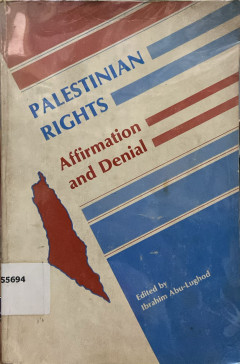
Palestinian rights: Affirmation and denial
Ibrahim Abu-Lughod's Palestinian Rights: Affirmation and Denial is a comprehensive study of Palestinian rights within the context of history, politics, and international law. It explores the roots of the Palestine–Israel conflict, explaining how fundamental Palestinian rights—such as the right to land, self-determination, and the right of return—have been recognized by various internation…
- Edisi
- -
- ISBN/ISSN
- 0-914456-22-9
- Deskripsi Fisik
- viii, 225 pages; 23 cm
- Judul Seri
- -
- No. Panggil
- 323.556 LUG p

After Soweto : An Unfinished journey
The 1976 uprising in Soweto transformed the nature of both internal and external opposition to apartheid in South Africa, and the effects of this vociferous and sustained protest are felt more strongly than ever today. This book examines the nature of opposition among the African community to apartheid in the crucial years since Soweto by analysing internal African initiatives for bringing abou…
- Edisi
- -
- ISBN/ISSN
- 0-19-827480-7
- Deskripsi Fisik
- xv, 448 pages ; 22 cm
- Judul Seri
- -
- No. Panggil
- 305.800968 BRE a
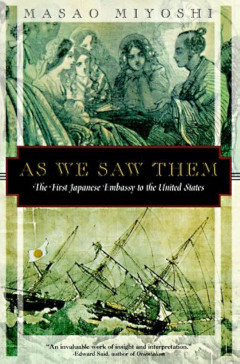
As we saw them: The First Japanese embassy to the United States
A detailed historical and cultural study of the 1860 Japanese diplomatic mission to America—the first official Japanese embassy sent abroad. Miyoshi examines how the envoys perceived American society, politics, technology, and culture during their journey, drawing from diaries, letters, and contemporary accounts. The book highlights the contrasts between Japanese expectations and the realitie…
- Edisi
- -
- ISBN/ISSN
- 1-56836-028-2
- Deskripsi Fisik
- xi, 232 pages : illustrations ; 22 cm
- Judul Seri
- -
- No. Panggil
- 327.52073 MIY a
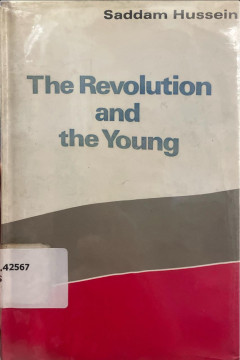
The Revolution and the young
The Revolution and the Young presents Saddam Hussein’s ideological perspective on the role of youth in shaping Iraq’s revolutionary and political future. In this work, he outlines the responsibilities of young generations in supporting national development, sustaining the Ba'athist revolutionary vision, and defending the principles of Arab nationalism. Through political reflections and dire…
- Edisi
- 1
- ISBN/ISSN
- -
- Deskripsi Fisik
- 40 pages; 20 cm
- Judul Seri
- -
- No. Panggil
- 322.4 HUS r

The Japanese file: Pre-war Japanese penetration in Southeast Asia
Japan’s economic, political, and strategic expansion into Southeast Asia during the decades leading up to World War II. Robertson analyzes how Japan used trade networks, migration, cultural initiatives, and intelligence activities to strengthen its influence across the region. The book highlights Japan’s ambitions to secure resources, build strategic footholds, and counter Western colonial …
- Edisi
- -
- ISBN/ISSN
- -
- Deskripsi Fisik
- 179 pages ; 21 cm
- Judul Seri
- -
- No. Panggil
- 327.52 ROB j

Modern Japan's foreign policy
In-depth examination of Japan’s diplomatic evolution from the late 19th century to the post–World War II period. Kajima analyzes how Japan’s foreign policy was shaped by its modernization efforts, shifting security concerns, economic priorities, and interactions with major world powers. The book discusses key issues such as Japan’s engagement in international organizations, its relation…
- Edisi
- -
- ISBN/ISSN
- 0-8048-0658-6
- Deskripsi Fisik
- 327 pages ; 22 cm
- Judul Seri
- -
- No. Panggil
- 327.52 KAJ m
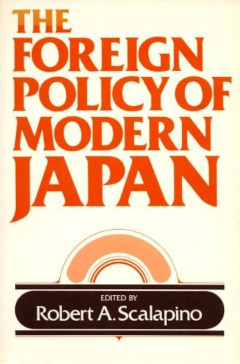
The Foreign policy of modern Japan
A comprehensive analysis of Japan’s diplomatic strategies and international behavior from the late 19th century through the post–World War II era. Scalapino examines the historical foundations of Japan’s foreign policy, including its early modernization efforts, imperial expansion, wartime decisions, and subsequent transformation under the postwar constitution. The book highlights Japan 
- Edisi
- -
- ISBN/ISSN
- 0-520-03499-6
- Deskripsi Fisik
- xix, 426 pages ; 23 cm
- Judul Seri
- -
- No. Panggil
- 327.52 SCA f
 Karya Umum
  Filsafat
  Agama
Agama  Ilmu-ilmu Sosial
  Bahasa
  Ilmu-ilmu Murni
  Ilmu-ilmu Terapan
  Kesenian, Hiburan, dan Olahraga
  Kesusastraan
  Geografi dan Sejarah