Ditapis dengan
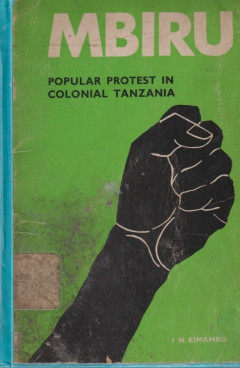
Mbiru: Popular protest in colonial Tanzania
MBIRU: Popular Protest in Colonial Tanzania by Isaria N. Kimambo examines the dynamics of Tanzanian resistance to colonial rule in the early 20th century. Through a study of social and political history, the book reveals the forms of popular protest, the causes of the resistance movement, and the relationship between colonial structures and local community responses. Kimambo emphasizes the impo…
- Edisi
- -
- ISBN/ISSN
- -
- Deskripsi Fisik
- 27 pages ; 21,5 cm
- Judul Seri
- -
- No. Panggil
- 967.8 KIM m
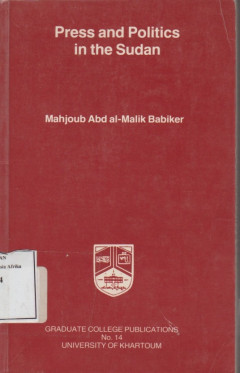
Press and politics in the Sudan
This study examines the historical development of the press and its close relationship with political power in Sudan. Beginning with the early decades of the twentieth century, the author analyzes how newspapers emerged as influential platforms for political mobilization, public debate, and nationalist expression. The work explores the role of major political parties, the influence of successiv…
- Edisi
- -
- ISBN/ISSN
- 0-86372-052-8
- Deskripsi Fisik
- 139 pages ; 21,5 cm
- Judul Seri
- -
- No. Panggil
- 320.0962 BAB p
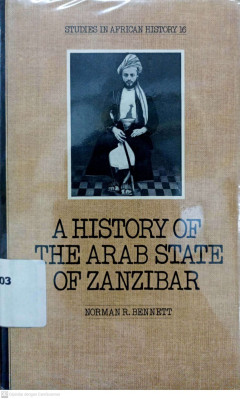
A History of Arab State of Zanzibar
Norman R. Bennett's A History of the Arab State of Zanzibar presents an in-depth study of Zanzibar's political, social, and economic development during the Arab period, from the 18th to the early 20th centuries. Through analysis of archives, colonial records, and various historical documents, Bennett describes the sultanate's governmental structure, international trade relations, social dynamic…
- Edisi
- -
- ISBN/ISSN
- 0-416-55080-0
- Deskripsi Fisik
- 304 pages; 19 cm
- Judul Seri
- -
- No. Panggil
- 967.8 BEN h
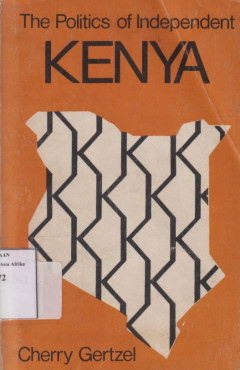
The Politics of independent Kenya 1963–8
This book is an in-depth study of Kenya's political dynamics in the early period after independence from 1963 to 1968. Cherry Gertzel analyzes the formation of the national government structure, the process of consolidation of power, the role of political parties, and the relationship between the political elite and the people. It also discusses factors influencing political stability, administ…
- Edisi
- -
- ISBN/ISSN
- 0 435 83351 0
- Deskripsi Fisik
- xii, 180 pages ; 21 cm
- Judul Seri
- -
- No. Panggil
- 320.96762 GER p

Officiële bescheiden betreffende de Nederlands-Indonesische betrekkingen 194…
This book is the third installment in the series Officiële Bescheiden Betreffende de Nederlands-Indonesische Betrekkingen 1945–1950, a compilation of official Dutch government documents on political relations between the Netherlands and Indonesia during the Revolution for Independence. This edition covers the period from 1 January to 30 March 1946, containing letters, diplomatic reports, gov…
- Edisi
- -
- ISBN/ISSN
- -
- Deskripsi Fisik
- xxiv, 739 pages : illustration ; 25 cm
- Judul Seri
- -
- No. Panggil
- 959.803 WAL o

The Commanders: Australian Military Leadership in the Twentieth Century
This book presents a comprehensive examination of Australian military leadership throughout the twentieth century. Edited by D. M. Horner, it offers detailed biographical studies of key Australian commanders and explores how their decisions, leadership styles, and operational experiences shaped the development of the nation’s military history. Through an analytical and historical approach, th…
- Edisi
- -
- ISBN/ISSN
- 0-86861-496-3
- Deskripsi Fisik
- xix, 355 halaman : illustration ; 25 cm
- Judul Seri
- -
- No. Panggil
- 355.00922 HOR c

Het conflict met Indonesië als Spiegel voor Nederland
The book *The Conflict with Indonesia as a Spiegel for the Netherlands* by Prof. Dr. A. Teeuw examines the conflict between Indonesia and the Netherlands in the early days of independence as a reflection for the Dutch nation. Teeuw explores the political, cultural, and psychological roots that influenced the relationship between the two countries during the period 1945–1950. Using historical …
- Edisi
- -
- ISBN/ISSN
- -
- Deskripsi Fisik
- 32 pages ; 22 cm
- Judul Seri
- -
- No. Panggil
- 959.802 TEE h
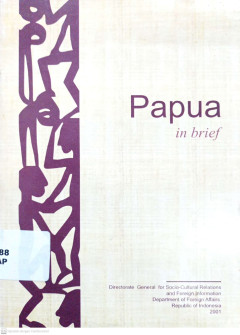
Papua in brief
The book Papua in Brief was published by the Directorate General for Socio-Cultural Relations and Foreign Information, Department of Foreign Affairs of the Republic of Indonesia in 2001. This book presents a concise overview of the conditions in the Papua region, covering historical, socio-cultural, geographical, political, and social development aspects. This publication was compiled to provid…
- Edisi
- -
- ISBN/ISSN
- -
- Deskripsi Fisik
- 56 pages : illustrations ; 21 cm
- Judul Seri
- -
- No. Panggil
- 959.88 DEP p
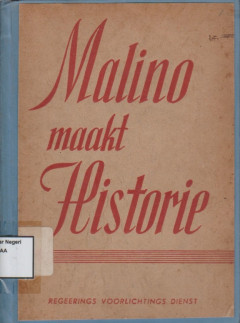
Malino maakt historie
The book Malino maakt historie is an official compilation of minutes and speeches from the Malino Conference, which took place from July 15 to 25, 1946. This conference was organized by the Dutch East Indies government as part of efforts to formulate a federal state structure in Indonesia after World War II. Compiled by W. A. van Goudeover, former editor-in-chief of the newspaper De Locomotief,…
- Edisi
- -
- ISBN/ISSN
- -
- Deskripsi Fisik
- 63 pages : illustrations ; 21,5 cm
- Judul Seri
- -
- No. Panggil
- 959.8035 GOU m

Rifle reports: A Story of Indonesian independence
Rifle Reports: A Story of Indonesian Independence is an ethnographic and historical study by Mary Margaret Steedly, based on archives, interviews, and field notes, that explores the struggles of the people of North Sumatra during the Indonesian Revolution of 1945–1949. The book highlights the personal narratives of historical actors, including Karo fighters, about their experiences with war, …
- Edisi
- -
- ISBN/ISSN
- 978-0-520-27487-7
- Deskripsi Fisik
- xvii, 396 pages : illustrations ; 23 cm
- Judul Seri
- -
- No. Panggil
- 959.803 STE r
 Karya Umum
  Filsafat
  Agama
Agama  Ilmu-ilmu Sosial
  Bahasa
  Ilmu-ilmu Murni
  Ilmu-ilmu Terapan
  Kesenian, Hiburan, dan Olahraga
  Kesusastraan
  Geografi dan Sejarah