Ditapis dengan

A Palestinian state: The Implications for Israel
The future of the West Bank and Gaza remains the single most crucial issue in the search for peace in the Middle East. Examining the entire range of possible outcomes, Mark Heller argues that an independent Palestinian state in those territories, even one dominated by the PLO, could, under certain stringent conditions, be the preferred option for Israel. In the first comprehensive treatment of…
- Edisi
- -
- ISBN/ISSN
- 0-674-65221-5
- Deskripsi Fisik
- x, 190 pages: illustration; 24 cm
- Judul Seri
- -
- No. Panggil
- 956.04 HEL p
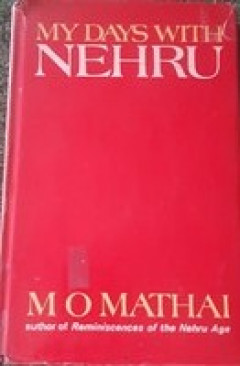
My days with Nehru
My Days with Nehru by M. O. Mathai is a memoir recounting Mathai’s personal and working relationship with Jawaharlal Nehru, India’s first Prime Minister. Mathai, who served as Nehru’s private secretary, provides a revealing portrait of Nehru’s personality, work habits, political vision, and private life. Through detailed anecdotes, conversations, and reflections, Mathai describes not ju…
- Edisi
- -
- ISBN/ISSN
- 0 7069 0823 6
- Deskripsi Fisik
- xv, 200 pages : illustrations ; 22,5 cm
- Judul Seri
- -
- No. Panggil
- 954.042 MOM m
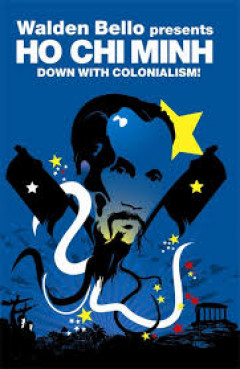
Down with colonialism!
Down with Colonialism! is a collection of speeches, essays, and political writings by Ho Chi Minh that outlines his critique of French colonial rule in Vietnam and his vision for national liberation. Through clear and persuasive arguments, Ho Chi Minh exposes the injustices, exploitation, and oppression experienced by the Vietnamese people under colonialism. The book highlights the development …
- Edisi
- -
- ISBN/ISSN
- 978-1-84467-177-9
- Deskripsi Fisik
- xliv, 226 pages ; 19,5 cm
- Judul Seri
- -
- No. Panggil
- 808 MIN d

The Singapore story: Memoirs of Lee Kuan Yew
Singapore's former Senior Minister Lee Kuan Yew provides an account of his personal and political life and provides a blow-by-blow chronicle of his dealings with political groups and leaders, both Malaysian and international, on the road to independence. Includes b & w photographs. Annotation c. Book News, Inc., Portland.
- Edisi
- -
- ISBN/ISSN
- 981-204-983-5
- Deskripsi Fisik
- 680 pages : illustrations (black and white) ; 25 cm
- Judul Seri
- -
- No. Panggil
- 923.1 YEW s

East Timor, Indonesia and the world: Myth and realities
The contents of this book: Chapter 1 From Portuguese Timor to Indonesia's East TImor Chapter 2 East Timor's Integration into Indonesia: the External Dynamics Chapter 3 East Timor and the Internal Dimension of Integration
- Edisi
- cet.2
- ISBN/ISSN
- 983-99159-0-8
- Deskripsi Fisik
- xxiv, 428 pages ; 22 cm
- Judul Seri
- -
- No. Panggil
- 959.87 SIN e

From third world to first: The Singapore story 1965-2000
"Few gave tiny Singapore much chance of survival when it was granted independence in 1965. How is it, then, that today the former British colonial trading post is a thriving Asian metropolis?" "The story of that transformation is told here by Lee Kuan Yew. Rising from a legacy of divisive colonialism, the devastation of the Second World War, and general poverty and disorder following the withdr…
- Edisi
- -
- ISBN/ISSN
- 981-204-984-3
- Deskripsi Fisik
- 778 pages : index ; 24 cm
- Judul Seri
- -
- No. Panggil
- 923.1 ANN f
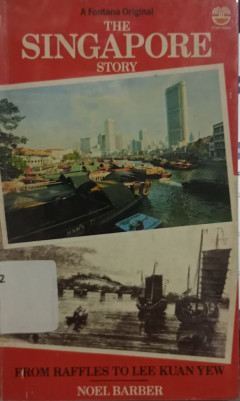
The Singapore Story
The Singapore Story by Noel Barber presents a vivid narrative of Singapore’s transformation from a small colonial trading post into a thriving modern nation. The book explores the island’s strategic importance, its multicultural society, and the political struggles that shaped its destiny. Barber highlights key historical events, including wartime challenges and post-independence developmen…
- Edisi
- -
- ISBN/ISSN
- -
- Deskripsi Fisik
- 224 pages ; 17 cm
- Judul Seri
- -
- No. Panggil
- 958.952 BAR s
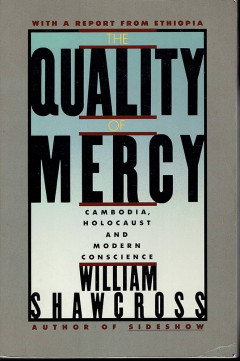
The quality of mercy: Cambodia, Holocaust and modern conscience
Study of the role of developed countries, the role of UN (UN and specialized agencies) and of nongovernmental organizations in providing emergency relief and food aid to alleviate hunger in Cambodia in 1979 - examines the functioning of responsible agencies in response to a disaster, the economic implications and political problems involved; discusses the conflict between politics and humanitar…
- Edisi
- -
- ISBN/ISSN
- 0-671-44022-5
- Deskripsi Fisik
- 464 pages : bibliography, index ; 25 cm
- Judul Seri
- -
- No. Panggil
- 959.604 SHA q
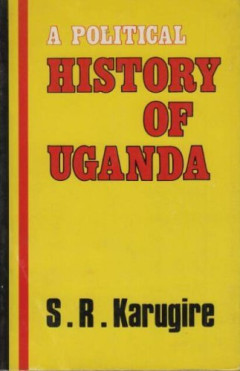
A Political history of Uganda
A Political History of Uganda provides a comprehensive overview of Uganda’s political evolution from the precolonial era to the modern state. The book examines the impact of colonial administration, the struggle for independence, and the subsequent political transformations that shaped Uganda’s governance structures. Through an analysis of leadership changes, ethnic dynamics, constitutional…
- Edisi
- 1
- ISBN/ISSN
- 0-435-94525 4
- Deskripsi Fisik
- 247 pages; 22 cm
- Judul Seri
- -
- No. Panggil
- 967.6104 KAR p
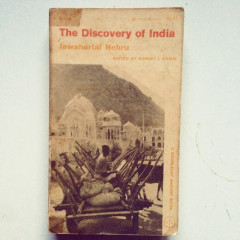
The Discovery of India
The Discovery of India adalah karya Jawaharlal Nehru yang sangat reflektif dan ilmiah, ditulis selama masa penahanannya di Benteng Ahmadnagar (1942–1945). Dalam narasi epistolary dan filosofis ini, Nehru menelusuri perjalanan budaya, sejarah, dan intelektual India yang luas — dari peradaban kunonya hingga penjajahan Inggris. Ia mengeksplorasi filsafat, agama, dan kehidupan politik India den…
- Edisi
- -
- ISBN/ISSN
- -
- Deskripsi Fisik
- xii, 426 pages ; 18 cm
- Judul Seri
- -
- No. Panggil
- 954.042 NEH d
 Karya Umum
  Filsafat
  Agama
Agama  Ilmu-ilmu Sosial
  Bahasa
  Ilmu-ilmu Murni
  Ilmu-ilmu Terapan
  Kesenian, Hiburan, dan Olahraga
  Kesusastraan
  Geografi dan Sejarah