Ditapis dengan

Japan's international relations: Politics, economics, and security
Japan can be explained. It needs to be explained because it matters. That it matters accounts for the wide range of information available in English on Japan's international relations.
- Edisi
- -
- ISBN/ISSN
- 0-415-24098-0
- Deskripsi Fisik
- xxxvi, 532 pages : index ; 25 cm
- Judul Seri
- -
- No. Panggil
- 327.52 Hoo j

Tensions of empire: Japan and Southeast Asia in the colonial and postcolonial…
Beginning with the closing decade of European colonial rule in Southeast Asia and covering the wartime Japanese empire and its postwar disintegration, Tensions of Empire focuses on the Japanese in Southeast Asia, Indonesians in Japan, and the legacy of the war in Southeast Asia. It also examines Japanese perceptions of Southeast Asia and the lingering ambivalence toward Japanese involvement in …
- Edisi
- -
- ISBN/ISSN
- 9971-69-281-3
- Deskripsi Fisik
- xxiv, 349 pages : illustrations, map : index ; 22 cm.
- Judul Seri
- -
- No. Panggil
- 327.52 Got t

Japan's foreign policy maturation: A quest for normalcy
The sudden end of the Cold War took the Japanese foreign policy community by surprise. The Yoshida Doctrine which served Japanese foreign policy so well during the Cold War is no longer a viable foreign policy option. This dissertation examines the restructuring of Japanese foreign policy since the end of the Cold War. Through a series of 56 interviews with Japanese foreign policy elites, the c…
- Edisi
- -
- ISBN/ISSN
- 0-415-93516-4
- Deskripsi Fisik
- xviii, 230 pages : bibl: hlm 205-221 : index ; 24 cm
- Judul Seri
- -
- No. Panggil
- 327.52 Coo f

Japan and China as charm rivals: Soft power in regional diplomacy
In international relations today, influence is a essential as military and economic might. Consequently, leaders promote favorable images of the state in order to attract allies and win support for their policies.
- Edisi
- -
- ISBN/ISSN
- 978-0-472-11833-5
- Deskripsi Fisik
- xii, 231 pages : bibl: hlm 199-213 : index ; 25 cm
- Judul Seri
- -
- No. Panggil
- 327.51052 Sun j

China rising: Peace, power, and order in East Asia
Throughout the past three decades East Asia has seen more peace and stability than at any time since the Opium Wars of 1839-1841. During this period China has rapidly emerged as a major regional power, averaging over nine percent economic growth per year since the introduction of its market reforms in 1978. Foreign businesses have flocked to invest in China, and Chinese exports have begun to fl…
- Edisi
- -
- ISBN/ISSN
- 978-0-231-14188-8
- Deskripsi Fisik
- xiii, 274 pages : illustrations : bibl: hlm 252-262 : index ; 24 cm
- Judul Seri
- -
- No. Panggil
- 327.5105 Kan c

China and Southeast Asia: Global changes and regional challenges
The relations between ASEAN and China occupy a unique and important position in the foreign relations of the Asia-Pacific region. China and Southeast Asia's political, strategic and economic importance in the realm of international relations has been transformed by the region's unprecedented economic growth, unexpected financial crisis, and turbulent political changes.
- Edisi
- -
- ISBN/ISSN
- 981-230-298-0
- Deskripsi Fisik
- xxvii, 327 pages ; 23 cm
- Judul Seri
- -
- No. Panggil
- 327.510 59 Leo c
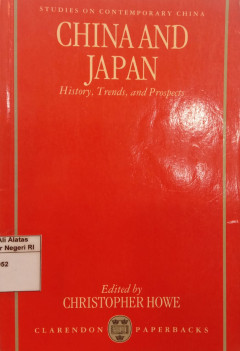
China and Japan: History, trends, and prospects
The distinguished contributors to this volume present and interpret the intriguing relationship between China and Japan, covering the important issues - both diplomatic and economic - and considering the implications of current Sino-Japanese contacts for the wider world. This book should prove to be an essential reference for students and academics.
- Edisi
- -
- ISBN/ISSN
- 0-19-828932-4
- Deskripsi Fisik
- vi, 203 pages : illustrations : bibl: hlm 179-194 : index ; 24 cm
- Judul Seri
- -
- No. Panggil
- 327.510 52 How c

If China attacks Taiwan: Military strategy, politics and economics
This is a new analysis of the key issues facing Chinese policy makers in their approach towards Taiwan, This is one of the most tense and potentially explosive relationships in world politic. This book explains succinctly the impetus, the methods and the consequences if China is to use force, a prospect that has become greater following the return of President Chen Shui- bian to power in Taiwan…
- Edisi
- First Published
- ISBN/ISSN
- 0-415-40785-0
- Deskripsi Fisik
- xviii, 215 halaman : index ; 25 cm
- Judul Seri
- -
- No. Panggil
- 327.51 Tsa c
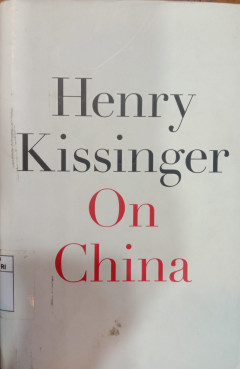
On China
Examines how China has approached diplomacy, strategy, and negotiation throughout its history, and reflects on the consequences for the global balance of power in the twenty-first century
- Edisi
- First Published
- ISBN/ISSN
- 978-1-59420-271-1
- Deskripsi Fisik
- xviii, 586 pages : index ; 22cm
- Judul Seri
- -
- No. Panggil
- 327.51 Kis o
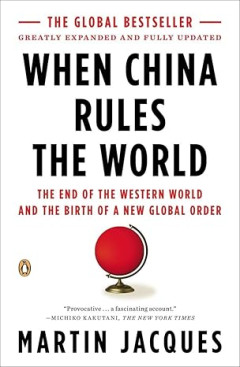
When China rules the world
Soon, China will rule the world. But in doing so, it will not become more Western. Since the first publication of When China Rules the World, the landscape of world power has shifted dramatically. In the three years since the first edition was published, When China Rules the World has proved to be a remarkably prescient book, transforming the nature of the debate on China. Now, in this gr…
- Edisi
- Ed. 2
- ISBN/ISSN
- 978-0-140-27604-6
- Deskripsi Fisik
- xxxv, 812 pages : illustrations (black and white) : bibl: hlm 736-776 : index ; 20 cm
- Judul Seri
- -
- No. Panggil
- 327.51 Jac w
 Karya Umum
 Filsafat
 Agama
 Ilmu-ilmu Sosial
 Bahasa
 Ilmu-ilmu Murni
 Ilmu-ilmu Terapan
 Kesenian, Hiburan, dan Olahraga
 Kesusastraan
 Geografi dan Sejarah