Ditapis dengan
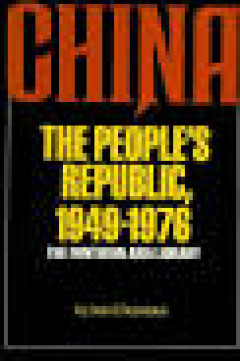
China : The People's republic, 1949-1976
This history of the People's Republic of China (1949-1976), the third and final volume in a major new history of modern China since 1840, offers a sweeping and penetrating account of a singular historical era During these pivotal decades, the Chinese struggled to find an alternative to the Soviet model of industrialization and to confront the awesome problems. of bureaucratization under the gu…
- Edisi
- -
- ISBN/ISSN
- 0-394-42873-0
- Deskripsi Fisik
- 255 pages ; 23 cm
- Judul Seri
- -
- No. Panggil
- 951.05 CHE c
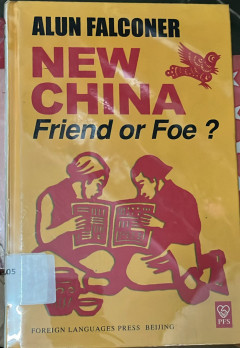
New China : Friend or foe?
New China: Friend or Foe? by Alun Falconer examines the political, economic, and strategic transformation of the People’s Republic of China in the modern era and evaluates its implications for the international community. The book explores China’s rapid economic growth, technological advancements, military modernization, and evolving global ambitions. Falconer analyzes how domestic policies…
- Edisi
- -
- ISBN/ISSN
- 7-119-03540-1
- Deskripsi Fisik
- xxi, 113 pages : illustrations ; 23 cm
- Judul Seri
- -
- No. Panggil
- 951.05 FAL n
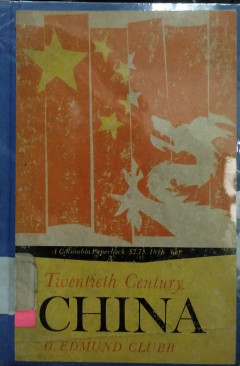
Twentieth century China
20th Century China by O. Edmund Clubb provides an analytical overview of China’s political, social, and diplomatic developments throughout the twentieth century. Written by a former U.S. Consul General in Peiping, the book offers firsthand insights into the transformation of China from imperial collapse to the rise of the People’s Republic. Clubb examines key events including the fall of th…
- Edisi
- -
- ISBN/ISSN
- -
- Deskripsi Fisik
- 470 pages ; 20,5 cm
- Judul Seri
- -
- No. Panggil
- 951.04 CLU t

Under the banner of the great juche idea of Comrade Kim Il Sung
This album, published in 1972 by the Foreign Languages Publishing House in Pyongyang, commemorates the 60th anniversary of the birth of Comrade Kim Il Sung. It presents photographic and textual materials illustrating the development and significance of the Juche idea, the guiding ideology of the Democratic People’s Republic of Korea. The volume highlights political achievements, social activi…
- Edisi
- -
- ISBN/ISSN
- -
- Deskripsi Fisik
- illustrations ; 29,5 cm
- Judul Seri
- -
- No. Panggil
- 320.95193 FOR u

Gandhi's way: A Handbook of conflict resolution
Juergensmeyer’s book is something of a Gandhian tour de force—a careful analysis and series of applications of Gandhi’s concept of satyagraha to everyday situations of conflict. A crisply written and cogently argued little manual, this book explores the practical implications of satyagraha (truth force). It is a manual of instruction in the best sense: a popular reassessment of Gandhian c…
- Edisi
- -
- ISBN/ISSN
- 0-520-24497-4
- Deskripsi Fisik
- xi, 174 pages ; 21 cm
- Judul Seri
- -
- No. Panggil
- 303.6 JUE g

China's watergate : Political and economic conflicts, 1969-1977
Leo Goodstadt is uniquely qualified to write an inside report on the crises which have shaken China throughout this decade. He has devoted his entire career since 1962 to research and writing on Chinese events. In this book, he brings together a fascinating account of the background to the collapse of Mao Tse-tung's entourage and of respect for his immediate family within a month of his death i…
- Edisi
- -
- ISBN/ISSN
- 0-7069-0725-6
- Deskripsi Fisik
- 219 pages ; 22 cm
- Judul Seri
- -
- No. Panggil
- 951.05 GOO c
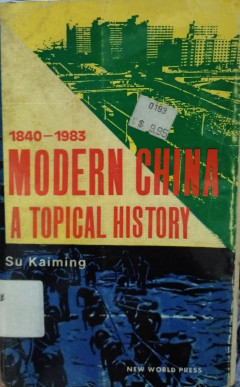
Modern China: A Topical history
Modern China: A Topical History by Su Kaiming provides a concise and accessible overview of China’s political, social, and cultural development in the modern era. Written for international readers, the book discusses key historical events, major political transformations, and influential figures that shaped China from the late Qing dynasty to the period of modernization. Organized by themes r…
- Edisi
- -
- ISBN/ISSN
- 0-8351-1397-3
- Deskripsi Fisik
- 279 pages : Ilustrations ; 21 cm
- Judul Seri
- -
- No. Panggil
- 951.083 KAI m
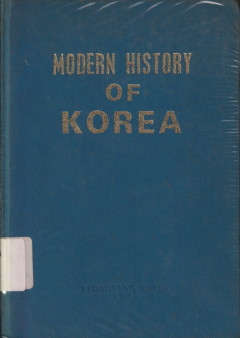
Modern History of Korea
This book provides an overview of the modern history of Korea, focusing on political, social, and historical developments from the late nineteenth century to the twentieth century. Written by Prof. & Dr. Kim Han Gil and published by the Foreign Languages Publishing House in Pyongyang in 1979, the work discusses major historical events, foreign interventions, national struggles, and the evolutio…
- Edisi
- -
- ISBN/ISSN
- -
- Deskripsi Fisik
- 566 pages ; 21,5 cm
- Judul Seri
- -
- No. Panggil
- 951.9 GIL m
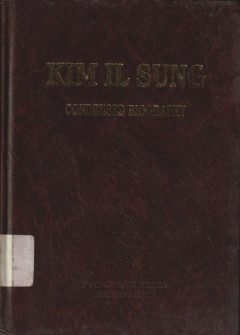
Kim Il Sung: Condensed biography
This condensed biography presents a summarized account of the life and revolutionary career of Kim Il Sung, the founding leader of the Democratic People’s Republic of Korea. The book outlines his role in the anti-Japanese struggle, the establishment of the DPRK, and the development of the Juche idea. Published in 2001 by the Foreign Languages Publishing House in Pyongyang, it provides an offi…
- Edisi
- -
- ISBN/ISSN
- -
- Deskripsi Fisik
- 318 pages : illustrations ; 21 cm
- Judul Seri
- -
- No. Panggil
- 923.3 FOR k
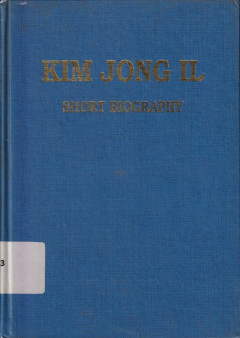
Kim Jong Il: Short biography
This short biography provides an overview of the life, revolutionary activities, and political leadership of Kim Jong Il, highlighting his role in guiding the Democratic People’s Republic of Korea under the principles of the Juche idea. Published in 2001 by the Foreign Languages Publishing House in Pyongyang, the book outlines major events, ideological contributions, and achievements attribut…
- Edisi
- -
- ISBN/ISSN
- -
- Deskripsi Fisik
- 206 pages : illustrations ; 21 cm
- Judul Seri
- -
- No. Panggil
- 923.3 CHU k
 Karya Umum
  Filsafat
  Agama
Agama  Ilmu-ilmu Sosial
  Bahasa
  Ilmu-ilmu Murni
  Ilmu-ilmu Terapan
  Kesenian, Hiburan, dan Olahraga
  Kesusastraan
  Geografi dan Sejarah