Ditapis dengan
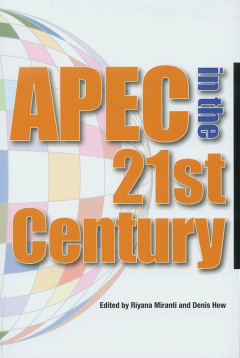
APEC in the 21st century
APEC is a unique organization that promotes economic cooperation in the Asia-Pacific region. It remains an informal intergovernmental organization that provides a useful platform for leaders, ministers, businessmen and experts to discuss regional issues on a regular basis. This book examines APECs accomplishments in recent years and the challenges it faces in the new century. These challenges i…
- Edisi
- -
- ISBN/ISSN
- 981-230-253-0
- Deskripsi Fisik
- xi, 302 pages ; 23 cm.
- Judul Seri
- -
- No. Panggil
- 382.095 Mir a

Expanding horizons: Australia and Indonesia into the 21st century
Expanding horizons: Australia and Indonesia into the 21st century present a collection of papers by Australian and Indonesia authors which focus on economic cooperation between Australia and Indonesia as we move into the 21st century. Trade and investment between the two countries is analysed and new sectors for future collaboration are identified.
- Edisi
- -
- ISBN/ISSN
- 0-644-335149
- Deskripsi Fisik
- 346 pages : 25 cm
- Judul Seri
- -
- No. Panggil
- 337.940598 Uni e
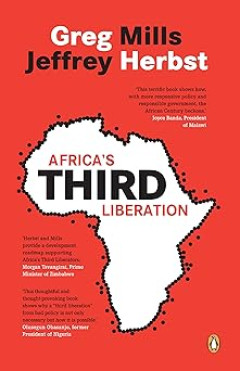
Africa's third liberation
Between 2000 and 2010, six of the ten fastest-growing economies worldwide were African. In this favorable environment, how do we make sure jobs and poverty reduction follow? Now is the time for African countries to consider how economic growth and political liberalization should reinforce each other. Africa has experienced two liberations: the first from colonial and racist regimes and the seco…
- Edisi
- -
- ISBN/ISSN
- 978-0143528883
- Deskripsi Fisik
- xii, 248 pages : illustration (black and white) ; 23,5 cm.
- Judul Seri
- -
- No. Panggil
- 338.96 Her a

Green economy and good governance for sustainable development: Opportunities,…
Much of the debate on green growth and environmental governance tends to be general in nature, and is often conceptual or limited to single disciplines - such as green growth being dominated by economists and governance by political scientists. This book examines such terms within the context of wide-interest topics including education, oceans and cities, and mixes conceptual discussion with em…
- Edisi
- -
- ISBN/ISSN
- 978-9280812169
- Deskripsi Fisik
- xv, 350 pages ; 23,5 cm.
- Judul Seri
- -
- No. Panggil
- 338.9 Oli g
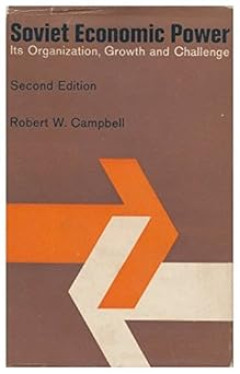
Soviet economic power: Its organization, growth, and challenge
No other country in the world excites so much concern and interest among thoughtful Americans as does the Soviet Union. This book, as the title emphasizes, delves into the Soviet Union's economic organization, growth and challenges.
- Edisi
- 2nd ed.
- ISBN/ISSN
- -
- Deskripsi Fisik
- xii, 184 pages ; 21 cm.
- Judul Seri
- -
- No. Panggil
- 338.947 Cam s
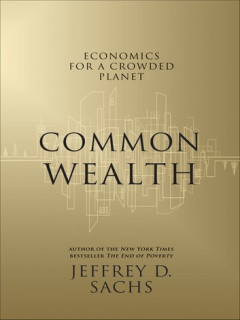
Common wealth: Economics for a crowded planet
In Common Wealth, Jeffrey D. Sachs-one of the world's most respected economists and the author of The New York Times bestseller The End of Poverty- offers an urgent assessment of the environmental degradation, rapid population growth, and extreme poverty that threaten global peace and prosperity. Through crystalline examination of hard facts, Sachs predicts the cascade of crises that awaits thi…
- Edisi
- -
- ISBN/ISSN
- 978-1-59420-127-1
- Deskripsi Fisik
- xiii, 386 pages : illustration (black and white) ; 24 cm.
- Judul Seri
- -
- No. Panggil
- 338.9 Sac c

The commanding heights: The battle of the government and the marketplace that…
The "commanding heights," according to Pulitzer Prize-winner Daniel Yergin and international business advisor Joseph Stanislaw, are those dominant enterprises and industries that form the high economic ground in nations around the globe. In their analysis of the new world economy, The Commanding The Battle Between Government and the Marketplace That Is Remaking the Modern World, they examine "t…
- Edisi
- -
- ISBN/ISSN
- 0-684-82975-4
- Deskripsi Fisik
- 457 pages : illustration (black and white) ; 24 cm.
- Judul Seri
- -
- No. Panggil
- 338.9 Yer c

Inside the new Europe
The purpose of this book is to tell the story of contemporary Western Europe's slow, determined effort to become a more powerful and, above all, a united force in world affairs. It will attempt to explain how and why the Common Market, for the first time since its founding in 1958, is challenging the United States and Japan for dominance in world trade and high technology. The buildup of Europe…
- Edisi
- Cetakan Pertama
- ISBN/ISSN
- 0060391014
- Deskripsi Fisik
- xv, 356 pages ; 25 cm
- Judul Seri
- -
- No. Panggil
- 337. 142 Kra i
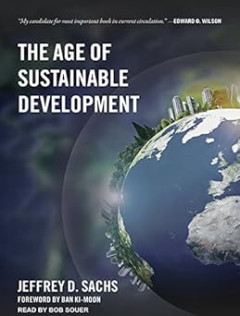
The age of sustainable development
Jeffrey D. Sachs has shown himself to be one of the world's most perceptive and original analysts of global development in his groundbreaking books, including The End of Poverty and Common Wealth: Economics for a Crowded Planet. Now, in this major new work he presents a compelling and practical framework for how global citizens can address the seemingly intractable worldwide problems of persist…
- Edisi
- -
- ISBN/ISSN
- 978-1515910879
- Deskripsi Fisik
- xvi, 543 pages : illustration ; 23 cm.
- Judul Seri
- -
- No. Panggil
- 338.927 Sac a
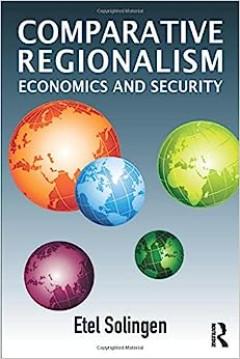
Comparative regionalism economics and security
This book comprises key essays on comparative regionalism and, more broadly, on regional conflict and cooperation by Professor Etel Solingen. The study of regionalism, a subject pioneered by Solingen in the 1990s, is now an established field of inquiry, with a large community of scholars and practitioners around the world. This book provides a window into an evolving conceptual framework for c…
- Edisi
- cet.1
- ISBN/ISSN
- 978-0-415-62779-0
- Deskripsi Fisik
- xiv, 290 pages : illustrations (black and white) ; 23 cm
- Judul Seri
- -
- No. Panggil
- 337 Sol c
 Karya Umum
 Filsafat
 Agama
 Ilmu-ilmu Sosial
 Bahasa
 Ilmu-ilmu Murni
 Ilmu-ilmu Terapan
 Kesenian, Hiburan, dan Olahraga
 Kesusastraan
 Geografi dan Sejarah