Ditapis dengan

Castle, class and power: Changing patterns of stratification in a Tanjore Vil…
This book contains: 1. Introduction 2. The village: Its physical structure 3. The caste structure 4. Economic organisation and social class 5. The distribution of power 6. Conclusion: Castle, class, and power
- Edisi
- Ed. 2
- ISBN/ISSN
- 0-19-563487-6
- Deskripsi Fisik
- 298 pages : index ; 22 cm.
- Judul Seri
- -
- No. Panggil
- 330 Bet c

Economic analysis and policy in underdeveloped countries
This book provides three themes; First, deals with scope, method, and possibilities of economics in the study of underdeveloped countries. Second, deals with some characteristics features of the economic landscape in underdeveloped countries. Last, examines certain issues of policy.
- Edisi
- -
- ISBN/ISSN
- -
- Deskripsi Fisik
- ix, 145 pages : index ; 21 cm.
- Judul Seri
- -
- No. Panggil
- 330 Bau e
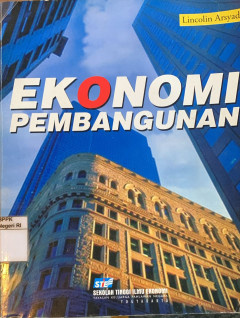
Ekonomi pembangunan: Edisi ke-4
Buku ini berisi: 1. Konsep-konsep dasar 2. Teori, strategi, dan perencanaan pembangunan 3. Sumber pembiayaan pembangunan 4. Permasalahan pembangunan 5. Pembangunan regional dan sektoral Etc.
- Edisi
- -
- ISBN/ISSN
- 979-8146-60-3
- Deskripsi Fisik
- xx, 399 halaman : index ; 24 cm.
- Judul Seri
- -
- No. Panggil
- 330 Ars e

The political economy of growth and impoverishment in the Marcos Era
Contents: 1. The Setting 2. The Growth and Distribution : An Overview 3. The Green Revolution 4. What Price Rice? 5. The New Rice Technology and Rural Inequality 6. Farming for the World Market, etc.
- Edisi
- -
- ISBN/ISSN
- 971-550-096-x
- Deskripsi Fisik
- xv, 405 pages : illustrations (black and white) : bibl; hlm.353-390 : index ; 22 cm
- Judul Seri
- -
- No. Panggil
- 330.9599 Boy p

Why nations fail: The origins of power, prosperity, and poverty
Daron Acemoglu and James Robinson conclusively show that it is man-made political and economic institutions that underlie economic success (or lack of it). Korea, to take just one of their fascinating examples, is a remarkably homogeneous nation, yet the people of North Korea are among the poorest on earth while their brothers and sisters in South Korea are among the richest. The south forged a…
- Edisi
- First Edition
- ISBN/ISSN
- 978-0-307-71922-5
- Deskripsi Fisik
- 529 pages : illustration : bibl: hlm 465-482 : index ; 25 cm
- Judul Seri
- -
- No. Panggil
- 330 Ace w
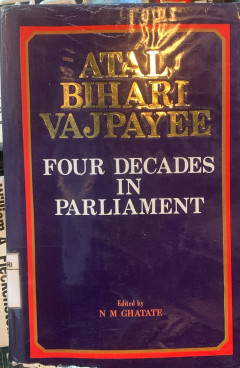
Four decades in parliament: Vol. 2 state of the economy
This book (Volume 2) contains: 1. Budget and planning 2. Corruption in high places 3. Rising prices and consequences 4. Taxation and banking 5. Industry and working class 6. Food and agriculture 7. Railways and transport
- Edisi
- First Published
- ISBN/ISSN
- 81-85402-X
- Deskripsi Fisik
- vii, 496 pages : index ; 24 cm.
- Judul Seri
- -
- No. Panggil
- 328.954 Vaj f
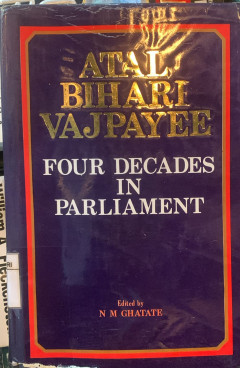
Four decades in parliament: Vol. 1 state of nation
This book (Volume 1) contains: 1. National Issues 2. No-confidence motions 3. Defence and security 4. Home affairs 5. Preventive detention Etc.
- Edisi
- First Published
- ISBN/ISSN
- 81-85402-70-1
- Deskripsi Fisik
- xxxix, 759 pages : index ; 24 cm.
- Judul Seri
- -
- No. Panggil
- 328.954 Vaj f

Gavel to Gavel: An insider's view of parliament
The book takes the reader on a fascinating journey through the corridors of parliament as seen through the eyes of a practitioner of thirty years' experience in the 'bear pit' on Macquarie Street. The author's seven years as one of its most highly regarded Speakers provides the background for this detailed and informative study of parliamentary practices and procedures. It lifts the veil on muc…
- Edisi
- First Published
- ISBN/ISSN
- 0-86840-900-6
- Deskripsi Fisik
- x, 314 pages : illustrations : index ; 24 cm.
- Judul Seri
- -
- No. Panggil
- 328.944 Roz g

Buku pegangan untuk anggota D.P.R.-G.R. dan pegawai sekretariat D.P.R,-G.R.
Buku ini berisi mengenai Buku pegangan untuk anggota dari D.P.R.-G.R. dan juga pedoman bagi pegawai Sekretariat D.P.R.-G.R.
- Edisi
- -
- ISBN/ISSN
- -
- Deskripsi Fisik
- 292 halaman ; 20 cm.
- Judul Seri
- -
- No. Panggil
- 328.92 Ind b

A culture of deferennce: Congress's failure of leadership in foreign policy
Arguing that 'Congress has substantially ceded its fundamental constitutional role in foreign policy, ' Stephen R. Weissman reveals how Congress's acquiescence to the president and special interests in foreign policy has caused American interests to suffer around the globe. A Culture of Deference offers a behind-the-scenes look at how policy decisions are made--and not made--in Washington.
- Edisi
- -
- ISBN/ISSN
- 0-465-00732-5
- Deskripsi Fisik
- xvii, 266 pages : index ; 20 cm.
- Judul Seri
- -
- No. Panggil
- 328.730 Wei c
 Karya Umum
  Filsafat
  Agama
Agama  Ilmu-ilmu Sosial
  Bahasa
  Ilmu-ilmu Murni
  Ilmu-ilmu Terapan
  Kesenian, Hiburan, dan Olahraga
  Kesusastraan
  Geografi dan Sejarah