Ditapis dengan
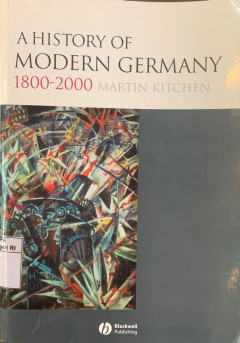
A history of modern Germany: 1800-2000
This engaging textbook provides a broad survey of modern German history from 1800-2000, and situates Germany's fragmented past within its full context. Organized chronologically, the book addresses all the major watersheds in German history, including the unification the rise and fall of the German Empire, the emergence of the Weimar Republic and its eventual submergence by the Third Reich, the…
- Edisi
- Ed. 1
- ISBN/ISSN
- 1-4051-0041-9
- Deskripsi Fisik
- x, 455 pages ; 25 cm
- Judul Seri
- -
- No. Panggil
- 943 Kit h

Distant voices
Throughout his distinguished career as a journalist and film-maker, John Pilger has looked behind the 'official' versions of events to report the real stories of our time. The centrepiece of this new, expanded edition of his bestselling Distant Voices is Pilger's reporting from East Timor, which he entered secretly in 1993 and where a third of the population has died as a result of Indonesia's…
- Edisi
- -
- ISBN/ISSN
- 0-09-938721-2
- Deskripsi Fisik
- xv, 625 pages ; 20 cm
- Judul Seri
- -
- No. Panggil
- 959.87 Pil d
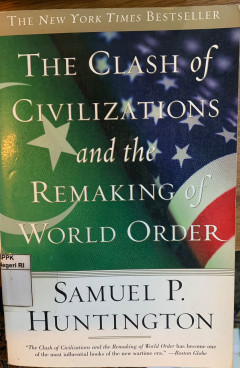
The clash of civilizations and the remaking of world order
Spurred by modernization, global politics is being reconfigured along cultural lines. Peoples and countries with similar cultures are coming together. Peoples and countries with different cultures are coming apart. Alignments defined by ideology and superpower relations are giving way to alignments defined by culture and civilization. Political bound- aries are increasingly redrawn to coincide …
- Edisi
- -
- ISBN/ISSN
- 0-684-84441-9
- Deskripsi Fisik
- 367 pages ; 25 cm
- Judul Seri
- -
- No. Panggil
- 909.829 Hun c

Uyghur nation: Reform and revolution on the Russia-China frontier
The meeting of the Russian and Qing empires in the nineteenth century had dramatic consequences for Central Asia’s Muslim communities. Along this frontier, a new political space emerged, shaped by competing imperial and spiritual loyalties, cross-border economic and social ties, and the revolutions that engulfed Russia and China in the early twentieth century. David Brophy explores how a comm…
- Edisi
- -
- ISBN/ISSN
- 978-0-674-66037-3
- Deskripsi Fisik
- 347 pages : illustrations (black and white) ; 24 cm
- Judul Seri
- -
- No. Panggil
- 951 Bro u
The revolution of 1911: Turning point in modern Chinese history
The Revolution of 1911 is the most important event in early 20th century China. At that time the Qing Dynasty, which had ruled over China for 260 years, was overthrown, ending two thousand years of feudal monarchic dictatorship. With the subsequent establishment of the Republic of China, democracy and the republican form of government was able to strike a deep root in the hearts of the Chinese …
- Edisi
- -
- ISBN/ISSN
- 0-8351-2889-X
- Deskripsi Fisik
- ii, 544 pages ; 21 cm
- Judul Seri
- -
- No. Panggil
- 951 Cai r

Chinese local history: Stone inscriptions from Fukien in the Sung to Ch'ing p…
More than any other historical source, stone inscription provide firsthand information on the public activities of local government and elites in imperial China. In this first English language collection, the author presents a selection of stone inscriptions dating from the Sung dynasty along with translations and analyses of stone texts found in the Fukien province. Contents: 1. Stone record…
- Edisi
- -
- ISBN/ISSN
- 0-8133-8412-5
- Deskripsi Fisik
- 193 pages ; 23 cm
- Judul Seri
- -
- No. Panggil
- 951 Ver c

China as no.1: The new superpower takes centre stage
As tensions mount in East Asia, much has been written recently about China and its place in the world. China has emerged from its past difficulties to become a superpower in its own right, but many in the West harbour misconceptions about it. The news media in the West tend to report on the negative aspects of Chinese life, ignoring the great strides China has taken in achieving its goals. C…
- Edisi
- -
- ISBN/ISSN
- 981-006-797-6
- Deskripsi Fisik
- xv, 177 pages ; 23 cm
- Judul Seri
- -
- No. Panggil
- 951 Bra c
Modern China: A companion to rising power
The detailed articles in this A-Z companion provide a comprehensive narrative history of China. Covering events from the last days of Imperial China to the aftermath of the Mao era, the events in Tiananmen Square in 1989 and the latest economic andpolitical reforms, Modern China is a superb guide to a key global power. China will have a huge impact on all our lives in the 21st century. Whether …
- Edisi
- -
- ISBN/ISSN
- 0-14-026275-X
- Deskripsi Fisik
- xxiii, 530 pages : illustrations (black and white) ; 23 cm
- Judul Seri
- -
- No. Panggil
- 951 Hut m
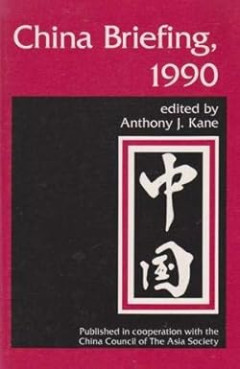
China briefing, 1990
China Briefing, 1990 approaches the events of the previous year differently from past volumes in the series, providing a long-term perspective on the dramatic developments of spring and summer 1989. Senior China specialists examine the student demonstrations and their aftermath in the larger context of the 40-year history of the People's Republic of China and also reflect on future directions f…
- Edisi
- -
- ISBN/ISSN
- 0-8133-8012-X
- Deskripsi Fisik
- viii, 214 pages ; 22 cm
- Judul Seri
- -
- No. Panggil
- 951 Kan c
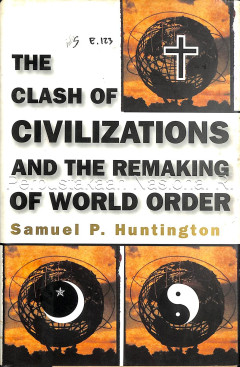
The clash of civilizations and the remaking of world order
Spurred by modernization, global politics is being reconfigured along cultural lines. Peoples and countries with similar cultures are coming together. Peoples and countries with different cultures are coming apart. Alignments defined by ideology and superpower relations are giving way to alignments defined by culture and civilization. Political bound- aries are increasingly redrawn to coincide …
- Edisi
- -
- ISBN/ISSN
- 0-684-81164-2
- Deskripsi Fisik
- 367 pages : index ; 25 cm
- Judul Seri
- -
- No. Panggil
- 909.829 Hun c
 Karya Umum
  Filsafat
  Agama
Agama  Ilmu-ilmu Sosial
  Bahasa
  Ilmu-ilmu Murni
  Ilmu-ilmu Terapan
  Kesenian, Hiburan, dan Olahraga
  Kesusastraan
  Geografi dan Sejarah