Ditapis dengan
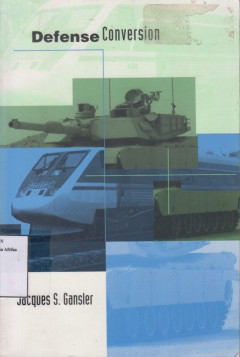
Defense conversion: Transforming the arsenal of democracy
Defense Conversion: Transforming the Arsenal of Democracy examines how the United States can shift its vast military-industrial infrastructure toward productive civilian uses after the Cold War. Jacques S. Gansler analyzes the challenges of converting defense-dependent industries, the economic impacts of reduced military spending, and the policy strategies needed to modernize America’s indust…
- Edisi
- -
- ISBN/ISSN
- 0-262-57116-1
- Deskripsi Fisik
- xiv, 277 pages : illustrations ; 23 cm
- Judul Seri
- -
- No. Panggil
- 338.476233 GAN d
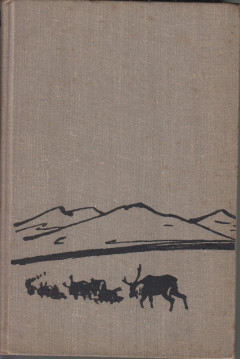
In de greep van de Dzjoegdyr
This novel by Grigori Fedoseyev tells a dramatic and gripping story set in the harsh wilderness of Siberia. The narrative follows a group of explorers who find themselves trapped in the remote Dzjoegdyr region, where they must confront extreme weather, treacherous terrain, and the limits of human endurance. Fedoseyev draws on real experiences from Soviet expeditions, offering a vivid portrayal …
- Edisi
- -
- ISBN/ISSN
- -
- Deskripsi Fisik
- 461 pages : illustrations ; 20 cm
- Judul Seri
- -
- No. Panggil
- 891.734 FED i

The Control of monopoly in the United Kingdom
This book comprehensively discusses the British government's policies in regulating and controlling monopolistic practices in the industrial sector. Paul H. Guénault and J. M. Jackson outline the legal framework, economic policies, and institutions involved in overseeing business competition in Britain in the mid-20th century. The analysis covers the background to the formation of anti-monopol…
- Edisi
- -
- ISBN/ISSN
- -
- Deskripsi Fisik
- ix, 197 pages ; 22 cm
- Judul Seri
- -
- No. Panggil
- 338.88 GUE c

The USSR in 1989: A Record of events
This volume provides a detailed chronological record of political, social, and economic developments in the Soviet Union during the pivotal year of 1989. Compiled from a wide range of official documents, news reports, and archival materials, the book traces major reforms, internal conflicts, institutional changes, and public movements that accelerated the disintegration of the Soviet system. It…
- Edisi
- -
- ISBN/ISSN
- 0-8133-8016-2
- Deskripsi Fisik
- x, 740 pages ; 23,5 cm
- Judul Seri
- -
- No. Panggil
- 947.085 TOL u
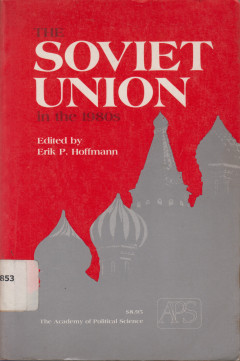
The Soviet Union in the 1980s
The Soviet Union in the 1980s is a scholarly volume featuring articles presented in the Proceedings of the Academy of Political Science. This issue analyzes the political, economic, and social dynamics of the USSR during a transformative decade marked by stagnation, leadership transitions, and the early stages of reform. Contributors examine Soviet domestic and foreign policy, ideological devel…
- Edisi
- -
- ISBN/ISSN
- 0065-0684
- Deskripsi Fisik
- xii, 244 pages ; 23 cm
- Judul Seri
- -
- No. Panggil
- 947.085 HOF s
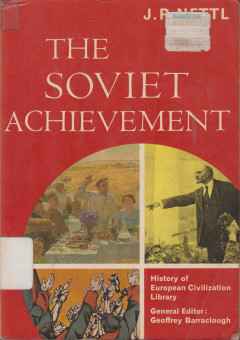
The Soviet achievement
The Soviet Achievement by J. P. Nettl is an illustrated historical and analytical survey of the development of the Soviet Union, highlighting its political, social, economic, and cultural evolution. Through 144 illustrations, including 19 in color, the book presents an accessible yet scholarly exploration of the USSR's rise, ideological foundations, institutional structures, and international i…
- Edisi
- -
- ISBN/ISSN
- -
- Deskripsi Fisik
- 288 pages : illustrations ; 21 cm
- Judul Seri
- -
- No. Panggil
- 947 NET s
Russia’s crimean war
Russia’s Crimean War by historian John Shelton Curtiss provides a comprehensive analysis of the origins, development, and consequences of the Crimean War from the Russian perspective. Drawing extensively on Russian archival sources, Curtiss examines the political decisions of Tsar Nicholas I, diplomatic failures, military operations, and the broader European context that shaped the conflict. …
- Edisi
- -
- ISBN/ISSN
- 0-8223-0374-4
- Deskripsi Fisik
- xi, 597 pages : illustrations ; 24 cm
- Judul Seri
- -
- No. Panggil
- 947.07 CUR r
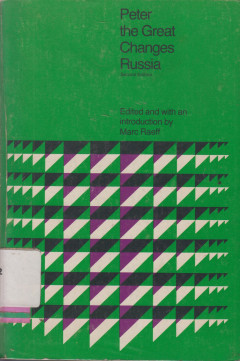
Peter the great changes Russia
This book offers a concise yet insightful exploration of the sweeping reforms introduced by Peter the Great and their profound impact on Russian society, government, and culture. Through selected documents and scholarly commentary, editor Marc Raeff highlights the transformation of Russia from a traditional tsarist state into an emerging European power. The volume provides historical context, a…
- Edisi
- -
- ISBN/ISSN
- 0-669-82701-0
- Deskripsi Fisik
- xxiv, 199 pages ; 20,5 cm
- Judul Seri
- -
- No. Panggil
- 947.05 RAE p
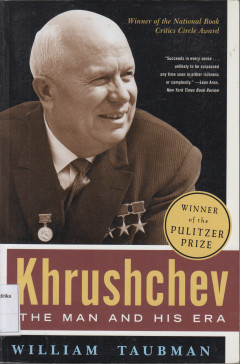
Khrushchev: The Man and His era
This Pulitzer Prize–winning biography offers an extensive and deeply researched portrait of Nikita Khrushchev, one of the most pivotal leaders of the Soviet Union. William Taubman reconstructs Khrushchev’s life—from his rise through the Communist Party under Stalin, to his surprising emergence as premier, and his attempts to reform the Soviet system while managing the dangers of the Cold …
- Edisi
- -
- ISBN/ISSN
- 978-0-393-05279-5
- Deskripsi Fisik
- xx, 871 pages : illustrations ; 23,5 cm
- Judul Seri
- -
- No. Panggil
- 947.084092 TAU k
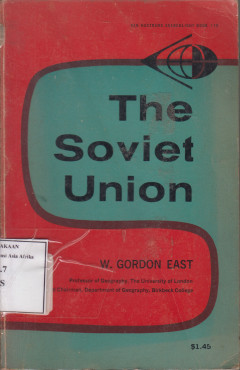
The Soviet Union
This book provides a comprehensive geographical and socio-economic survey of the Soviet Union as it existed in the early 1960s. Written by noted geographer W. Gordon East, the work examines the physical landscape, population distribution, natural resources, agriculture, industry, and regional differences across the vast Soviet territory. It also discusses historical influences that shaped the S…
- Edisi
- -
- ISBN/ISSN
- -
- Deskripsi Fisik
- 136 pages : illustrations ; 20,5 cm
- Judul Seri
- -
- No. Panggil
- 914.704 EAS s
 Karya Umum
  Filsafat
  Agama
Agama  Ilmu-ilmu Sosial
  Bahasa
  Ilmu-ilmu Murni
  Ilmu-ilmu Terapan
  Kesenian, Hiburan, dan Olahraga
  Kesusastraan
  Geografi dan Sejarah