Ditapis dengan
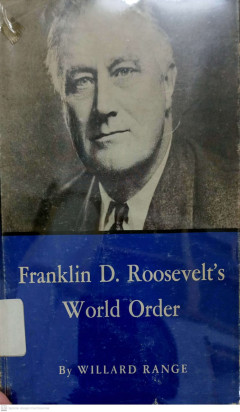
Franklin D. Roosevelt world order
Franklin D. Roosevelt’s World Order examines the international vision and foreign policy strategies developed by President Franklin D. Roosevelt during his administration, particularly through the era of World War II. Willard Range analyzes Roosevelt’s approach to building a stable postwar world, his diplomatic principles, and the political challenges he faced in shaping global order. The b…
- Edisi
- -
- ISBN/ISSN
- -
- Deskripsi Fisik
- xiii, 219 pages ; 24,5 cm
- Judul Seri
- -
- No. Panggil
- 973.917 RAN f

When the cheering stopped
When the Cheering Stopped is a compelling historical narrative that explores the final years of President Woodrow Wilson, focusing on his declining health, political struggles, and the downfall of his dream for the League of Nations. Gene Smith offers an intimate portrayal of Wilson’s personal and political challenges after World War I, revealing the tensions within his administration, his de…
- Edisi
- -
- ISBN/ISSN
- -
- Deskripsi Fisik
- xiii, 305 pages ; 17,5 cm
- Judul Seri
- -
- No. Panggil
- 973.913 SMI w
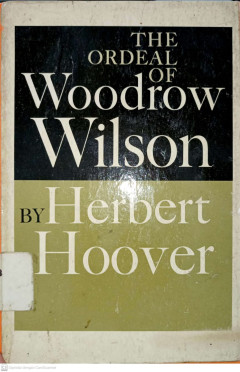
The Ordeal of Woodrow Wilson
The Ordeal of Woodrow Wilson is Herbert Hoover’s personal and political account of President Woodrow Wilson during the turbulent years surrounding World War I and its aftermath. Drawing from his close relationship with Wilson as head of wartime relief efforts, Hoover offers an insider’s perspective on Wilson’s struggles to negotiate peace, lead the United States through global crisis, and…
- Edisi
- -
- ISBN/ISSN
- -
- Deskripsi Fisik
- xiii, 318 pages : illustrations ; 20,1 cm
- Judul Seri
- -
- No. Panggil
- 973.913 HOO o
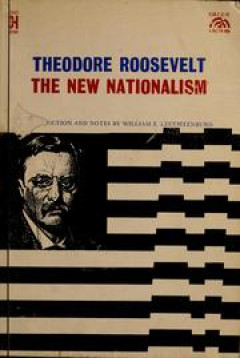
The New nationalism
The New Nationalism presents Theodore Roosevelt’s influential political philosophy advocating for stronger government regulation, social justice, and national unity during the Progressive Era. Through his speeches and writings, Roosevelt argues for reforms to balance the interests of labor, capital, and the public, emphasizing the need for fairness and responsibility in industrial society. Th…
- Edisi
- -
- ISBN/ISSN
- -
- Deskripsi Fisik
- xii, 173 pages ; 20 cm
- Judul Seri
- -
- No. Panggil
- 973.911 ROO n
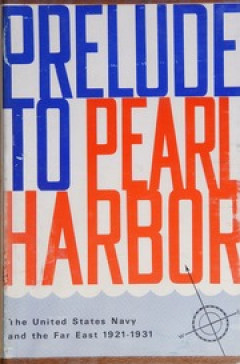
Prelude to pearl harbor
This book examines the strategic, political, and diplomatic developments involving the United States Navy and its activities in the Far East during the decade 1921–1931. Gerald E. Wheeler analyzes naval operations, American foreign policy, and the growing tensions between the United States and Japan in the years preceding the attack on Pearl Harbor. Through detailed historical documentation, …
- Edisi
- -
- ISBN/ISSN
- -
- Deskripsi Fisik
- xii, 211 pages ; 21,5 cm
- Judul Seri
- -
- No. Panggil
- 973.91 WHE p
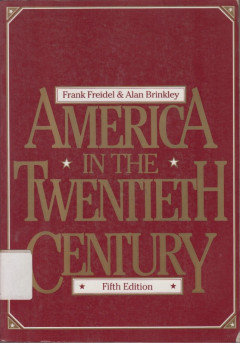
America in the twentieth century
America in the Twentieth Century provides a comprehensive overview of the major political, social, cultural, and economic developments that shaped the United States from 1900 through the late twentieth century. Written by Frank Freidel and Alan Brinkley, the book examines key events such as the Progressive Era, the Great Depression, both World Wars, the Cold War, the Civil Rights Movement, and …
- Edisi
- Fifth Edition
- ISBN/ISSN
- 0-07-554359-1
- Deskripsi Fisik
- xvii, 581 pages : illustrations ; 23,5 cm
- Judul Seri
- -
- No. Panggil
- 973.9 FRE a
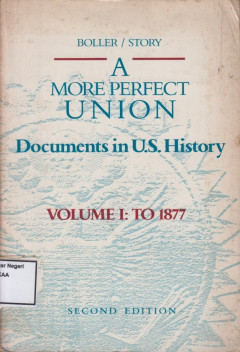
A More perfect Union: Documents in U.S. history
A More Perfect Union: Documents in U.S. History, Volume I, presents a curated collection of essential primary sources tracing the development of the United States from the colonial era through Reconstruction in 1877. Compiled by Paul F. Boller, Jr. and Ronald Story, this volume includes political speeches, constitutional texts, letters, legal documents, and social commentaries that illuminate m…
- Edisi
- 2nd Edition
- ISBN/ISSN
- 0-395-35920-1
- Deskripsi Fisik
- xv, 252 pages : illustrations ; 23,5 cm
- Judul Seri
- -
- No. Panggil
- 973.8 BOL m
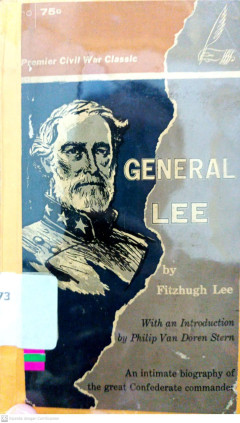
General Lee
General Lee is a classic biography of Confederate General Robert E. Lee, written by his nephew Fitzhugh Lee. The book presents a detailed account of Lee’s military career, leadership during the Civil War, and his character as a soldier and statesman. Drawing on personal knowledge and historical documents, the author provides insight into Lee’s strategic decisions, relationships with fellow …
- Edisi
- -
- ISBN/ISSN
- -
- Deskripsi Fisik
- viii, 416 pages, 18 x 11 cm
- Judul Seri
- -
- No. Panggil
- 973.573 LEE g
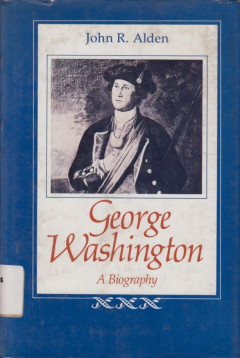
George Washington: A Biography
George Washington: A Biography offers a detailed and authoritative account of the life of the first President of the United States. John R. Alden examines Washington’s early years, his military leadership during the French and Indian War and the American Revolution, his role in shaping the new nation, and his presidency. The book provides insight into Washington’s character, political thoug…
- Edisi
- -
- ISBN/ISSN
- 0-8071-1153-8
- Deskripsi Fisik
- xii, 326 pages, 24 x 16 cm
- Judul Seri
- -
- No. Panggil
- 973.41 ALD g
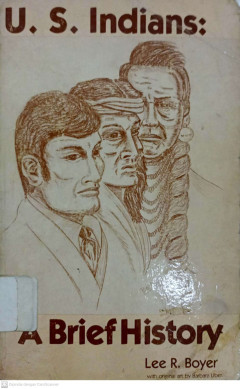
U.S. Indians: A Brief history
U.S. Indians: A Brief History provides an introductory survey of the history of Native American peoples in the United States. Lee R. Boyer outlines the cultural diversity, social structures, and traditions of Indigenous groups before European contact, and examines the dramatic changes brought by colonization, U.S. government policies, displacement, warfare, and assimilation efforts. The book hi…
- Edisi
- -
- ISBN/ISSN
- 0-89894-009-5
- Deskripsi Fisik
- 219 pages, 23 x 15 cm
- Judul Seri
- -
- No. Panggil
- 973.4 BOY u
 Karya Umum
  Filsafat
  Agama
Agama  Ilmu-ilmu Sosial
  Bahasa
  Ilmu-ilmu Murni
  Ilmu-ilmu Terapan
  Kesenian, Hiburan, dan Olahraga
  Kesusastraan
  Geografi dan Sejarah