Ditapis dengan

Roots of totalitarianism: The Ideological sources of fascism, national social…
J. Lucien Radel's Roots of Totalitarianism examines the ideological roots of three major 20th-century political movements: fascism, national socialism, and communism. The book traces the development of thought, socio-political conditions, and the figures that influenced the birth of these totalitarian systems. Using historical and philosophical analysis, Radel explains how these ideologies form…
- Edisi
- -
- ISBN/ISSN
- 0-8448-0374-X
- Deskripsi Fisik
- ix, 218 pages ; 23 cm
- Judul Seri
- -
- No. Panggil
- 335.5 RAD r

American dreams: The United States since 1945
For a brief, bright moment in 1945, America stood at its apex, looking back on victory not only against the Axis powers but against the Great Depression, and looking ahead to seemingly limitless power and promise. What we've done with that power and promise over the past six decades is a vitally important and fascinating topic that has rarely been tackled in one volume, and never by a historian…
- Edisi
- -
- ISBN/ISSN
- 978-1-59420-262-9
- Deskripsi Fisik
- x, 420 pages ; 24 cm
- Judul Seri
- -
- No. Panggil
- 973. 9 BRA a

The rise and fall of the American left
The American Left was born in America, not, as some would have it in Europe or the Third World, and the American Left was nurtured by intellectuals and activists who read Jefferson and Whitman before the read Marx or Mao. One lesson this brilliant history teaches us in that the fury of radical innocence and wounded idealism so peculiar to American intellectual history springs from native soil
- Edisi
- -
- ISBN/ISSN
- 0-393-03075-X
- Deskripsi Fisik
- 432 pages : illustrations ; 22 cm
- Judul Seri
- -
- No. Panggil
- 303.484 DIG r

The Force of fantasy: Restoring the American dream
The Force of Fantasy explores how symbolic communication, storytelling, and rhetorical vision shape American social and political life. Ernest G. Bormann examines the ways collective fantasies influence public opinion, national identity, and political decision-making. Through his analysis of rhetorical movements and shared fantasies, the book demonstrates how narratives help restore, reform, or…
- Edisi
- -
- ISBN/ISSN
- 0-8093-1185-2
- Deskripsi Fisik
- ix, 279 pages ; 23,5 cm
- Judul Seri
- -
- No. Panggil
- 302.2 BOR f
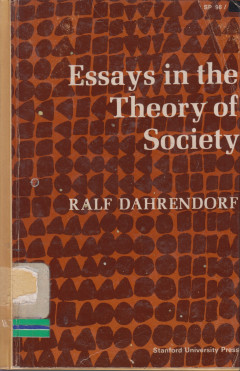
Essays in the theory of society
This volume brings together ten influential essays by renowned sociologist Ralf Dahrendorf, offering a comprehensive exploration of major themes in sociological theory. Covering issues such as social conflict, authority, class structure, and the origins of inequality, the essays reflect Dahrendorf’s distinctive analytical approach that bridges classical and modern sociological thought. Severa…
- Edisi
- -
- ISBN/ISSN
- -
- Deskripsi Fisik
- x, 300 pages ; 21,5 cm
- Judul Seri
- -
- No. Panggil
- 301.01 DAH e

Alexis de Tocqueville: His social and political theory
Whitney Pope's Alexis de Tocqueville: His Social and Political Theory provides a comprehensive study of the social and political thought of Alexis de Tocqueville, one of the most influential theorists in the history of the social sciences. Pope examines Tocqueville's ideas on democracy, civil society, equality, liberty, and the dangers of the tyranny of the majority, as well as their relevance …
- Edisi
- -
- ISBN/ISSN
- 0-8039-2557-3
- Deskripsi Fisik
- 158 pages ; 21,5 cm
- Judul Seri
- -
- No. Panggil
- 301.0924 POP a

Denmark : A trouble welfare state
Denmark in the 1990s promises to be a stark contrast to the postwar years. In this critical introduction, Professor Kenneth Miller examines Danish social, governmental and public policy, focusing on the changes that have transformed it in the past 40 years. He presents a story of stability and change, of a welfare state in times of challenge and difficulty, and of a small country – despite in…
- Edisi
- -
- ISBN/ISSN
- 0-81330834-8
- Deskripsi Fisik
- xiii, 224 pages ; 24 cm
- Judul Seri
- -
- No. Panggil
- 361.6509 MIL d

Society, culture, and change in the Middle East
This book explores the social structures, cultural patterns, and dynamic processes of change occurring in the Middle East during the mid-twentieth century. Raphael Patai analyzes traditional and modern influences shaping Middle Eastern societies, addressing issues such as family life, social organization, modernization, and cultural transformation. As an expanded edition of his earlier work, th…
- Edisi
- -
- ISBN/ISSN
- 0-8122-7289-7
- Deskripsi Fisik
- 560 pages ; 20,5 cm
- Judul Seri
- -
- No. Panggil
- 306.0956 PAT s
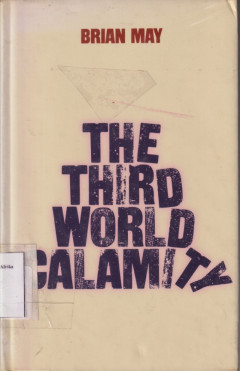
The Third world calamity
This book analyzes the severe social, economic, and political crises affecting Third World countries. Brian May explores the structural causes of underdevelopment, including poverty, inequality, colonial legacies, and global economic imbalances. Through critical examination, the author highlights how these interconnected issues shape the difficult realities faced by developing nations and argue…
- Edisi
- -
- ISBN/ISSN
- 0-7100-0764-7
- Deskripsi Fisik
- xii, 274 pages : illustration ; 22 cm
- Judul Seri
- -
- No. Panggil
- 309.1172 MAY t

The Middle East: A Political and economic survey
This volume provides a comprehensive political and economic survey of the Middle East, examining the region’s historical background, political developments, economic structures, and social dynamics. Edited by Peter Mansfield, the book offers analytical perspectives on the shifting geopolitical landscape, regional conflicts, modernization issues, and the economic challenges faced by Middle Eas…
- Edisi
- -
- ISBN/ISSN
- 0-19-215851-1
- Deskripsi Fisik
- ix, 579 pages : illustration ; 22 cm
- Judul Seri
- -
- No. Panggil
- 956.05 MAN t
 Karya Umum
  Filsafat
  Agama
Agama  Ilmu-ilmu Sosial
  Bahasa
  Ilmu-ilmu Murni
  Ilmu-ilmu Terapan
  Kesenian, Hiburan, dan Olahraga
  Kesusastraan
  Geografi dan Sejarah