Ditapis dengan

Report of the Chairman of the Non-Aligned Movement on the Activities of the M…
The book Report of the Chairman of the Non-Aligned Movement on the Activities of the Movement, September 1992 – October 1995 is an official report prepared by the Office of the Executive Assistant to the Chairman of the Non-Aligned Movement. This report summarizes various activities, work programs, political initiatives, as well as high-level meetings and ministerial meetings held during the …
- Edisi
- -
- ISBN/ISSN
- 979-553-703-2
- Deskripsi Fisik
- xi, 885 pages ; 24,5 cm
- Judul Seri
- -
- No. Panggil
- 327.172 OFF r
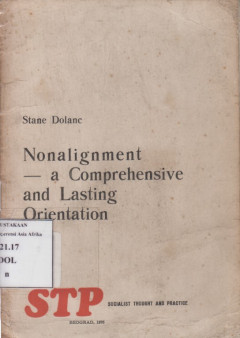
Nonalignment — a comprehensive and lasting orientation
This publication presents a political address by Stane Dolanc, offering a comprehensive analysis of the Non-Aligned Movement as a long-term and principled orientation for developing countries. Dolanc discusses the ideological foundations of nonalignment, its importance in preserving independence amid global power blocs, and its role in promoting peaceful coexistence, international cooperation, …
- Edisi
- -
- ISBN/ISSN
- -
- Deskripsi Fisik
- 24 pages ; 20 cm
- Judul Seri
- -
- No. Panggil
- 327.17 DOL n

Nationalism in Asia and Africa
This volume is a collection of scholarly essays examining the development, ideology, and impact of nationalist movements across Asia and Africa. Edited by Elie Kedourie, the book explores the political, historical, and intellectual contexts that shaped anti-colonial struggles and nation-building processes in the 20th century. Through contributions from various authors, it provides analytical in…
- Edisi
- -
- ISBN/ISSN
- -
- Deskripsi Fisik
- viii, 573 pages ; 21 cm
- Judul Seri
- -
- No. Panggil
- 320.54 KED n

The Emergence of the modern Middle East
The Emergence of the Modern Middle East by Albert Hourani provides a comprehensive analysis of the historical transformation of the Middle East from the eighteenth century to the twentieth century. Hourani explores the political, social, and intellectual developments that shaped modern Middle Eastern societies, including the impact of European influence, internal reforms, nationalism, and cultu…
- Edisi
- -
- ISBN/ISSN
- 0-520-03862-6
- Deskripsi Fisik
- xx, 243 pages ; 22 cm
- Judul Seri
- -
- No. Panggil
- 956 HOU e
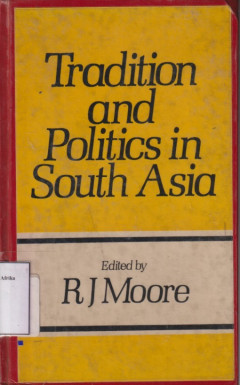
Tradition and politics in South Asia
This volume examines the complex interactions between political structures, traditional institutions, and cultural practices in South Asia. Edited by R. J. Moore, the book brings together scholarly essays that explore how historical traditions have shaped political behavior, governance, and social change across countries such as India, Pakistan, Bangladesh, and Sri Lanka. The work provides insi…
- Edisi
- -
- ISBN/ISSN
- 0-7069-0608-X
- Deskripsi Fisik
- xxii, 266 pages ; 21 cm
- Judul Seri
- -
- No. Panggil
- 320.954 MOO t
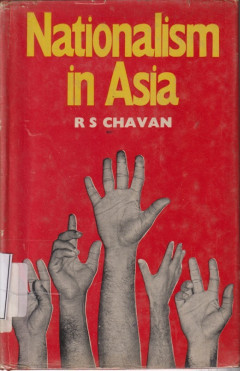
Nationalism in Asia
This book provides an analytical overview of the rise and development of nationalism in various regions of Asia. R. S. Chavan examines the historical roots, political dynamics, and socio-cultural forces that shaped nationalist movements across the continent. The work highlights key events, ideological influences, and regional variations that contributed to the formation of modern Asian nation-s…
- Edisi
- -
- ISBN/ISSN
- 0-7069-0608-X
- Deskripsi Fisik
- xvi, 595 pages ; 22 cm
- Judul Seri
- -
- No. Panggil
- 320.54095 CHA n
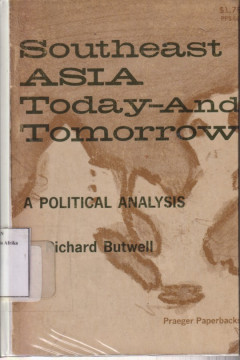
Southeast Asia today-and tomorrow: A Political analysis
This book presents a political analysis of Southeast Asia during the early post-colonial era, examining the major political developments, regional dynamics, and emerging challenges faced by Southeast Asian nations. Richard Butwell explores issues of governance, nationalism, international alignments, and the strategic significance of the region. The work provides historical insights as well as f…
- Edisi
- -
- ISBN/ISSN
- -
- Deskripsi Fisik
- x, 182 pages : illustration ; 20,5 cm
- Judul Seri
- -
- No. Panggil
- 320.959 BUT s
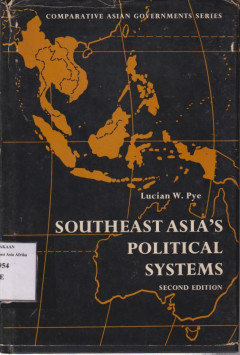
Southeast Asia’s political systems
This book provides a comprehensive analysis of the political systems of Southeast Asian countries, examining the historical, cultural, and social foundations that shape governance in the region. Lucian W. Pye explores the comparative structures of political authority, leadership patterns, modernization challenges, and the interaction between traditional values and modern state-building. As part…
- Edisi
- Kedua
- ISBN/ISSN
- 0-13-823690-9
- Deskripsi Fisik
- xi, 116 pages ; 23,5 cm
- Judul Seri
- -
- No. Panggil
- 320.959 PYE s
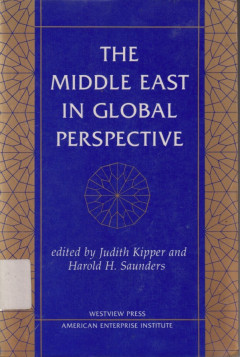
The Middle East in global perspective
This edited volume provides a comprehensive examination of the Middle East within the context of shifting global political dynamics. Bringing together contributions from leading scholars and practitioners, the book analyzes political developments, regional conflicts, economic challenges, sociopolitical transformations, and the evolving role of the Middle East in international affairs. It highli…
- Edisi
- -
- ISBN/ISSN
- 0-8133-0296-X
- Deskripsi Fisik
- viii, 359 pages ; 23 cm
- Judul Seri
- -
- No. Panggil
- 320.956 KIP m

Democracy and democratization: Processes and prospects in a changing world
This book analyzes the processes, challenges, and prospects of democratization in a rapidly changing global political landscape. Georg Sørensen explores the theoretical foundations of democracy, the conditions required for successful democratization, and the obstacles faced by emerging democracies. By examining political transitions in different regions, the author highlights how global power …
- Edisi
- -
- ISBN/ISSN
- 0-8133-1527-1
- Deskripsi Fisik
- xv, 170 pages ; 23,5 cm
- Judul Seri
- -
- No. Panggil
- 321.8 SOR d
 Karya Umum
 Filsafat
 Agama
 Ilmu-ilmu Sosial
 Bahasa
 Ilmu-ilmu Murni
 Ilmu-ilmu Terapan
 Kesenian, Hiburan, dan Olahraga
 Kesusastraan
 Geografi dan Sejarah