Ditapis dengan

Gott segne Afrika : Texte und Predigten des Friedensnobelpreisträgers
This book is a collection of texts, sermons, and reflections by Desmond Tutu, Nobel Peace Prize laureate and leading moral voice in the struggle against apartheid in South Africa. Written during a period of intense political repression, the work combines theological insight with sharp social critique, emphasizing justice, reconciliation, and human dignity. Tutu addresses the moral responsibilit…
- Edisi
- -
- ISBN/ISSN
- 3-499-15626-1
- Deskripsi Fisik
- 155 pages : Illustrations ; 19 cm
- Judul Seri
- -
- No. Panggil
- 968.065 TUT g

New Zealand in world affairs : Volume I
This volume presents a collection of authoritative papers examining New Zealand’s role and evolving position in world affairs. Written by leading scholars and diplomats, the book explores the country’s foreign policy development, its involvement in international organizations, and its responses to major global and regional issues during the mid-20th century. The analyses provide historical …
- Edisi
- -
- ISBN/ISSN
- 0-7055-0636-3
- Deskripsi Fisik
- 204 pages ; 21,5 cm
- Judul Seri
- -
- No. Panggil
- 327.93 MCI n
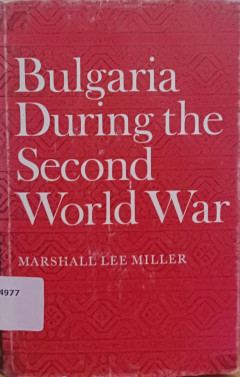
Bulgaria during the second world war
Marshall Lee Miller's Bulgaria During the Second World War offers an in-depth analysis of Bulgaria's political, military, and social position during World War II. Miller explains how Bulgaria navigated geopolitical pressures from Nazi Germany, the Soviet Union, and other Balkan states, as well as the internal factors that shaped the country's policies during the war. The book highlights the Bul…
- Edisi
- -
- ISBN/ISSN
- 0-8047-0870-3
- Deskripsi Fisik
- xii, 290 pages : illustration ; 22,5 cm
- Judul Seri
- -
- No. Panggil
- 949.75 MIL b

The Opening of the apartheid mind: Options for the New South Africa
Revealing the complex political forces involved in disman- thing apartheid, Adam and Moodley argue that although the African National Congress will join the government it may be forced to govern without real constitutional, eco- nomie, or military power. They view a political settlement as a necessary but insufficient condition for reversing the social disintegration and economie decline that i…
- Edisi
- -
- ISBN/ISSN
- 0-520-08199-4
- Deskripsi Fisik
- 256 pages : illustration ; 24 cm
- Judul Seri
- -
- No. Panggil
- 968.064 ADA o
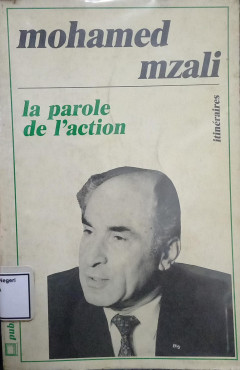
La parole de l’action: Conversation avec Xavière Ulysse
La parole de l’action presents an in-depth political conversation between Mohamed Mzali, a prominent Tunisian political figure, and Xavière Ulysse. Through a dialogical format, the book explores themes of political responsibility, governance, ideology, and action in the context of modern Tunisia and the Arab world. Drawing on Mzali’s intellectual background and political experience, this w…
- Edisi
- -
- ISBN/ISSN
- -
- Deskripsi Fisik
- 281 pages ; 21,5 cm
- Judul Seri
- -
- No. Panggil
- 320.092 MZA l
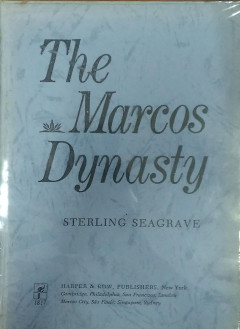
The Marcos Dynasty
This book is an in-depth journalistic investigation that exposes hidden details of the authoritarian regime of Ferdinand and Imelda Marcos in the Philippines (1946–1986). Seagrave details widespread political corruption, an international money laundering network, and the Marcos family's complex ties to U.S. intelligence and organized crime. The book presents a gripping narrative of how power …
- Edisi
- First Edition
- ISBN/ISSN
- 0-06-015815-8
- Deskripsi Fisik
- viii, 485 pages ; ilustrations : 21,5 cm
- Judul Seri
- -
- No. Panggil
- 959.904 STE m

Bourguiba: l’homme d’action de l’Afrique
This book presents a political biography of Habib Bourguiba, the leading figure of Tunisian independence and one of Africa’s most influential nationalist leaders. Written by Jean Rous, the work examines Bourguiba’s political actions, leadership style, and his role in shaping modern Tunisia within the broader context of African decolonization movements.
- Edisi
- -
- ISBN/ISSN
- -
- Deskripsi Fisik
- 188 halaman ; 21 cm
- Judul Seri
- -
- No. Panggil
- 961.104 ROU b
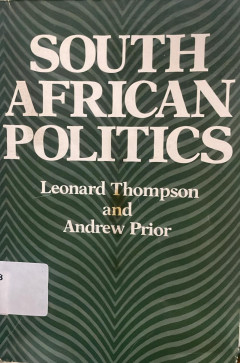
South African Politics
This book provides a comprehensive analysis of the political system and historical development of South Africa. It examines the evolution of political institutions, ideologies, and power relations from the colonial period through the era of apartheid and its aftermath. The authors explore the roles of race, ethnicity, nationalism, and economic structures in shaping South African politics, as we…
- Edisi
- -
- ISBN/ISSN
- 0-300-02767-2
- Deskripsi Fisik
- 255 pages ; 21 cm
- Judul Seri
- -
- No. Panggil
- 320.968 THO s
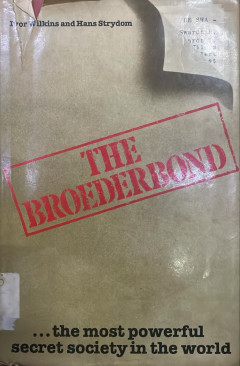
The Broederbond
The most controversial nation in the world, the nation of gold and diamonds, of apartheid and Soweto, does not exist in complete isolation. South Africa, whether we like it or not, is inextricably linked to the economies of the Western world and its fate will affect us all. It is a nation divided not only between black and white but between white and white. To understand South Africa the world …
- Edisi
- 1
- ISBN/ISSN
- 0 70920734 4
- Deskripsi Fisik
- 458 pages ; 24 cm
- Judul Seri
- -
- No. Panggil
- 320.968 WIL b

Roosevelt : Studie über glück und macht
This book is a biographical and psychological study of Franklin D. Roosevelt, written by Emil Ludwig. The author explores Roosevelt’s character, leadership style, and exercise of power, focusing on the relationship between personal happiness and political authority. Published in 1938, the work reflects contemporary perspectives on Roosevelt’s presidency and offers insight into political lea…
- Edisi
- -
- ISBN/ISSN
- -
- Deskripsi Fisik
- 309 pages : illustration ; 20,5 cm
- Judul Seri
- -
- No. Panggil
- 973.917 LUD r
 Karya Umum
  Filsafat
  Agama
Agama  Ilmu-ilmu Sosial
  Bahasa
  Ilmu-ilmu Murni
  Ilmu-ilmu Terapan
  Kesenian, Hiburan, dan Olahraga
  Kesusastraan
  Geografi dan Sejarah