Ditapis dengan
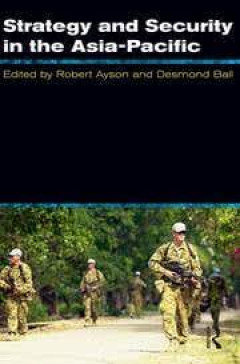
Strategy and security in the Asia-Pacific
Strategy and Security in the Asia-Pacific provides the analytical frameworks needed to make sense of this complex but exciting strategic universe. Offering a unique mix of global strategic thinking and Asia-Pacific security analysis, this book is for readers from Sydney to Seoul who want to put their own local security challenges in a wider regional and global context. It is also for North Amer…
- Edisi
- First Published
- ISBN/ISSN
- 1-74114-798-0
- Deskripsi Fisik
- xxiii, 343 pages : index ; 23 cm
- Judul Seri
- -
- No. Panggil
- 303.625095 Ays s

Energy and US foreign policy: The quest for resource security after the Cold War
The quest for oil can be seen as a defining principle of global US foreign policy, an imperative which has shaped and redefined the practice of American diplomacy, especially in the wake of 9/11, which raised questions about the stability of global oil resources. In "Energy and US Foreign Policy", Ahmed Mahdi relates the military expansion of the world's biggest superpower to its quest to gain …
- Edisi
- -
- ISBN/ISSN
- 978-1-84885-776-6
- Deskripsi Fisik
- 311 pages ; 22 cm
- Judul Seri
- -
- No. Panggil
- 333.790973 Mah e

Regional security in Southeast Asia: Beyond the ASEAN way
The book examines ASEAN's mechanisms in managing challenges and threats to regional security. Its extensive analyses of the ASEAN story of managing regional security cover the different phases of ASEAN's development as a regional organization and explore the perceptible changes that have occurred in regional mechanisms of conflict management. The book also examines the roles of relevant actors …
- Edisi
- Cet. 1
- ISBN/ISSN
- 981-230-260-3
- Deskripsi Fisik
- viii, 327 pages ; 23 cm
- Judul Seri
- -
- No. Panggil
- 341.7 Ant r
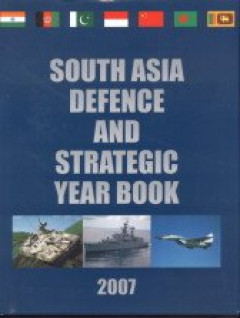
South Asia defence and strategic year book 2007
The year book aims to provide a comprehensive overview of the security environment in South Asia. International focus on the region and its increasing engagement by the comity of nations are ample indications of its emergence as the next power center in global politics. And yet, while it continues to grow in economic, industrial and military potential, its peculiar security environment, ridden …
- Edisi
- -
- ISBN/ISSN
- 81-86505-85-7
- Deskripsi Fisik
- 301 pages : illustrations ; 27 cm
- Judul Seri
- -
- No. Panggil
- 341.7 San s
Report: On the state of national security -external aspects-
The Report prepared at the Polish Institute of International Affairs (now the Department of Strategic Research/Polish Institute of International Affairs, Ministry of Foreign Affairs) is the first such relatively comprehensive analysis of the external determinants of Poland's national security supplemented by an examination of some of the internal aspects. The time-frame of the Report (to spr…
- Edisi
- -
- ISBN/ISSN
- 83-901305-1-3
- Deskripsi Fisik
- 155 pages : illustrations (black and white) ; 20 cm
- Judul Seri
- -
- No. Panggil
- 343.01 Ani r

Forward engagement: RSIS as a think tank of international studies and securit…
In many ways, the S. Rajaratnam School of International Studies (RSIS) is a microcosm of the Singapore brand of government. The DNA of Singapore's policymaking is its forward-looking nature. S. Rajaratnam's trademark is taking the long view while Lee Kuan Yew articulated his wish for leadership foresight and the admiration for 'helicopter quality' candidates in policymaking. This was how RSIS' …
- Edisi
- -
- ISBN/ISSN
- 978-0-00-098716-7
- Deskripsi Fisik
- xviii, 155 pages ; 23 cm
- Judul Seri
- -
- No. Panggil
- 355.03 Cho f

Intermediate states, regional leadership and security: India, Brazil and Sout…
The contents of this book: Part 1 Intermediate States, Regional Leadership and Security: Analytical Frameworks Part 2 IBSA in the Context of Global Security: National Perspective Part 3 Regional Security Contexts Part 4 Defence Policies and Prospects for Cooperation
- Edisi
- -
- ISBN/ISSN
- 85-230-0849-7
- Deskripsi Fisik
- 310 pages ; 22 cm
- Judul Seri
- -
- No. Panggil
- 322 Vas i

The final test: A history of the comprehensive nuclear-test-ban treaty negoti…
Contents: 1. Introduction 2. The mandate 3. Preamble 4. Article 1: Basic obligation 5. Article 2: The organization 6. Article 3: National implementation measures etc.
- Edisi
- -
- ISBN/ISSN
- -
- Deskripsi Fisik
- 291 pages : illustrations ; 23 cm
- Judul Seri
- -
- No. Panggil
- 341.7 Ram f

The Asia-Pacific security lexicon
The Asia-Pacific Security Lexicon focuses on the vocabulary of Asia-Pacific security, mainly as it developed in the creative decade of the 1990s. The goals is to dissect thirty-four ideas and concepts that have been at the core of debates about multilateral security co-operation.
- Edisi
- -
- ISBN/ISSN
- 981-230-149-6
- Deskripsi Fisik
- xi, 224 pages ; 23 cm.
- Judul Seri
- -
- No. Panggil
- 341.7 Cap a

Bridging the gap: A future security architecture for the Middle East
A path-breaking collaboration between an Israeli arms control expert and a Jordanian policy advisor, this concise book offers a frank assessment of Arab and Israeli perceptions of their security problems. Building on the bilateral and multilateral peace process, the authors propose a set of measures to increase trust between the two sides and break out of the security dilemma in which a move by…
- Edisi
- -
- ISBN/ISSN
- 0-8476-8551-9
- Deskripsi Fisik
- xvii, 126 pages ; 23 cm
- Judul Seri
- -
- No. Panggil
- 355.033056 Fel b
 Karya Umum
  Filsafat
  Agama
Agama  Ilmu-ilmu Sosial
  Bahasa
  Ilmu-ilmu Murni
  Ilmu-ilmu Terapan
  Kesenian, Hiburan, dan Olahraga
  Kesusastraan
  Geografi dan Sejarah