Ditapis dengan
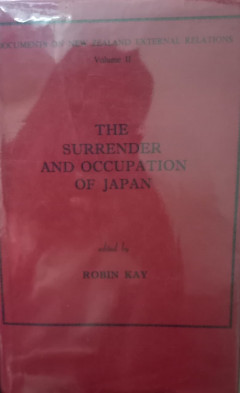
The Surrender and occupation of Japan
Examines the events surrounding Japan’s capitulation at the end of World War II and the subsequent Allied occupation. The book details the political decisions, military negotiations, and humanitarian challenges that shaped Japan’s transition from a wartime empire to a demilitarized and reformed nation. Kay highlights the role of Allied forces, particularly the United States, in restructurin…
- Edisi
- -
- ISBN/ISSN
- 0-477-01053-9
- Deskripsi Fisik
- xcix, 1782 pages ; 25 cm
- Judul Seri
- -
- No. Panggil
- 952 KAY s

Fifty years of light and dark: The Hirohito era
A panoramic chronicle of the reign of Emperor Hirohito (Shōwa period), blending historical narrative with photo-essay elements. Edited by Hiroshi Fujimoto and published by the Mainichi Newspapers, the book portrays Japan’s traumatic wartime experience — including WWII, defeat, and reconstruction — as well as its astonishing postwar economic revival.
- Edisi
- -
- ISBN/ISSN
- -
- Deskripsi Fisik
- 464 pages : illustrations ; 23,5 cm
- Judul Seri
- -
- No. Panggil
- 923.153 FUJ g

Deterrence before hiroshima: The Airpower background of modern strategy
In Deterrence Before Hiroshima, George H. Quester offers a rigorous historical analysis of deterrence theory as it developed before the advent of nuclear weapons. He argues that strategic airpower — especially the capacity to inflict pain on civilian populations through aerial bombardment — played a central role in shaping pre-nuclear deterrence strategy.
- Edisi
- -
- ISBN/ISSN
- -
- Deskripsi Fisik
- xiii, 196 pages ; 23 cm
- Judul Seri
- -
- No. Panggil
- 940.54 QUE d
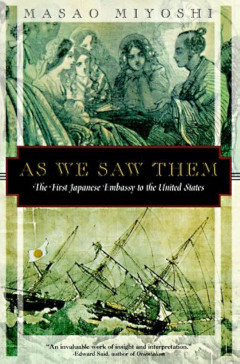
As we saw them: The First Japanese embassy to the United States
A detailed historical and cultural study of the 1860 Japanese diplomatic mission to America—the first official Japanese embassy sent abroad. Miyoshi examines how the envoys perceived American society, politics, technology, and culture during their journey, drawing from diaries, letters, and contemporary accounts. The book highlights the contrasts between Japanese expectations and the realitie…
- Edisi
- -
- ISBN/ISSN
- 1-56836-028-2
- Deskripsi Fisik
- xi, 232 pages : illustrations ; 22 cm
- Judul Seri
- -
- No. Panggil
- 327.52073 MIY a

The Japanese file: Pre-war Japanese penetration in Southeast Asia
Japan’s economic, political, and strategic expansion into Southeast Asia during the decades leading up to World War II. Robertson analyzes how Japan used trade networks, migration, cultural initiatives, and intelligence activities to strengthen its influence across the region. The book highlights Japan’s ambitions to secure resources, build strategic footholds, and counter Western colonial …
- Edisi
- -
- ISBN/ISSN
- -
- Deskripsi Fisik
- 179 pages ; 21 cm
- Judul Seri
- -
- No. Panggil
- 327.52 ROB j

Modern Japan's foreign policy
In-depth examination of Japan’s diplomatic evolution from the late 19th century to the post–World War II period. Kajima analyzes how Japan’s foreign policy was shaped by its modernization efforts, shifting security concerns, economic priorities, and interactions with major world powers. The book discusses key issues such as Japan’s engagement in international organizations, its relation…
- Edisi
- -
- ISBN/ISSN
- 0-8048-0658-6
- Deskripsi Fisik
- 327 pages ; 22 cm
- Judul Seri
- -
- No. Panggil
- 327.52 KAJ m
The Foreign policy of modern Japan
A comprehensive analysis of Japan’s diplomatic strategies and international behavior from the late 19th century through the post–World War II era. Scalapino examines the historical foundations of Japan’s foreign policy, including its early modernization efforts, imperial expansion, wartime decisions, and subsequent transformation under the postwar constitution. The book highlights Japan 
- Edisi
- -
- ISBN/ISSN
- 0-520-03499-6
- Deskripsi Fisik
- xix, 426 pages ; 23 cm
- Judul Seri
- -
- No. Panggil
- 327.52 SCA f
The Silent power: Japan's identity and world role
How Japan’s cultural traditions, historical experiences, and national identity shape its behavior and position in the international community. The book examines Japan’s preference for subtle, indirect, and consensus-driven strategies in diplomacy, economics, and global engagement—an approach often described as “silent power.” It analyzes how Japan balances pacifist principles with eco…
- Edisi
- -
- ISBN/ISSN
- -
- Deskripsi Fisik
- xi, 251 pages ; 21 cm
- Judul Seri
- -
- No. Panggil
- 327.352 EXC s
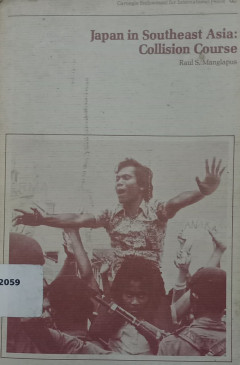
Japan in Southeast Asia: Collision course
Japan’s expanding political and economic presence in Southeast Asia during the postwar and early contemporary periods. Manglapus analyzes how Japan’s rapid economic growth, increasing investment, and regional diplomatic activities influence Southeast Asian nations and reshape regional power dynamics. The book explores both opportunities and tensions arising from Japan’s involvement—rang…
- Edisi
- -
- ISBN/ISSN
- 0-87003-004-3
- Deskripsi Fisik
- vi, 151 pages : illustrations ; 23 cm
- Judul Seri
- -
- No. Panggil
- 327.252059 MAN j

Japanese politics--an Inside view: Readings from Japan
Presents a collection of essays and analyses written by Japanese scholars that provide an insider’s perspective on Japan’s political system. The book explores key aspects of political institutions, party dynamics, bureaucratic influence, local governance, and policy-making processes. By highlighting viewpoints rooted in Japan’s own academic and political discourse, the volume offers reade…
- Edisi
- -
- ISBN/ISSN
- 0-8014-0735-4
- Deskripsi Fisik
- x, 248 pages : illustrations ; 21,5 cm
- Judul Seri
- -
- No. Panggil
- 320.95204 ITO j
 Karya Umum
  Filsafat
  Agama
Agama  Ilmu-ilmu Sosial
  Bahasa
  Ilmu-ilmu Murni
  Ilmu-ilmu Terapan
  Kesenian, Hiburan, dan Olahraga
  Kesusastraan
  Geografi dan Sejarah