Ditapis dengan
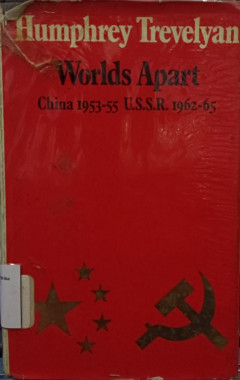
Worlds Apart : China 1953-55 U.S.S.R. 1962-65
This book examines two critical periods in the Cold War era, focusing on the divergence between the People's Republic of China (PRC) and the Soviet Union (USSR). The first part of the study delves into the period 1953–1955, when China, under the leadership of Mao Zedong, navigated its relationship with the Soviet Union after Stalin’s death, exploring the fluctuating dynamics between the two…
- Edisi
- -
- ISBN/ISSN
- 333-13023-5
- Deskripsi Fisik
- 320 pages : 22 cm
- Judul Seri
- -
- No. Panggil
- 320.5 TRE w

The Collected documents of the group of 77. Volume 1
The volume compiles foundational documents of the Group of 77, a coalition of developing nations established to promote collective economic interests and enhance joint negotiating capacity within the United Nations system. The collection includes historical records, resolutions, policy statements, and other primary sources related to international economic cooperation, development issues, and t…
- Edisi
- Second Series
- ISBN/ISSN
- 0-379-00969-2
- Deskripsi Fisik
- lii, 592 pages ; 26 cm
- Judul Seri
- -
- No. Panggil
- 338.91 SAU g

Cuba’s international relations: The Anatomy of a nationalistic foreign policy
This book presents an in-depth analysis of Cuban foreign policy after the 1959 Revolution. H. Michael Erisman explains how Cuba's nationalistic ideology and internal political dynamics shaped the country's diplomatic strategy at the regional and global levels. The discussion covers Cuba's relations with Latin American countries, the Soviet Union, the Third World, and its struggles in internatio…
- Edisi
- -
- ISBN/ISSN
- 0-8133-0042-8
- Deskripsi Fisik
- xv, 203 pages ; 23 cm
- Judul Seri
- -
- No. Panggil
- 327.7291 ERI c
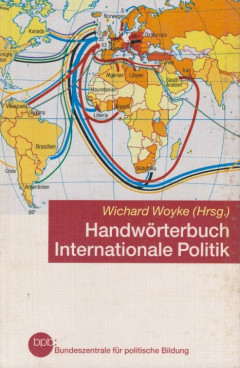
Handworterbuch internationale politik
This handbook provides a comprehensive reference on key concepts, institutions, theories, actors, and developments in international politics. Edited by Wichard Woyke, the volume offers concise and authoritative explanations relevant for students, scholars, and practitioners in political science and international relations. The revised ninth edition reflects updated research and contemporary glo…
- Edisi
- -
- ISBN/ISSN
- 3-89331-489-X
- Deskripsi Fisik
- xxiii, 676 pages ; 18,5 cm
- Judul Seri
- -
- No. Panggil
- 327.03 WOY h

Europa von a bis z: Taschenbuch der Europaischen integration
Europa von A bis Z is a comprehensive reference work that provides concise, well-structured explanations of the key institutions, processes, policies, and concepts of European integration. Developed by leading scholars Werner Weidenfeld and Wolfgang Wessels, the book serves as an essential guide for understanding the political, economic, and institutional foundations of the European Union. Orga…
- Edisi
- -
- ISBN/ISSN
- 3-89331-475-X
- Deskripsi Fisik
- 496 pages ; 20,5 cm
- Judul Seri
- -
- No. Panggil
- 341.2422 WEI e
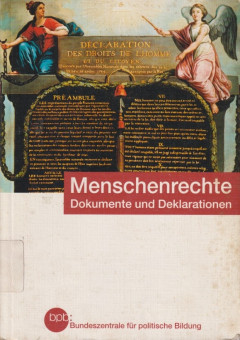
Menschenrechte: Dokumente und deklarationen
This book presents a comprehensive collection of major human rights documents and declarations adopted at national, regional, and international levels. Compiled and edited by the Bundeszentrale für politische Bildung, the volume includes foundational texts such as the Universal Declaration of Human Rights, key UN conventions, European human rights instruments, and additional thematic declarati…
- Edisi
- -
- ISBN/ISSN
- 3-89331-481-4
- Deskripsi Fisik
- 616 pages : illustration ; 21 cm
- Judul Seri
- -
- No. Panggil
- 323.4 BUN m

Foreign policy on Latin America 1970–1980
Foreign Policy on Latin America 1970–1980 provides an analytical overview of the political, economic, and diplomatic developments that shaped Latin America during a turbulent decade. Compiled by the staff of Foreign Policy, the book examines U.S.–Latin American relations, regional conflicts, authoritarian regimes, democratization efforts, and the shifting geopolitical landscape of the Cold …
- Edisi
- -
- ISBN/ISSN
- 0-86531-704-6
- Deskripsi Fisik
- vii, 184 pages ; 26 cm
- Judul Seri
- -
- No. Panggil
- 327.8 STA f
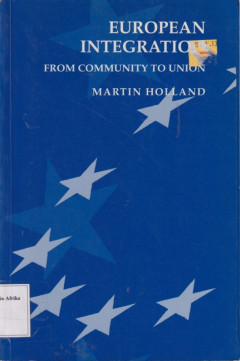
European integration: From community to union
European Integration: From Community to Union by Martin Holland provides a comprehensive analysis of the evolution of European integration from the early European Community toward the formation of the European Union. The book examines institutional development, policy-making processes, major treaties, and political dynamics that shaped modern Europe. Holland discusses the shifting roles of memb…
- Edisi
- -
- ISBN/ISSN
- 1-85567-241-3
- Deskripsi Fisik
- 258 pages ; 23 cm
- Judul Seri
- -
- No. Panggil
- 341.2422 HOL e
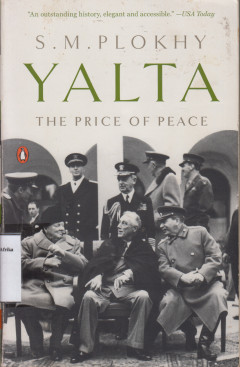
Yalta: The Price of peace
“Yalta: The Price of Peace” by historian Serhii Plokhy provides a comprehensive examination of the 1945 Yalta Conference, where Roosevelt, Churchill, and Stalin negotiated the political shape of the postwar world. Drawing from newly available archival materials, Plokhy reveals the strategic calculations, personal dynamics, and geopolitical pressures that shaped the decisions leading to the …
- Edisi
- -
- ISBN/ISSN
- ISBN 978-0-670-02141-3
- Deskripsi Fisik
- xxviii, 451 pages ; 21,5 cm
- Judul Seri
- -
- No. Panggil
- 940.5314 PLO y
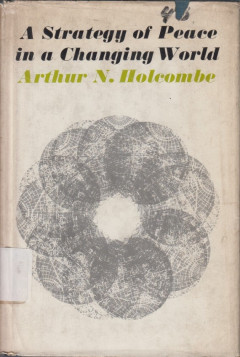
A Strategy of peace in a changing world
In this influential work, Arthur N. Holcombe examines the challenges of creating and sustaining peace in a rapidly changing international environment. He discusses the political, economic, and strategic forces shaping world affairs during the mid-twentieth century and explores the role of the United States in promoting global stability. Holcombe analyzes the requirements of an effective peace s…
- Edisi
- -
- ISBN/ISSN
- -
- Deskripsi Fisik
- 332 pages ; 21,5 cm
- Judul Seri
- -
- No. Panggil
- 327.172 HOL s
 Karya Umum
 Filsafat
 Agama
 Ilmu-ilmu Sosial
 Bahasa
 Ilmu-ilmu Murni
 Ilmu-ilmu Terapan
 Kesenian, Hiburan, dan Olahraga
 Kesusastraan
 Geografi dan Sejarah