Ditapis dengan

China and the CPC: The challenges we face and how we respond
The 21st century has confronted China with a host of new international challenges globalization, financial crisis, geopolitical conflict, climate change. These are mirrored by equally demanding domestic challenges - managing the new normal, transforming and upgrading the economy, restoring and protecting the environment, and implementing political reform. This book explains how the CPC is respo…
- Edisi
- Ed. 1 ; Cet. 2
- ISBN/ISSN
- 978-7-119-09426-7
- Deskripsi Fisik
- xiii, 271 pages : illustrations (black and white) ; 21 cm
- Judul Seri
- -
- No. Panggil
- 330.12 Pre c

Review on globalization: From an Islamic perspective
This book is written in response to an initiative to boost research at University of Darussalam Gontor (UNIDA), Ponorogo. All the chapters in this book have been written by the lecturers of the Department of International Relations at UNIDA Gontor. Although there is no unified theme that links the ten chapters, the book strives in its entirety to reflect globalization from the three sub-areas o…
- Edisi
- Ed. 1
- ISBN/ISSN
- 978-602-5620-78-2
- Deskripsi Fisik
- xviii, 196 halaman ; 23 cm
- Judul Seri
- -
- No. Panggil
- 337 Har r
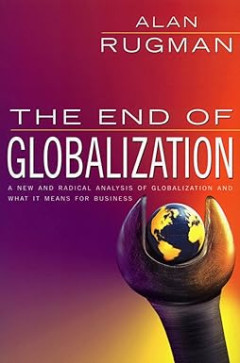
The end of globalization
Argues that globalization was never more than a myth and looks in detail at the managerial implications of the end of globalization, including in-depth discussion of corporate strategies, organizational structures and analytical methods. Contents: Part 1 : The social and political actors affecting globalization Part 2 : The economic and management actors affecting globalization.
- Edisi
- -
- ISBN/ISSN
- 0-7126-8495-6
- Deskripsi Fisik
- xv, 237 pages : illustrations ; 23 cm
- Judul Seri
- -
- No. Panggil
- 382.93 Rug e

The maze of fear : Security and migration after 9/11
Contents: 1. Introduction : The movement of people and the security of states John Tirman 2. Empire through diasporic eyes : A view from the other boat Engseng Ho 3. Displacement, diaspora mobilization, and transnational cycles of political violence Fiona Damson 4. The return of the state? financial reregulation in the pursuit of national security after september 11 Thomas J . Biersteker wi…
- Edisi
- -
- ISBN/ISSN
- 1-56584-906-X
- Deskripsi Fisik
- viii, 322 pages ; 23 cm
- Judul Seri
- -
- No. Panggil
- 363.32 Tir m

The role of the world trade organization in global governance
The World Trade Organization is a major player in the field of global governance. Since its creation in January 1995, it has expanded the reach of trade rules deep into the regulatory structure of almost 140 sovereign states, affecting the daily lives of all citizens. As a result, it has found itself at the center of controversy in areas that are well outside the domain of traditional trade pol…
- Edisi
- -
- ISBN/ISSN
- 92-808-1055-3
- Deskripsi Fisik
- x, 298 pages ; 23 cm
- Judul Seri
- -
- No. Panggil
- 382.92 Sam r

The hydrogen economy : The creation of the worldwide energy web and the redis…
The author of The Biotech Century exposes the coming depletion of oil reserves and illuminates the potential of sustainable hydrogen fuel to replace fossil fuels. Contents: 1. Between realities 2. Sliding down hubbert's bell curve 3. Energy and the rise and fall of civilizations 4. The fossil -fuel era 5. The islamist wild card 6. A global meltdown,etc.
- Edisi
- -
- ISBN/ISSN
- 1-58542-193-6
- Deskripsi Fisik
- 294 pages ; 23 cm
- Judul Seri
- -
- No. Panggil
- 333.8 Rif h

Globalization and development studies: Challenges for the 21st century
This text provides a comprehensive introduction to the concept of globalization and its challenge to the contemporary study of development. Part I introduces the theoretical issues and debates surrounding globalization, illustrates the often contested nature of the concept, and considers the implications for the future of development studies. Part II reviews more specific theory and policy i…
- Edisi
- -
- ISBN/ISSN
- 0-7619-7267-6
- Deskripsi Fisik
- vi, 212 pages ; 24 cm
- Judul Seri
- -
- No. Panggil
- 382 Sch g

The Lexus and the olive tree: Understanding globalization
In this vivid portrait of the new business world, Thomas L. Friedman shows how technology, capital, and information are transforming the global marketplace, leveling old geographic and geopolitical boundaries. With bold reporting and acute analysis, Friedman dramatizes the conflict between globalizing forces and local cultures, and he shows why a balance between progress and the preservation of…
- Edisi
- Ed. 1
- ISBN/ISSN
- 0-385-49934-5
- Deskripsi Fisik
- xxii, 490 pages : illustrations (black and white) ; 20 cm
- Judul Seri
- -
- No. Panggil
- 337 Fri l
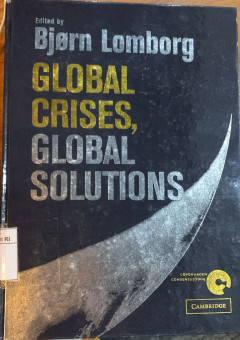
Global crises, global solutions
This volume provides a uniquely rich set of arguments and data for prioritizing our responses to some of the most serious problems facing the world today, such as climate change, communicable diseases, conflicts, education, financial instability, corruption, migration, malnutrition and hunger, trade barriers, and water access. Leading economists evaluate the evidence for costs and benefits of v…
- Edisi
- -
- ISBN/ISSN
- 0-521-84446-0
- Deskripsi Fisik
- xxii, 648 pages : illustrations ; 25 cm
- Judul Seri
- -
- No. Panggil
- 338.91 Lom g

Globalization and the south: Some critical issues
This book examines the implications of some of the main features of the globalisation process for the developing countries. It also makes several proposals for developing countries in considering national-level policies to face the globalisation challenge, as well as coordination among developing countries in facing negotiations or making proposals at the international level. While there are…
- Edisi
- Cet. 4
- ISBN/ISSN
- 983-9747-46-0
- Deskripsi Fisik
- iii, 108 pages ; 21 cm
- Judul Seri
- -
- No. Panggil
- 382 Kho g
 Karya Umum
  Filsafat
  Agama
Agama  Ilmu-ilmu Sosial
  Bahasa
  Ilmu-ilmu Murni
  Ilmu-ilmu Terapan
  Kesenian, Hiburan, dan Olahraga
  Kesusastraan
  Geografi dan Sejarah