Ditapis dengan

The challenge to the south: The report of the south commission
This report provides a general introduction to the problems of development as seen by the developing country. It has been produced by the South Commission, which was established in 1987, with Julius Nyerere, President of Tanzania as its Chairman and Manmohan Sing as Secretary General. This report is a follow-up to the 1983 Brandt Commission Common North-South Co-operation for World Recovery. …
- Edisi
- -
- ISBN/ISSN
- 0-19-877311-0
- Deskripsi Fisik
- xv, 325 pages : illustrations ; 21 cm.
- Judul Seri
- -
- No. Panggil
- 338.9 Nye c
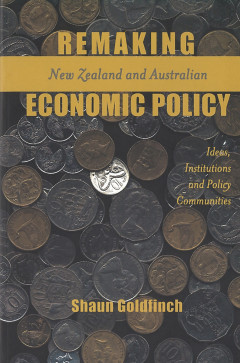
Remaking economic policy: New Zealand and Australian
During the 1980s and early 1990s, Australia and New Zealand extensively deregulated their economies to create two of the most open markets in the industrialized world. Drawing on interviews with more than 180 leading policymakers in Australia and New Zealand—including former prime ministers, ministers of finance, treasurers, and public servants—Shaun Goldfinch analyzes the factors that made…
- Edisi
- Cet. 1
- ISBN/ISSN
- 0-86473-393-3
- Deskripsi Fisik
- 295 pages : illustrations (black and white) ; 23 cm
- Judul Seri
- -
- No. Panggil
- 343.07 Gol r

Natural capitalism: Creating the next industrial revolution
Contents: 1. The next industrial revolution 2. Reinventing the wheels: Hypercars and neighborhoods 3. Waste not 4. Making the world 5. Building blocks 6. Tunneling through the cost barrier etc.
- Edisi
- Ed. 1
- ISBN/ISSN
- 0-316-35316-7
- Deskripsi Fisik
- xix, 396 pages : illustrations (black and white) ; 24 cm
- Judul Seri
- -
- No. Panggil
- 338.973 Haw n

The age of diminished expectations
Paul Krugman's popular guide to the economic landscape of the 1990s has been revised and updated to take into account economic developments of the past three years. New material in the third edition includes: - A new chapter—complete with colorful examples from Lloyds of London and Sumitomo Metals—on how risky behavior can lead to disaster in private markets. - An evaluation of the Federa…
- Edisi
- Ed. 3 ; Cet. 3
- ISBN/ISSN
- 0-262-61134-1
- Deskripsi Fisik
- xii, 232 pages : illustrations (black and white) ; 23 cm
- Judul Seri
- -
- No. Panggil
- 338.973 Kru a

Japan's lost decade
In this incisive analysis of Japan's lost decade of the 1990's, Professor Hiroshi Yoshikawa comprehensively explains how the world's second largest economy has come to a standstill and the difficult choices facing the nation at this crucial moment of transition. This book contains: 1. Macroeconomic analysis of the 1990s 2. Bad debts and the Japanese Economy 3. Exchange rates 4. Japan's M…
- Edisi
- -
- ISBN/ISSN
- -
- Deskripsi Fisik
- xiv, 240 pages ; 24 cm
- Judul Seri
- -
- No. Panggil
- 338.952 Hir j
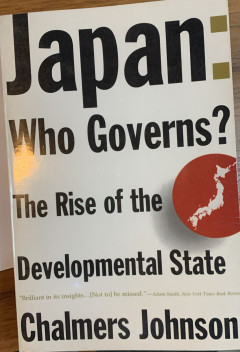
Japan, who governs? : The rise of the developmental state
The godfather of Japanese revisionism, author of MITI and the Japanese Miracle and president of the Japan Policy Research Institute explains how--and why--Japan has become a world power in the past 25 years. Johnson lucidly explains here how the Japanese economy will thrive as it moves from a producer-dominated economy to a consumer-oriented headquarters for all of East Asia.
- Edisi
- -
- ISBN/ISSN
- 0-393-03739-8
- Deskripsi Fisik
- 384 pages ; 21 cm.
- Judul Seri
- -
- No. Panggil
- 338.952 Joh j
Lessons from the crisis in Argentina
This book contains: 1. Boom years and buildup of Vulnerabilities: 1992-98 2. Downturn and deeping depression: 1998-2000 3. Crisis: 2001 4. Aftermath: 2002 5. Role of the IMF
- Edisi
- -
- ISBN/ISSN
- 1-58906-359-7
- Deskripsi Fisik
- V, 55 pages ; 28 cm.
- Judul Seri
- -
- No. Panggil
- 330.9982 Das l

Pembangunan Indonesia tantangan-tantangan dalam tataran nasional dan global (…
Buku ini berisi kumpulan artikel mengenai permasalahan perkembangan perekonomian, administrasi publik, politik, dan lain-lain menjelang era globalisasi di Indonesia. - Agenda Aksi Regormasi Birokrasi - Reformasi Ekonomi dan Penyesuaian Struktural Menanggapi Krisis Keuangan - Program Reform Ekonomi Melalui Berbagai Program Deregulasi - Dunia Usaha Menghadapi Era Global (Kerangka Uraian)
- Edisi
- -
- ISBN/ISSN
- -
- Deskripsi Fisik
- 149 halaman ; 21 cm
- Judul Seri
- -
- No. Panggil
- 330.9598 Tjo p

Pembangunan Indonesia tantangan-tantangan dalam tataran nasional dan global (…
Buku ini berisi kumpulan artikel mengenai permasalahan perkembangan perekonomian, administrasi publik, politik, dan lain-lain menjelang era globalisasi di Indonesia. - Clean Goverment Sebagai Prasyarat Mewujudkan Masyarakat Industri Baru Dalam Milenium ke III - Manajemen Diplomasi yang Efektif dan Efisien - Manajemen Pembangunan Dalam Memasuki Era Globalisasi
- Edisi
- -
- ISBN/ISSN
- -
- Deskripsi Fisik
- 193 halaman ; 21 cm
- Judul Seri
- -
- No. Panggil
- 330.9598 Tjo p

4 years of repair for all Thais and Thailand: Under government of Prime Minis…
Today, four years of this administration, Thailand has put behind it that economic crisis. The country has taken up a new prominent role and position in today's world arena. The book presents the Government's achievements, focusing on major projects and operations that the Government has found essential in steering Thailand and its economy proudly and firmly to where it is today.
- Edisi
- -
- ISBN/ISSN
- -
- Deskripsi Fisik
- 109 pages : illustrations ; 26 cm
- Judul Seri
- -
- No. Panggil
- 330.9593 Com y
 Karya Umum
  Filsafat
  Agama
Agama  Ilmu-ilmu Sosial
  Bahasa
  Ilmu-ilmu Murni
  Ilmu-ilmu Terapan
  Kesenian, Hiburan, dan Olahraga
  Kesusastraan
  Geografi dan Sejarah