Ditapis dengan

Cultural interface of India with Asia religion, art and architecture
The reality of the Indian presence in Asian cultures is undeniable. Recent scholarship in Asian cultural studies has emphasized the essential oneness of the substratum that defines Asian identity. Buddhism and Hinduism, originating in India, travelled beyond their homeland and profoundly shaped the beliefs and faith of people across Asia. Trade, political ambitions, and religious pursuits facil…
- Edisi
- -
- ISBN/ISSN
- 81-246-0262-X
- Deskripsi Fisik
- xxii, 412 pages : illustrations ; 29 cm
- Judul Seri
- -
- No. Panggil
- 303.482 PAN c
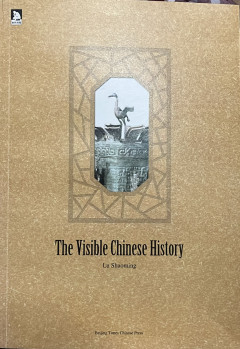
The Visible Chinese history
This book provides a comprehensive overview of the historical and cultural development of China from the Qin Dynasty to the Tang Dynasty. The first part focuses on the formation of the first centralized empire under the Qin, as well as the consolidation of institutions, the system of government, and the formation of a highly civilized society during the Han Dynasty. This book highlights nationa…
- Edisi
- -
- ISBN/ISSN
- 978-7-80769-399-4
- Deskripsi Fisik
- 360 pages : illustrations ; 24 cm
- Judul Seri
- -
- No. Panggil
- 738.0951 SHA v

Flaying dragon and dancing phoenix: An Introduction to selected Chinese minor…
This book will give readers a glimpse of one of the main cultural forms among Chinese minorities. It not only introduces the dances of each minority group, including characteristic movements, steps, patterns, rhythms and musical accompaniment, but also gives the historical and legendary background for the dances. The selection of twenty-five minority groups' folk dances represents the fruition …
- Edisi
- 1
- ISBN/ISSN
- 7-80005-007-6
- Deskripsi Fisik
- 224 pages : illustrations ; 21 cm
- Judul Seri
- -
- No. Panggil
- 793.2 WEI f
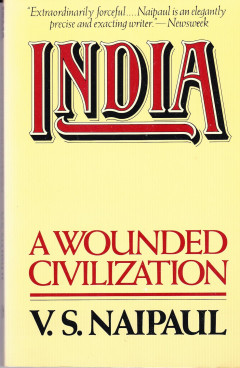
India: A Wounded civilization
V. S. Naipaul's India: A Wounded Civilization is both a personal reflection and a trenchant analysis of India, written after his visit to the country in 1975 during the Emergency. Naipaul examines India's complex history, religion, and social structure, arguing that centuries of foreign rule have left deep psychological and cultural scars. He depicts a nation grappling with poverty, disillusion…
- Edisi
- -
- ISBN/ISSN
- 0-394-72463-1
- Deskripsi Fisik
- xi, 191 pages ; 20 cm
- Judul Seri
- -
- No. Panggil
- 954 NAI i

United Arab Emirates: Heritage & modern development
United Arab Emirates: Heritage & Modern Development offers a comprehensive overview of the UAE’s transformation from a traditional desert society to a modern, rapidly developing nation. The book explores the country’s rich cultural heritage—its tribal traditions, Bedouin lifestyle, architecture, and maritime history—while also examining the political, economic, and social changes that f…
- Edisi
- -
- ISBN/ISSN
- 0-907151-85-x
- Deskripsi Fisik
- 110 pages : Illustrations ; 30 cm
- Judul Seri
- -
- No. Panggil
- 953.8 VIN u

The Foundations of "Africanite" or "Negritude" and "Arabite"
The book The Foundations of Africanité or Négritude and Arabité by Léopold Sédar Senghor outlines the philosophical, cultural, and historical foundations of the concepts of Africanité (African-ness) and Négritude, two core ideas in modern African identity thinking. Senghor discusses the complex relationship between black African heritage and Arab traditions, and how these two elements sh…
- Edisi
- -
- ISBN/ISSN
- -
- Deskripsi Fisik
- 89 pages : 18 cm
- Judul Seri
- -
- No. Panggil
- 306 SEN f
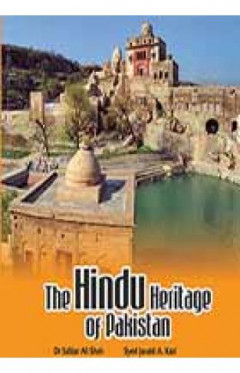
The Hindu heritage of Pakistan
This book encompass historical perspective of respective communities, their contribution at the national level and elaborate coverage of their places of worship and sacred sites. The text has been written by Dr Safdar Ali Shah, a well-known researcher and scholar; and the photography have been done by Syed Javaid A Kazi, President Pakistan Photographic Society and recipient of Presidential Prid…
- Edisi
- -
- ISBN/ISSN
- 978-969-9532-02-3
- Deskripsi Fisik
- ix, 121 pages: illustration; 35 cm
- Judul Seri
- -
- No. Panggil
- 294.554 SHA h
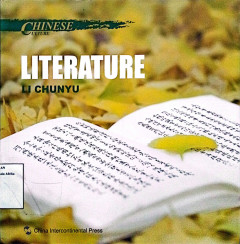
Literature
Literature provides a comprehensive overview of the major trends, works, and figures in Chinese literature, spanning from ancient to contemporary times. The book explores the rich literary traditions of China, including classical poetry, historical writings, and modern prose, highlighting the cultural, social, and philosophical contexts in which these works were created. The book discusses key …
- Edisi
- -
- ISBN/ISSN
- 978-7-5085-2736-9
- Deskripsi Fisik
- 233 pages : illustrations ; 21 cm
- Judul Seri
- -
- No. Panggil
- 306.51 LIC l

The cultural background of the peoples of Malaya
This book presents an anthropological and sociological analysis of cultural diversity in the Malay Peninsula. N. J. Ryan reviews the social and cultural background of the main ethnic groups, namely the Malay, Chinese, and Indian, as well as Western influences, in the development of Malay society. Through a historical approach, he explores the social structures, customs, traditional values, beli…
- Edisi
- -
- ISBN/ISSN
- -
- Deskripsi Fisik
- xiii, 184 pages: illustrations ; 19 cm
- Judul Seri
- -
- No. Panggil
- 306.595 RYA c

Minorities within minorities: Equality, rights and diversity
Groups around the world are increasingly successful in maintaining or winning autonomy. However, what happens to individuals within the groups who find that their group discriminates against them? This volume brings together sixteen distinguished scholars who examine the balance between group autonomy and individual rights in relation to conflicts involving gender, religion, culture, and indige…
- Edisi
- Cet. 1
- ISBN/ISSN
- 0-521-60394-3
- Deskripsi Fisik
- xii, 390 pages : index ; 23 cm
- Judul Seri
- -
- No. Panggil
- 323.1 Eis m
 Karya Umum
  Filsafat
  Agama
Agama  Ilmu-ilmu Sosial
  Bahasa
  Ilmu-ilmu Murni
  Ilmu-ilmu Terapan
  Kesenian, Hiburan, dan Olahraga
  Kesusastraan
  Geografi dan Sejarah